
For everyday wear, pick a 65/35 or 80/20 cotton-poly blend at 300 to 340 GSM. For premium streetwear, go with heavyweight cotton fleece at 380 to 420 GSM. Athletic use calls for polyester or poly-spandex performance fleece in a typical fabric weight range, while lightweight layering works best in French terry or tri-blend fabrics between 220 and 300 GSM. GSM and construction quality matter far more than whatever label is stitched inside the collar.
TL;DR:
- Fabric weight measured in GSM predicts hoodie warmth, durability, and drape better than the label, with midweight (300-340 GSM) ideal for daily wear.
- Heavier cotton fleece (above 350 GSM) provides desired streetwear quality but may shrink more if not pre-shrunk and tends to pill if yarn staples are short.
- Polyester fleece and blends resist shrinking and moisture but lack breathability, making them suitable for athletic and performance hoodies.
- High-quality construction, including more than 16 to 18 courses per inch and thorough testing for shrinkage and rib recovery, is crucial for garment longevity.
- Cotton and cotton-rich fabrics absorb inks well for printing, while polyester requires different printing techniques; fabric care routines significantly influence hoodie lifespan.
Table of Contents
- Hoodie Fabric Types and How They Actually Perform
- Why GSM and Construction Signals Matter More Than the Label
- A Step-by-Step Framework for Choosing Fabric for Hoodies
- Printing, Decoration, and Care: What Affects Your Fabric Choice
- What Thepreciouslamb Looks for Before a Fabric Makes the Cut
- Hoodies From Thepreciouslamb That Match These Fabric Picks
- Sources
- FAQ
Hoodie Fabric Types and How They Actually Perform
Not every fabric labeled “fleece” or “cotton blend” behaves the same way once it’s on your back for a full season. The differences show up in how a hoodie feels on day one versus how it feels after twenty washes.
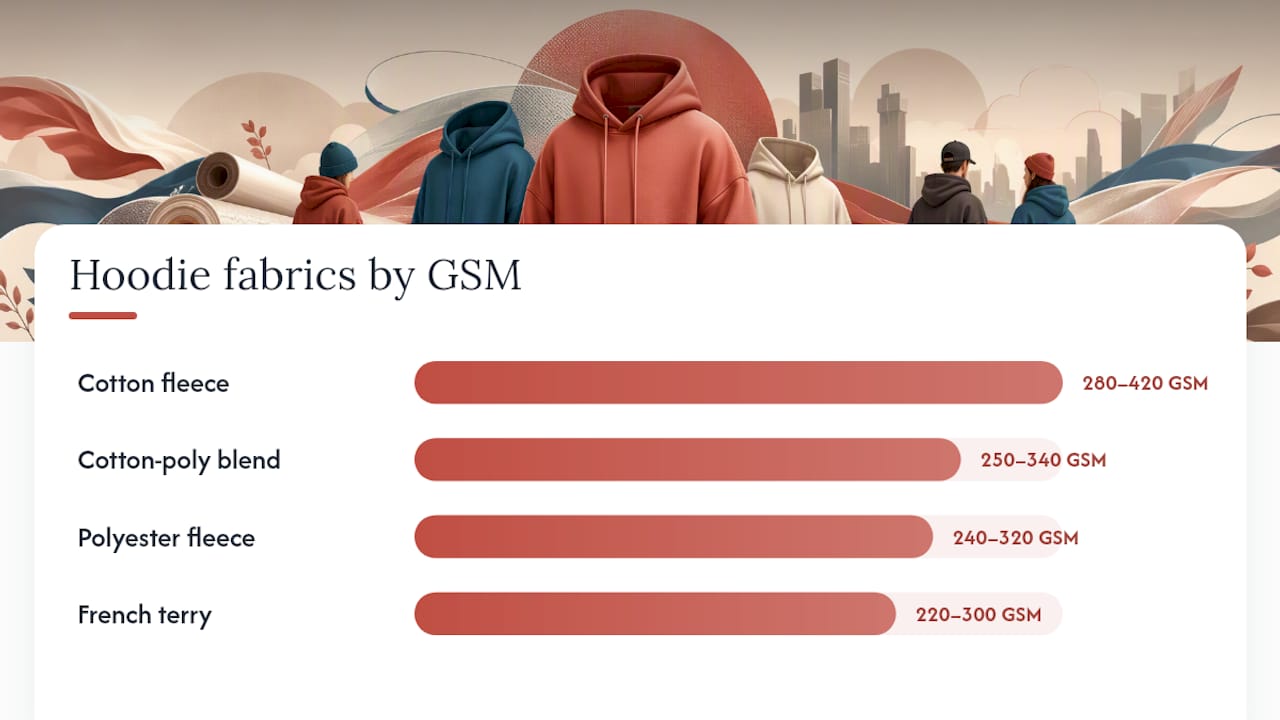
Cotton fleece runs 280 to 420 GSM and gives you that brushed, cozy interior streetwear brands love. It breathes well and softens with wear, but heavier weights (350+) shrink more without proper pre-shrinking and can pill if the yarn staple is short.
Cotton-poly blends (usually 65/35 or 80/20) hit 250 to 340 GSM and are the workhorse of casual apparel. They resist shrinkage, dry faster than pure cotton, and hold screen prints cleanly.
Polyester fleece sits at 240 to 320 GSM, wicks moisture, and barely shrinks. It’s the default for athletic hoodies, though it lacks the breathability cotton offers.
French terry is a looped knit, typically 220 to 300 GSM, lighter and less bulky than fleece. It’s the go-to for warm-climate layering or spring hoodies.
Tri-blend (cotton, polyester, rayon) feels notably soft and drapes well, though it’s less durable under heavy abrasion.
Wool blends add warmth and odor resistance for cold-weather pieces but cost more and need gentler care.
Quick reference by use:
- Everyday wear: cotton-poly blend, 300 to 340 GSM
- Premium streetwear often employs heavyweight cotton fleece in heavier fabric ranges
- Athletic or gym clothing favors polyester or poly-spandex fleece in midweight ranges
- Warm-weather layering frequently features French terry or tri-blend fabrics that are lighter and breathable.
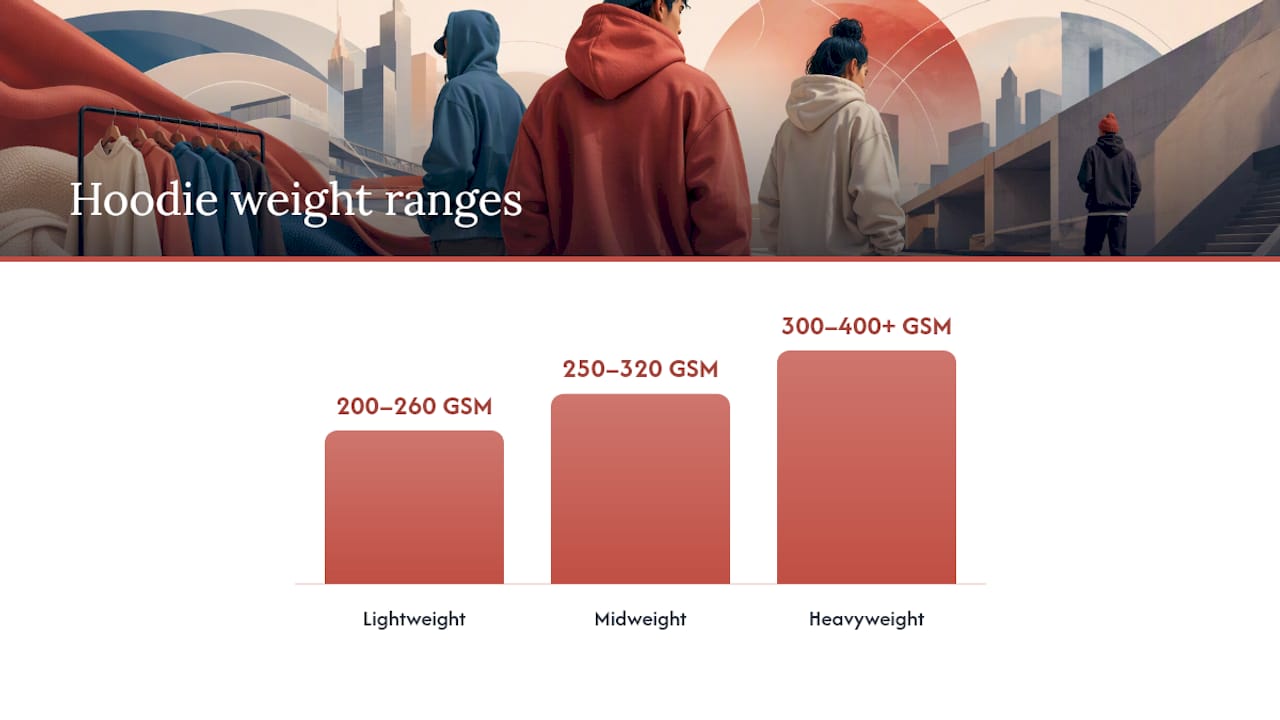
According to Vistaprint’s fabric breakdown, lightweight hoodie options generally fall between 200 and 260 GSM, while anything above 300 crosses into midweight to heavyweight territory.
Why GSM and Construction Signals Matter More Than the Label
GSM (grams per square meter) tells you how much fabric you’re actually getting, and it predicts warmth, drape, and durability far better than a tag that just says “cotton blend.” Lightweight hoodies sit around 200 to 260 GSM, midweight runs 250 to 320, and heavyweight starts around 300 and climbs past 400 for the heaviest streetwear pieces, according to Vistaprint.
Weight alone doesn’t tell the whole story. Stitch density, measured in courses per inch, affects how well a knit resists stretching out and pilling. Fexwear’s quality guide recommends looking for fleece with more than 16 to 18 courses per inch, and points to Martindale abrasion testing above 20,000 cycles as the benchmark separating durable fabric from a hoodie that thins out in a year.
What to check before buying:
- GSM listed on the product page or tag
- Ring-spun or combed cotton (softer, fewer loose fibers that turn into pills)
- Pre-shrunk or sanforized finishing
- Cuff and hem rib recovery after a stretch test
Pro Tip: If a product page lists no GSM at all, treat that as a red flag. Reputable manufacturers publish fabric weight because it’s the number that actually predicts how a hoodie will hold up.
A Step-by-Step Framework for Choosing Fabric for Hoodies
Choosing fabric for hoodies gets a lot simpler when you follow the same order a buyer at an apparel brand would.
- Define your primary use and wash frequency. A hoodie worn twice a week and washed weekly needs different durability than a shelf piece worn occasionally.
- Pick your GSM and knit type based on that use. Everyday and streetwear pieces lean midweight to heavyweight fleece; layering pieces do better lighter, in French terry.
- Choose fiber or blend for breathability versus durability. Cotton breathes and softens but shrinks more; polyester resists shrinkage and wicks moisture but traps heat.
- Check decoration compatibility if you’re buying printed or embroidered pieces. Some fabrics hold screen print cleanly; others need different techniques entirely.
- Request a sample and run a wash test. Fexwear recommends a 40°C wash cycle repeated three times, checking for shrinkage under 5% and confirming the rib cuffs bounce back instead of sagging.
If you’re between two sizes because you’re unsure how a heavier fabric will fit once it’s broken in, a hoodie size guide can help you avoid ordering the wrong cut before you’ve even tested the fabric.
Printing, Decoration, and Care: What Affects Your Fabric Choice
Cotton and cotton-rich blends absorb inks well and are preferred for screen printing and direct-to-garment methods. Polyester resists most ink types and needs sublimation printing instead, which bonds dye directly into the synthetic fibers.
Dark or pigment-dyed hoodies carry a hidden risk: dye migration, where the garment’s own dye bleeds into the print and shifts its color over time. Printers prevent this by applying a grey underbase before the design goes down, according to ezCorporateClothing’s technical breakdown. If you’re ordering a custom dark hoodie, ask whether your printer uses this step.
Longevity isn’t just a printing concern. Custom Ink’s 2026 Swag Trends survey found that 45% of event organizers rank long-term durability as their top priority when choosing hoodies for giveaways, ahead of price or design flexibility.
Care habits that protect fabric over time:
- Wash inside out to protect printed surfaces and reduce surface abrasion
- Use cold water on a gentle cycle
- Skip the dryer’s high heat setting, or air dry when possible
- Avoid fabric softener on brushed fleece, since it can flatten the nap and reduce warmth
A detailed hoodie care guide walks through wash settings by fabric type, and a screen print versus embroidery breakdown is useful to review before ordering anything decorated.
What Thepreciouslamb Looks for Before a Fabric Makes the Cut
Thepreciouslamb builds its fleece hoodies around GSM and finish targets first, then tests samples for shrinkage and rib recovery before committing to a run. That process mirrors the GSM cheat-sheet we point shoppers to when they’re comparing fabric weights across brands.
The production side matters just as much. Understanding how hoodies are made, including the multi-week decisions around fabric sourcing and finishing, explains why two hoodies with the same GSM number on paper can still feel completely different in hand. That’s the gap between a spec sheet and an actual sample, and it’s why we test before we commit rather than trusting a supplier’s numbers alone.
— Joshua
Hoodies From Thepreciouslamb That Match These Fabric Picks
If the heavyweight cotton fleece recommendation above sounds like what you’re after, the Snow Washed Distressed Panel Pocket Hoodie is built on that same premium streetwear logic: a heavier brushed fleece with a washed, distressed finish that’s meant to hold its texture wash after wash, not thin out after a season.
For the everyday midweight pick, the Vintage Washed Cropped Fleece Hoodie fits the 300 to 340 GSM sweet spot this guide keeps coming back to. It’s the fabric weight that balances softness against durability without feeling stiff or overbuilt for daily rotation.

Both pieces come from the same fleece hoodie lineup, so if you want to compare fit, wash, and finish side by side before deciding, browse the full hoodie collection and check the spec details listed on each product page. If you’re still weighing weight against warmth, the GSM notes on each listing will tell you exactly where a piece lands before it ships.
Sources
For deeper technical detail beyond this guide, Custom Ink’s hoodie guide covers real-world blank weights, Vistaprint’s fabric hub breaks down GSM bands by fabric type, and Fexwear’s quality guide offers a practitioner-level checklist for testing samples before you buy.
- Custom Hoodies Guide: What People Actually Wear + Styles, Fabrics, and Print Methods - Custom Ink
- 10 types of hoodie fabric — Vistaprint
- Best material for hoodies: The lifestyle-first guide to decoding quality - Fexwear
- What is dye migration? — ezCorporateClothing
FAQ
What GSM Is Best for a Hoodie?
Midweight hoodies for everyday wear perform best between 300 and 340 GSM, while premium streetwear pieces typically run 380 to 420 GSM for extra warmth and structure.
Is Cotton or Polyester Better for a Hoodie?
Cotton breathes better and feels softer against skin, while polyester resists shrinkage and wicks moisture, making it the stronger pick for athletic use.
Does Fleece Fabric Shrink After Washing?
Heavyweight cotton fleece can shrink more than 5% if it isn’t pre-shrunk or sanforized, which is why checking for that finish before buying matters.
What Fabric Holds Screen Printing Best?
Cotton and high-cotton-face blends take screen print and DTG printing most cleanly because the fibers absorb ink without resisting it the way synthetic fabrics do.
How Do I Know if a Hoodie Fabric Will Pill?
Check for ring-spun or combed cotton and a higher courses-per-inch count. Fewer than 16 courses per inch on fleece is a common sign it will pill faster with regular washing.