
For any church retreat, pack your Bible or devotional, modest daytime and worship clothing, any prescription medication in its original bottle, and a reusable water bottle. Beyond those four, everything else is negotiable based on the venue. The one rule that overrides every packing decision: read your organizer’s dress-code and electronics policy before you fill a single bag, because retreat centers do enforce them.
TL;DR:
- Modest clothing should be based on specific dress-code rules, with an emphasis on coverage during worship and outdoor activities.
- Medications must be in original containers with written dose schedules, and some retreats require handing them directly to staff at check-in.
- Packing should include bedding only if not provided, and outdoor gear must be suitable for changing weather and activities like hiking or swimming.
- Electronics policies vary, but many retreats restrict devices to promote community, so consider bringing a journal or simple camera instead.
- Organize and pack space-saving items like rolling clothes and packing cubes, especially for shared accommodations and varied outdoor schedules.
Table of Contents
- Church Retreat Packing List Essentials
- Clothing, Modesty, and Dress-Code Rules
- Toiletries, Medications, and Basic First-Aid
- Sleep and Bedding: What’s Provided vs. What You Bring
- Outdoor and Activity Gear
- Electronics Policy and Low-Tech Alternatives
- Packing and Organization Tips That Save Space and Stress
- Special Packing Notes for Kids, Couples, and Leaders
- Important Documents and Money to Bring
- Snacks and Food Considerations for Retreats
- Recreational and Activity-Specific Gear
- How Packing Thoughtfully Changed One Retreat Weekend
- Retreat-Ready Clothing That Meets the Dress Code
- Sources
- FAQ
Church Retreat Packing List Essentials
Retreat centers publish remarkably similar packing lists year after year, and there’s a reason: the same categories cover 90 percent of what attendees actually need. A must-have packing list from America’s Keswick confirms the core items that show up on nearly every organizer’s sheet: devotional materials, extra clothes, toiletries, medications, sun protection, a water bottle, and bedding basics.
Break it down by category and it stops feeling overwhelming.
Spiritual and personal items:
- Bible or devotional book, plus a journal and two or three pens
- Notebook for sermon notes or small-group discussion
- Any personal items tied to your specific tradition (rosary, prayer journal, hymnal)
Clothing basics:
- One outfit per day, plus a dedicated worship outfit and separate sleepwear
- A jacket or sweatshirt layer regardless of season
- Closed-toe shoes for daytime and a second pair for wet or muddy activities
Toiletries and health:
- Travel-size toiletries, sunscreen, and insect repellent
- All medications in original containers with a written dose list
- A small first-aid kit with bandages and antiseptic wipes
Sleep and gear:
- Bedding or a sleeping bag if the venue doesn’t supply linens
- Bath towel and, separately, a pool towel if swimming is planned
- Flashlight, laundry bag, and a refillable water bottle
Screenshot that list before you leave. It covers the bulk of any church camp packing guide, and you can adjust from there based on the venue’s specific packet.
Clothing, Modesty, and Dress-Code Rules
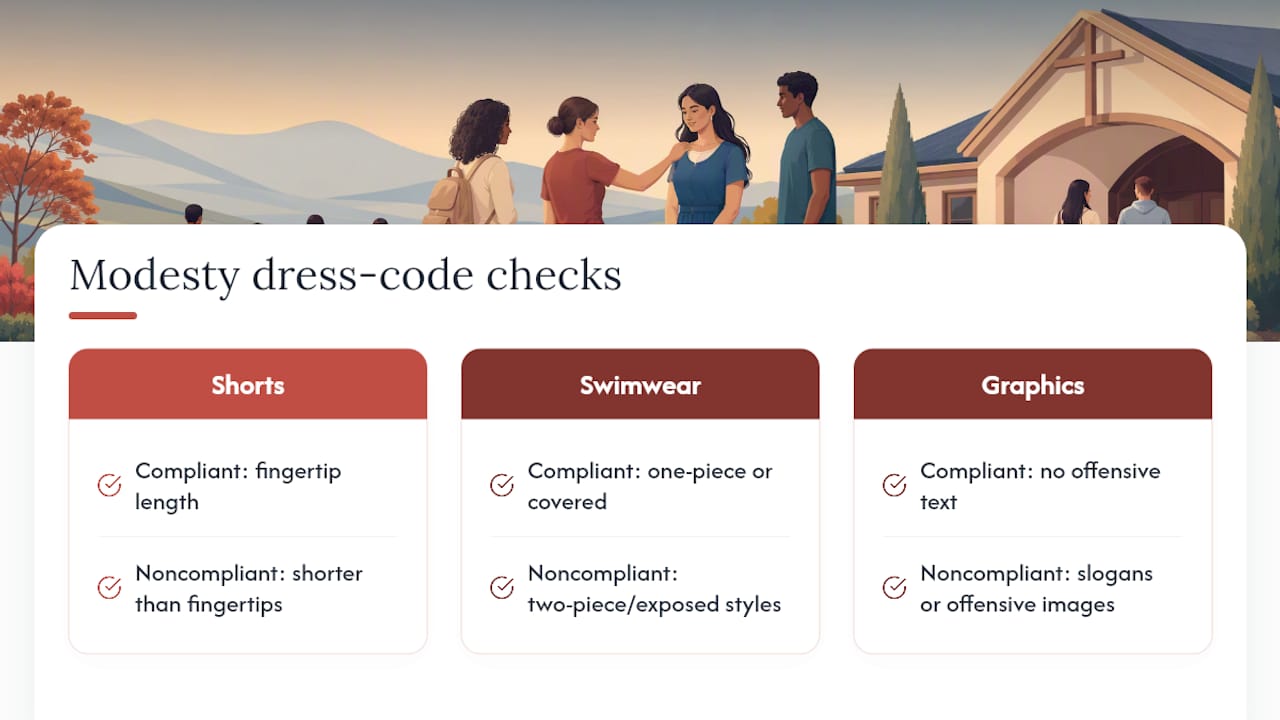
Almost every organizer packet uses some version of the phrase “modest and appropriate,” and vague as that sounds, it usually comes with real specifics attached. Recent dress-code guidance shows retreats defining modesty in concrete terms: shorts at fingertip length, one-piece or fully covered swimwear, and no clothing with offensive graphics or slogans. Some venues will confiscate items that don’t comply, so this isn’t a suggestion you can shrug off.
Build outfits around formulas instead of individual pieces. A daytime look might be a t-shirt, modest shorts or jeans, and sneakers. Worship calls for something a step up, a button-up shirt or a modest dress with a cardigan. Active sessions need quick-dry fabric and closed shoes you don’t mind getting muddy.

Pro Tip: When the packet is vague on worship-night expectations, err toward more coverage. Dress-code enforcement at retreats varies widely from event to event, and the safest move is treating worship sessions like your most conservative outfit day.
For actual outfit combinations that hit every one of these moments, Three Outfit Formulas That Cover Every Church Camp Moment breaks it down piece by piece.
Toiletries, Medications, and Basic First-Aid
Medications get their own category because organizer compliance rules are stricter here than anywhere else on the list. Parent and camper packets commonly require medications in their original containers with the prescription label attached and a written dosage schedule. Some retreats go further and require you to hand medications directly to staff at check-in rather than keeping them in your bag.
Pack these categories:
- Prescriptions in original bottles, with a printed list of doses and times
- Basic over-the-counter items: pain reliever, allergy medicine, antacid
- Bandages, antiseptic wipes, and blister pads
- Travel-size shampoo, soap, deodorant, and sanitary supplies
- Sunscreen and insect repellent (pack both even for indoor-heavy retreats)
Check the registration forms twice. Missing a required medical form is one of the most common reasons attendees get flagged at check-in.
Sleep and Bedding: What’s Provided vs. What You Bring
Retreat centers vary enormously here, so this is the section where checking your packet actually saves you from arriving with the wrong gear. Some venues run dorm-style cabins with twin beds and full linens included. Others hand you a bare mattress and expect you to bring everything.
- If linens aren’t listed as provided, pack a fitted sheet, a flat sheet or blanket, and a pillow
- Rustic cabins or camping-style retreats usually call for a sleeping bag instead
- Bring a separate towel for the pool or lake if swimming is on the schedule, since a wet bath towel ruins packing efficiency
- Earplugs are worth the ounce of weight if you’re sharing a room with a group
Outdoor and Activity Gear
Hiking, campfires, and lake time all show up on typical retreat schedules, and the gear list changes accordingly. Packing lists from retreat and conference centers consistently recommend bringing two pairs of shoes: one for regular walking and one you don’t mind ruining in mud or creek water.
- A daypack with a water bottle holder, sun hat, and sunglasses
- Closed-toe shoes for hikes, plus an old pair or water shoes for creek and mud activities
- Shower shoes for communal bathhouses
- A packable rain jacket or poncho, since weather at outdoor retreats shifts fast
- Sunscreen and insect repellent, reapplied rather than packed once and forgotten
Electronics Policy and Low-Tech Alternatives
Confirm the rules before you pack a single cable. Many retreats intentionally limit or ban electronics to keep attention on community and reflection instead of screens, and some organizer packets list phones and gaming devices under prohibited items entirely.
- Bring a journal, extra pens, and a simple point-and-shoot camera if photography is allowed
- Pack a basic wristwatch or travel alarm clock as a phone substitute
- If you’re allowed to keep your phone, bring the charger and a portable battery pack, since outlets are often scarce in shared cabins
Packing and Organization Tips That Save Space and Stress
Retreat veterans repeat the same handful of tricks, and they work because retreat luggage has to survive vans, dorm rooms, and muddy trails. Practical guidance from The Ultimate Retreat Packing List points to rolling clothes and using packing cubes as the single biggest space-saver for weekend trips.
- Roll clothes instead of folding, and wear your bulkiest jacket on the drive instead of packing it
- Use packing cubes or compression bags to separate daily outfits so you’re not digging through a jumbled bag each morning
- Pack a small “essentials pouch” with meds, chargers, and toiletries you’ll need the first night, kept separate from the main bag
- Label every bag if you’re traveling with kids, and bring a few plastic laundry bags for wet swimsuits or muddy clothes
Pro Tip: Organizers juggling shared supplies, snack tables, and emergency contact sheets benefit from the same system: one labeled bin per category, checked against a printed list before the group ever loads the van.
Special Packing Notes for Kids, Couples, and Leaders
The core checklist works for everyone, but a few groups need small additions.
- Kids: Label everything, from water bottles to jackets. Pack a spare outfit beyond the usual daily count, and stick to child-safe toiletries and pre-measured medication doses. Center guidance on packing for church camp recommends headlamps over flashlights for younger campers, since they keep hands free.
- Couples: Split shared items rather than duplicating them. One picnic blanket, one deck of cards or small game, and one shared phone charger cuts down on bag weight for both of you.
- Leaders and volunteers: Carry printed copies of registration and medical forms, a printed schedule, extra pens for attendees who forgot theirs, and a slightly larger first-aid kit than a typical camper would need. A small “host kit” with extra bandages, hand sanitizer, and zip ties eases the workload for the whole volunteer team.
Important Documents and Money to Bring
A packing list heavy on clothes and toiletries can leave out the paperwork that actually gets you checked in, and this is the category attendees forget until they’re standing at the registration table. Bring a government-issued ID if you’re an adult, or make sure a parent or guardian has a copy of a minor’s ID and any required travel consent forms. Insurance cards matter more at retreats than most people expect, since remote venues are often a real drive from the nearest clinic or hospital. Pack a physical copy of your health insurance card, not just a photo on a phone that might be locked away under the retreat’s electronics policy.
Cash and cards deserve a specific plan rather than getting shoved into a pocket. Many retreat centers have a small camp store or offer optional off-site outings, and not every location takes cards. Bring a modest amount of cash in small bills, along with one card as backup, and keep both in a zippered pouch rather than loose in a bag that gets tossed around a cabin all weekend. If you’re a parent sending a child, a labeled envelope with a fixed cash amount keeps spending contained and easy to track.
Leaders and organizers should carry a folder with emergency contact information for every attendee, copies of medical forms, and a signed liability waiver where required. That folder becomes the single most important item in the building if a medical issue comes up mid-retreat.
Snacks and Food Considerations for Retreats
Most church retreats run on communal meals prepared by kitchen staff or volunteer teams, which means your food planning is mostly about the gaps between meals and any dietary restrictions the group menu doesn’t cover. Pack a few shelf-stable snacks (granola bars, trail mix, dried fruit) for the stretch between dinner and lights-out, especially on retreats with evening activities that run long.
If you have a food allergy, a gluten intolerance, or follow a specific diet, contact the organizer well before the retreat rather than assuming the communal menu will accommodate you automatically. Most retreat centers can adjust for common allergies with advance notice, but they need that notice, sometimes weeks out depending on how meals are sourced and prepped. Bring backup snacks anyway, even after confirming accommodations, since retreat kitchens serving large groups don’t always execute a special order perfectly every meal.
Kids attending without a parent present should have any dietary restriction written down and handed to a leader, not just mentioned verbally at drop-off. For leaders, keeping a simple list of who has which restriction, taped inside the folder with emergency contacts, prevents a scramble at the first communal meal.
Recreational and Activity-Specific Gear
Retreat schedules typically build in unstructured time for sports, swimming, or free play, and the gear for these moments deserves its own quick pass separate from your everyday clothing list. Swimwear needs the same modesty check as the rest of your wardrobe. One-piece suits or covered two-pieces are the standard organizer expectation, and packing a rash guard or cover-up gives you flexibility for both swimming and sitting poolside without changing outfits.
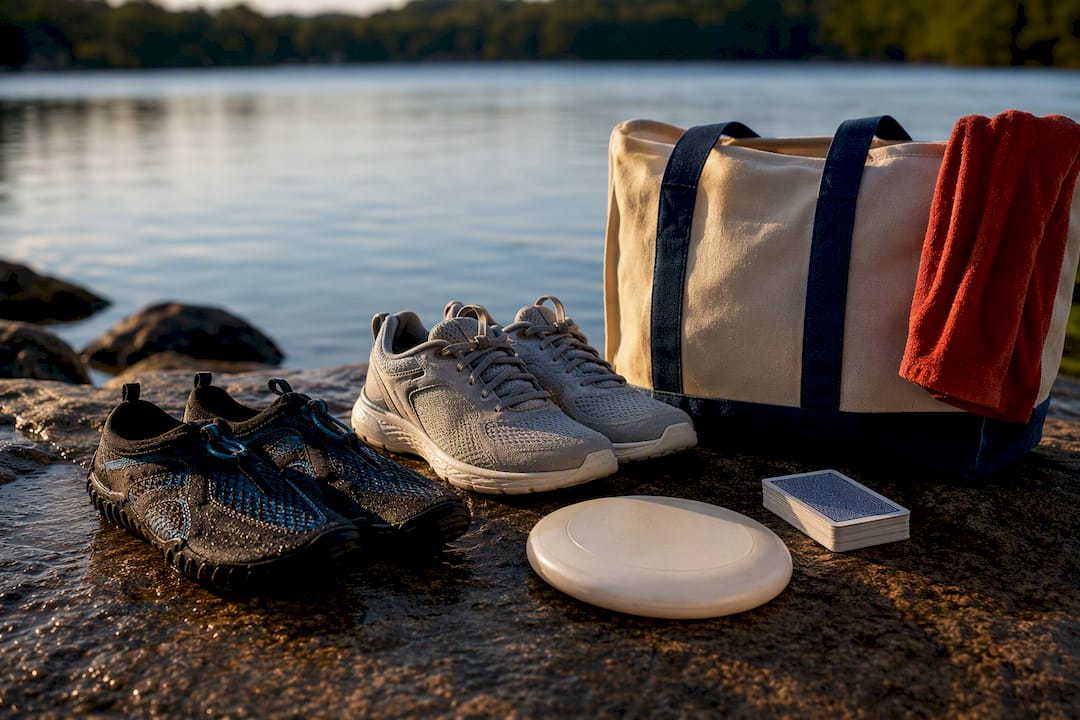
If the retreat schedule mentions group sports like volleyball, soccer, or capture the flag, pack athletic shoes separate from your hiking or mud shoes, along with moisture-wicking shorts or leggings you don’t mind getting grass-stained. Bring your own basic gear only if the packet specifically says equipment isn’t provided. Most retreat centers supply balls and nets for group games, so check before hauling your own volleyball across three states.
A frisbee, a deck of cards, or a small board game takes up almost no space and fills the gaps during free time better than a phone would, especially at retreats with electronics restrictions already in place. For water-based retreats, water shoes protect against sharp rocks in lakes or creeks, and they double as your mud-activity shoes if the schedule includes hiking too.
How Packing Thoughtfully Changed One Retreat Weekend
A retreat leader once told me the best packing decision they ever made wasn’t gear at all. It was a single worship outfit they knew fit the dress code cold, so they never had to think about it during a weekend already packed with logistics. That one decision freed up mental space for actually leading. The takeaway: build your worship outfit before you leave home, not the morning of. Our outfit guide works well for exactly this kind of advance planning.
— Joshua
Retreat-Ready Clothing That Meets the Dress Code
Once your checklist is built, the clothing itself is where most attendees waste time scrambling last minute. Many casual apparel brands stock versatile categories suited for a retreat weekend: layering tees, denim jackets for cool evenings, hoodies for early mornings, and durable jeans appropriate for both outdoor activities and worship sessions.

Start with a versatile base. The Essential Cotton T-Shirt works under a jacket for chilly mornings or on its own for an afternoon activity block, and a Vintage Wash Zip Denim Jacket covers the layer you’ll need once the sun goes down at an outdoor campfire. Browse the full collection of tees, hoodies, and denim to build out day and worship outfits from pieces that mix and match instead of packing a separate outfit for every single moment on the schedule. Pair a plain tee with the Vintage Wash Heavyweight Denim Jeans for a worship-appropriate look that also survives a hike back to the cabin. Check the current collection and build your retreat wardrobe around three or four pieces you can rewear all weekend.
Sources
- Dress-code guidance (2026)
- Sample retreat policies (organizer packet)
- The Must-Have Packing List for Any Retreat (America’s Keswick)
- Parent packet packing & medication rules (2026)
FAQ
What Does a Church Retreat Consist Of?
A church retreat typically mixes worship sessions, small-group discussion, communal meals, and free time for outdoor activities like hiking or swimming. Most run over a weekend at a dedicated retreat center or camp, with structured programming during the day and looser evening activities like campfires.
How Do You Prepare for a Church Retreat?
Start by reading the organizer’s packet closely for dress-code language, electronics rules, and what bedding or linens are provided. Confirm any dietary restrictions with the organizer in advance, pack medications in their original containers with a dose list, and build your outfits around the retreat’s specific worship and activity schedule.
What Should You Pack for a Retreat?
At minimum, pack a Bible or devotional, modest clothing for both daytime and worship, prescription medications in original bottles, and a reusable water bottle. Beyond that, retreat centers commonly recommend toiletries, sunscreen, insect repellent, a flashlight, and sleeping gear if linens aren’t provided.
What Should a Retreat Menu Include?
Retreat menus are typically planned by the organizer or camp kitchen and built around communal dining for the full group. If you have a food allergy or dietary restriction, contact the organizer ahead of time so the kitchen can plan accordingly, and pack a few shelf-stable snacks as backup regardless.
Are Electronics Allowed at Church Retreats?
Rules vary widely by organizer, but many retreats restrict or ban phones and other devices to encourage community and reduce distractions. Check your specific retreat’s policy before packing, and bring a journal or simple camera as a low-tech alternative if devices are limited.