
Drop shoulder meaning, in plain terms, is a construction style where the shoulder seam sits below your natural shoulder line, usually landing somewhere on the upper arm instead of right at the joint. That single seam shift is what gives the garment its relaxed, boxy silhouette and a noticeably wider bodice. It’s a deliberate pattern choice, not a synonym for “oversized,” though the two often show up together.
TL;DR:
- Drop shoulders create a boxy silhouette by placing the shoulder seam below the natural shoulder, often on the upper arm, with bigger drops resulting in more exaggerated, oversized looks.
- The construction eliminates shoulder shaping, resulting in a straight bodice edge and a deeper armhole that prioritizes comfort over arm mobility and fit precision.
- Individuals with narrow or sloped shoulders benefit from drop shoulders, as they add width, while broader or shorter frames should opt for shallower drops to avoid shapelessness.
- Heavy fabrics maintain the intended drop shape better, while lightweight materials may need true-to-size fitting to prevent looking oversized or sloppy.
- Choosing contrast with fitted bottoms and verifying shoulder seam placement before purchasing helps ensure drop-shoulder pieces look intentional rather than sloppy.
Table of Contents
- What Is a Drop Shoulder, Exactly?
- How Drop Shoulders Change Fit and Function
- Who Drop Shoulder Flatters (and Who It Can Overwhelm)
- Styling a Drop-Shoulder Piece So It Looks Intentional
- Drop Shoulder vs Set-In Sleeve vs Raglan
- What to Check Before You Buy a Drop-Shoulder Piece
- How ThePreciousLamb Shows Drop Shoulders in Product Listings
- Why Designers Keep Using Drop Shoulders in Casual Fashion
- Shop Drop-Shoulder Pieces at ThePreciousLamb
- Sources
- FAQ
What Is a Drop Shoulder, Exactly?
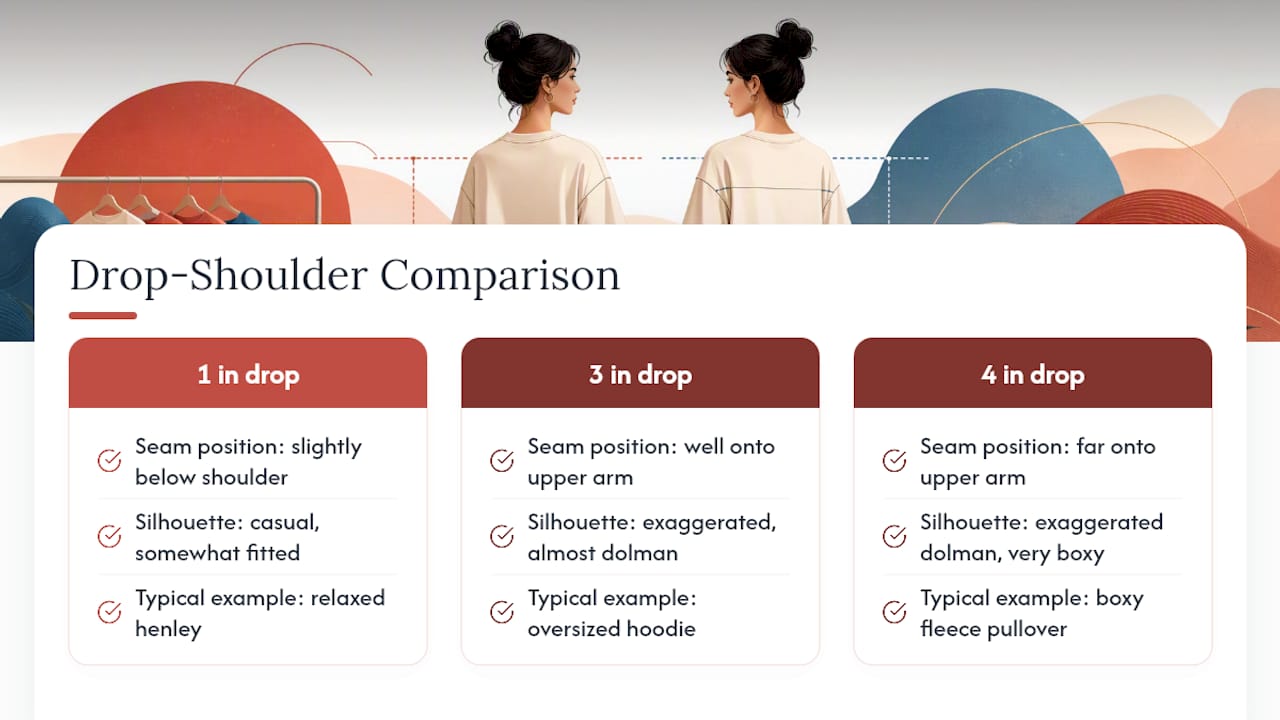
A drop shoulder moves the seam connecting sleeve to bodice away from the natural shoulder point and down onto the arm. Pattern makers measure that shift, called “the drop,” from the natural shoulder to wherever the new seam falls. A drop-shoulder style typically places that seam below the shoulder point by a small to moderate amount, and the bigger the number, the boxier the garment looks.
Construction-wise, this cut skips shoulder shaping entirely. The bodice edge runs straight instead of curving into a fitted armhole, which removes the need for eased sleeve caps or precisely calculated armholes. That’s exactly why knitting patterns lean on drop shoulders so heavily: fewer shaping steps means fewer chances for a beginner to mess up a sweater.
A slight drop, around an inch, reads as casual but still somewhat fitted; think a relaxed henley. An extreme drop, three or four inches or more, produces the exaggerated, almost dolman look you see on oversized hoodies and boxy fleece pullovers.
How Drop Shoulders Change Fit and Function
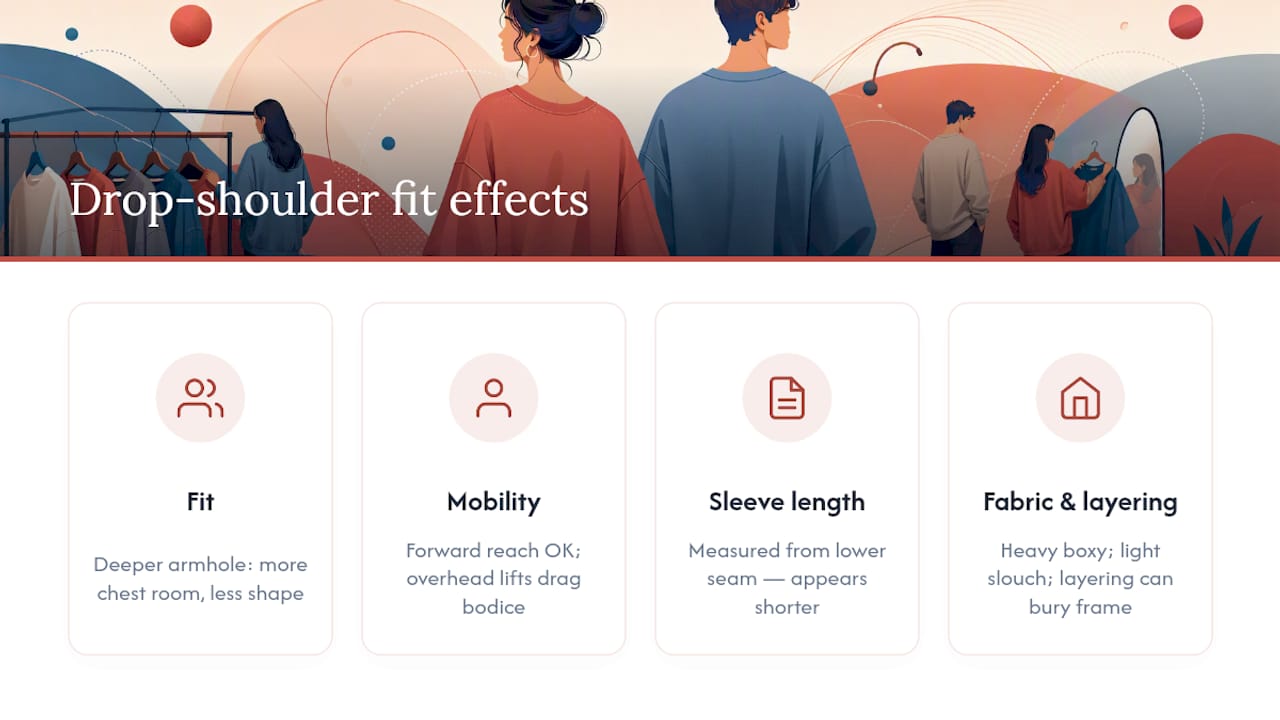
Move the seam down, and the armhole opens up with it. That deeper armhole is the trade you’re making for comfort: more room across the chest and shoulders, less shape hugging your frame.
Arm mobility takes a hit in a specific way. You can reach forward comfortably, but lifting your arm straight overhead in a heavily dropped garment tends to drag the whole bodice up with it, since there’s no shaped cap to let the sleeve pivot independently.
Sleeve length gets confusing fast. Because the sleeve is measured from that lower seam point rather than from the top of the natural shoulder, a drop-shoulder sleeve can look and feel shorter than the tag suggests, even at the same actual length as a set-in sleeve. Add a heavyweight fabric like fleece or raw denim, and the extra bodice width drapes into a stiffer, more architectural box. Lightweight jersey with the same drop measurement will slouch instead of hold shape. That distinction matters when you’re layering: a drop-shoulder hoodie over a fitted tee works because the volume stacks in one direction, but two loose, dropped layers together can bury your frame.
Who Drop Shoulder Flatters (and Who It Can Overwhelm)
If you’ve got narrow or sloped shoulders, a drop shoulder is one of the easiest ways to add visual width up top without buying a size up everywhere else. The straight bodice line reads as structure even when the fit is loose, which balances out a smaller shoulder frame better than a fitted set-in sleeve would.
Broad-shouldered or petite, shorter-torso frames need more caution. An aggressive drop on an already-wide shoulder line can push the silhouette past relaxed into shapeless, and on a shorter frame it can shorten the torso visually. The fix is usually simple: size down slightly, or pick a garment with a shallower drop, an inch or so, rather than the extreme three-to-four-inch version.
A lot of this comes down to intent. Chasing a slouchy streetwear look means embracing the biggest drop you can find. Going for something that still reads polished means picking a subtler drop and pairing it with fitted pieces elsewhere.
Styling a Drop-Shoulder Piece So It Looks Intentional
The fastest way to make a drop-shoulder top look deliberate rather than sloppy is contrast. Pair the loose upper half with something fitted below the waist, since balancing a dropped-shoulder top with fitted trousers or a tailored skirt keeps the proportions from reading as one shapeless block.
A few reliable formulas:
- Boxy fleece hoodie tucked into slim straight-leg denim, sleeves pushed up to the elbow.
- Drop-shoulder tee layered under an open denim jacket, both loose but the jacket adding a defined edge.
- Oversized sweatshirt with leggings or joggers for an all-relaxed look that still has a clear top-to-bottom shape.
Fabric weight decides how far you can push the size. Heavier knits and fleece hold their drop and look intentional even sized up; lightweight cotton jersey in the same oversized cut can look like you grabbed the wrong size. When in doubt, true-to-size is safer for lighter fabrics, and sizing up by one is usually the ceiling for anything you want to wear regularly rather than as a one-off statement piece.
Pro Tip: If you’re tucking a drop-shoulder top to reduce bulk at the waist, only tuck the front and sides loosely, half-tuck style. A full tuck on a wide bodice tends to bunch up fabric right where you’re trying to look streamlined.
Drop Shoulder vs Set-In Sleeve vs Raglan
Each of these three sleeve constructions solves the shoulder-to-arm connection differently, and the differences show up the moment you move.
| Feature | Drop Shoulder | Set-In Sleeve | Raglan |
|---|---|---|---|
| Where seam sits | 1 to 4 inches below natural shoulder | At the natural shoulder point | Diagonal, from underarm to neckline |
| Silhouette effect | Boxy, relaxed | Structured, fitted | Softer structure, sloped shoulder |
| Movement | Restricted overhead reach | Best range of motion | Good range, easy shoulder mobility |
| Tailoring complexity | Low, no shoulder shaping | High, eased cap and curved armhole | Moderate, diagonal seam shaping |
| Typical uses | Hoodies, streetwear, oversized knits | Blazers, tailored shirts, dress shirts | Athletic wear, baseball tees |
The trade-off between drop shoulder and set-in sleeve construction comes down to casual ease versus tailored precision and arm freedom. Choose drop shoulder for a relaxed, low-effort silhouette. Choose set-in sleeve when you need a tailored shape and full arm mobility. Choose raglan when you want ease of movement without the boxiness.
What to Check Before You Buy a Drop-Shoulder Piece
Product photos and spec details tell you almost everything you need before checkout.
- Look for a photo showing the actual shoulder seam location, not just a front-facing shot.
- Check where sleeve length is measured from; brands should state whether it’s from the shoulder point or the drop seam.
- Review armhole and underarm depth if listed, since a deeper armhole confirms a more dramatic drop.
- Compare the model’s height and the size they’re wearing against your own measurements to estimate how the drop will actually sit on you.
- If the fit lands slightly off, a tailor can usually take in the side seams to reduce bodice width without touching the shoulder line itself.
How ThePreciousLamb Shows Drop Shoulders in Product Listings
Some product pages list fabric weight and body measurements so you can judge shoulder drop before adding anything to your cart, which matters more on heavier fleece where the drop reads more dramatically. The internal guide Check Shoulder Drop Before You Buy: Drop Shoulder vs Regular walks through exactly how to spot the difference on a listing photo. Hoodies and boxy fleece pieces in the catalog are where this construction shows up most, and the Sweatshirt vs Sweater guide covers how the same drop measurement behaves differently across fabric types.
Why Designers Keep Using Drop Shoulders in Casual Fashion
Efficiency drives this cut more than trend cycles do. Dropped-shoulder construction cuts out the eased sleeve cap and shaped armhole that set-in sleeves require, which matters a lot when you’re producing heavyweight fleece or denim at scale. Fewer construction steps means faster production and fewer fit inconsistencies across a run.
The look itself also just fits where casual fashion has been heading, loose, unstructured, comfortable first. Fit and fashion aren’t fighting each other here. The construction shortcut happens to produce exactly the silhouette people want right now.
— Joshua
Shop Drop-Shoulder Pieces at ThePreciousLamb
Drop-shoulder construction appears across various hoodies, boxy fleece, and oversized tees, helping avoid guesswork about the meaning of “relaxed fit” labels.

The Contrast-Stitched Boxy Fleece Zip Hoodie shows the drop-shoulder seam clearly in its product photos, and the Snow Washed Distressed Panel Pocket Hoodie is another solid reference point if you want to compare seam placement across two different weights. For a broader look at the full range, the complete collection covers hoodies, fleece, and tees where this construction shows up most. Before purchasing, reviewing product photos and confirming shoulder seam location against your own measurements can help ensure a good fit and reduce returns.
Sources
For the dictionary definition, Merriam-Webster’s entry on dropped shoulder is the standard reference. For construction and measurement specifics, SewGuide’s breakdown of drop-shoulder style and AZKnit’s comparison of drop shoulder versus set-in sleeve cover the sewing and knitting side in detail.
FAQ
Does Drop Shoulder Mean Oversized?
No. Drop shoulder describes where the seam sits, not the overall garment size. A drop-shoulder top can be cut true to size; it just adds width and a boxier shape at the shoulder and bodice regardless of size.
How Do I Fix a Dropped Shoulder Fit Issue?
If a drop-shoulder garment fits too wide through the body, a tailor can usually take in the side seams without touching the shoulder seam itself. If the sleeve feels too long or too short, check whether the length was measured from the drop seam or the natural shoulder before assuming the size is wrong.
Who Should Wear a Drop Shoulder?
Anyone wanting a relaxed, casual silhouette, but it’s especially useful for narrow or sloped shoulders since it adds visual width. Broader shoulders or shorter torsos generally look better in a shallower drop rather than an extreme one.
What’s the Difference Between Drop Shoulder and Regular Fit?
A regular, set-in sleeve sits right at the natural shoulder point and follows a curved, shaped armhole for a closer fit. A drop shoulder moves that seam down the arm and skips the shaping, trading fitted structure for a looser, boxier look, as covered in ThePreciousLamb’s drop shoulder versus regular fit guide.