
Gender-neutral clothing means garments designed, marketed, or worn without signaling a specific gender through fit, color, or silhouette. The term can describe a brand’s design choices, a marketing category, or simply how a person chooses to wear an item. The Cambridge Dictionary defines it as anything relating to or usable by any gender, but retail usage stretches that definition in different directions depending on who’s selling the clothes.
TL;DR:
- Genuine gender-neutral garments are designed with specific pattern adjustments to avoid gendered shaping, not just labeled as unisex or oversized.
- Shopping for these pieces requires measuring your body, reviewing fit testing practices, and trying items with your layering habits in mind, as size charts can be misleading.
- The term gender-fluid refers to how communities adopt clothing over time, not to a garment’s cut, which is distinct from unisex design based on manufacturing decisions.
- Most true gender-neutral clothing features neutral colors and minimal detailing, but oversized fits alone do not ensure inclusivity without proper patterning and fit testing.
- Retailers often confuse gender-neutral, unisex, and androgynous, but understanding their differences helps in selecting garments that genuinely suit varied body types.
Table of Contents
- What Does Gender-Neutral Clothing Mean in Practice?
- Gender-Neutral vs. Unisex vs. Androgynous vs. Gender-Fluid
- How Unisex and Gender-Neutral Fashion Evolved
- What Gender-Neutral Design Actually Looks Like on the Rack
- How to Shop for Gender-Neutral Clothing
- Legal and Social Recognition of Gender-Neutral Clothing
- Brands and Designers Known for Gender-Neutral Design
- Why Gender-Neutral Clothing Shapes How People See Themselves
- What Inclusive Design Actually Requires
- Find Gender-Neutral Staples Built for Real Fit
- Sources
What Does Gender-Neutral Clothing Mean in Practice?
The dictionary definition is simple: something “not relating to either the male or female sex.” That’s the baseline the Cambridge Dictionary offers, and it’s a useful anchor because retail marketing tends to complicate things.
In stores and on product pages, “gender-neutral” gets applied in at least three different ways, and mixing them up is where most confusion starts.
- As a design category: the garment itself is patterned to avoid gendered shaping, fitting a range of body types without defaulting to a “men’s” or “women’s” block.
- As a marketing label: a brand slaps the term on a collection to signal inclusivity, sometimes without changing the underlying pattern at all.
- As a personal practice: a wearer chooses to dress outside gendered categories regardless of how the label on the tag was written.
That third point matters more than most articles admit. A flannel shirt cut and marketed as “men’s” can be worn gender-neutrally by anyone who buys it and wears it that way. The label on the tag doesn’t control how a piece functions in someone’s closet. Documentary coverage from All Arts points out that the industry itself hasn’t settled on one consistent definition, which is part of why shoppers feel confused walking into a store that has a “gender-neutral” rack next to separate men’s and women’s sections.
Gender-Neutral vs. Unisex vs. Androgynous vs. Gender-Fluid
These four terms get used interchangeably online, but they describe different things, and knowing the difference changes how you shop.
- Gender-neutral describes intent: a garment made or worn without gendered signaling built in.
- Unisex is older retail language for a single fit or size run marketed to everyone. It’s about sizing convenience, not necessarily thoughtful pattern design.
- Androgynous describes a visual style, usually one that blends traditionally masculine and feminine elements into a single silhouette.
- Gender-fluid describes usage over time rather than a fixed product. Research from Columbia Business School frames gender-fluid fashion as clothing that becomes “fluid” because people across genders adopt it consistently, not because a designer engineered fluidity into the seams.
That last distinction is the one most shoppers miss. A garment isn’t gender-fluid on a hanger. It becomes gender-fluid through how a community of wearers actually uses it. Unisex, by contrast, is a manufacturing decision made before the garment ever reaches a rack. When you’re shopping, that means a “unisex” tag tells you about the size chart, while “gender-fluid” tells you almost nothing concrete about the cut at all.
How Unisex and Gender-Neutral Fashion Evolved
The idea of clothing without strict gender rules isn’t new. It’s been building for more than a century, in fits and starts tied to bigger social shifts.
- Victorian dress reform (late 1800s): Reformers pushed back against corsets and restrictive skirts, arguing practical clothing shouldn’t be dictated by sex.
- 1960s unisex boom: Designers began marketing identical silhouettes, think simple tunics and straight-leg pants, to men and women alike, riding the counterculture’s rejection of rigid norms.
- 1980s androgynous movement: Musicians and designers pushed sharp, blended silhouettes into the mainstream, making androgyny a visible style statement rather than a niche.
- 2010s to 2020s gender-neutral and gender-fluid visibility: Runway shows added combined or non-gendered categories, and retailers began labeling entire collections “gender-neutral,” often years before their pattern-making caught up to the marketing.
Industry milestones track this shift. The CFDA has adjusted award categories to reflect blended presentations, and Vogue has covered runway experiments in gender-neutral design for years, treating it as a legitimate design conversation rather than a novelty. But coverage from Columbia Business School raises a sharper point: because masculine-coded styles carry more social power, they convert into “neutral” defaults far more easily than feminine-coded ones do. A boxy jacket becomes “gender-neutral.” A wrap dress rarely gets offered that label, even when it could fit anyone. That imbalance shapes which styles retailers actually greenlight.
What Gender-Neutral Design Actually Looks Like on the Rack
Spotting genuine gender-neutral design takes a slightly trained eye, because “neutral” gets used loosely.
The technical work happens in the pattern, not the color story. Designers building true gender-neutral pieces adjust darting, waist shaping, and sleeve cap curves so the garment doesn’t quietly default to a men’s block with a looser fit. That’s a deliberate grading decision, according to Columbia Business School, not something that happens by accident when a brand just orders a size run in extra small through extra large.
A few garment types tend to read as gender-neutral almost by default:
- Boxy, straight-hemmed tees with minimal shaping through the torso
- Straight-leg or relaxed trousers without a fitted waist dart
- Denim jackets with a loose, structured cut rather than a tailored waist
- Zip hoodies and fleece pullovers, which have always skewed toward loose fits
Color and detailing follow a similar logic. Neutral palettes (olive, gray, indigo, black) and utilitarian details like patch pockets or contrast stitching show up constantly in gender-neutral lines. But there’s a catch worth flagging directly: an oversized black sweatshirt isn’t automatically inclusive just because it’s shapeless. NBC News reporting found that many gender-fluid or gender-neutral collections collapse into the same baggy, monochrome default, which sidesteps the harder work of fit-testing across different body types rather than solving it.
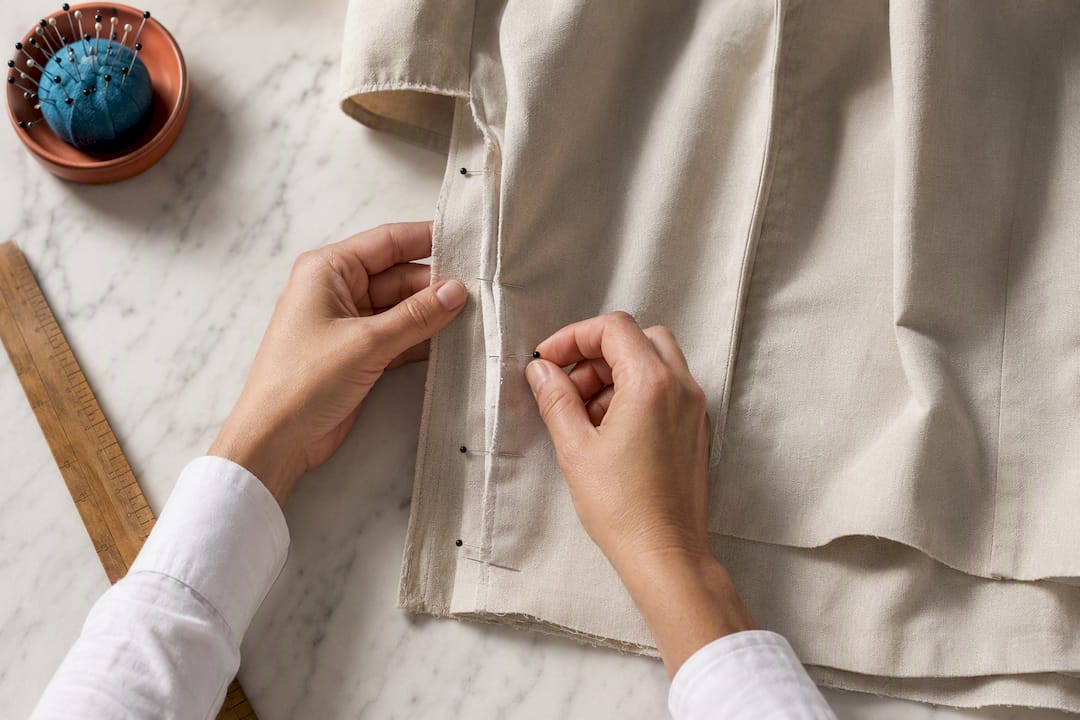
Pro Tip: If a boxy garment reads too oversized for your frame, a tailor can take in the side seams without touching the shoulder or collar, keeping the neutral silhouette while improving how it actually sits on your body.
How to Shop for Gender-Neutral Clothing
Sizing is where gender-neutral shopping gets genuinely tricky, mostly because “unisex” size charts don’t always mean what shoppers assume.
- Measure yourself before trusting a size label. Unisex charts are frequently built off a single body type, usually a straight men’s block, so a size medium can fit wildly differently across brands.
- Check shoulder seams and sleeve length first. These two points reveal more about true fit than chest or waist measurements, since a boxy cut can mask sizing problems everywhere else.
- Try on with your actual layering habits in mind. A hoodie that fits loose alone might feel restrictive over a sweater, so try it the way you’ll actually wear it.
- Ask brands direct questions about fit testing. Reputable brands can tell you what base pattern a piece started from and whether it was tested across multiple body types. Brands using diverse fit models tend to produce genuinely inclusive results, according to NBC News, rather than a single silhouette stretched across a size run.
- Look beyond the gender-neutral rack. Mixed-section retailers, unisex sections, and local tailors all offer paths to a better fit than sticking strictly to one labeled category. A guide to unisex tee fit walks through exactly what to check before buying.
Legal and Social Recognition of Gender-Neutral Clothing
Retail labeling and law don’t move at the same speed, and that gap matters if you’re trying to understand why “gender-neutral” means something different depending on where you shop or which policy you’re reading about.
In the United States, there’s no federal law that regulates how clothing must be labeled by gender, which is why the term stays loosely defined across brands. Some school districts and workplaces have adopted gender-neutral dress code policies, dropping separate rules for “boys” and “girls” or “men” and “women” in favor of a single standard applied to everyone. Those policy shifts tend to follow broader nondiscrimination protections rather than clothing-specific statutes.
Socially, acceptance of gender-neutral dressing varies sharply by region, industry, and generation, and that variation shows up in retail decisions long before it shows up in law. A retailer expanding into a market with more conservative norms around dress will often market the identical garment differently, sometimes as “streetwear” instead of “gender-neutral,” to avoid friction. That’s a business decision, not a legal requirement, but it illustrates how social context shapes what gets called what.
The practical takeaway for shoppers: don’t assume a “gender-neutral” label carries any consistent meaning across borders or even across two stores in the same city. Read the actual garment description, not just the category tag, and treat regional norms as a factor in how boldly a brand will market inclusive design.
Brands and Designers Known for Gender-Neutral Design
A handful of design approaches show up repeatedly across brands working seriously in this space, even when specific labels vary. High-fashion houses have run combined runway shows for years, presenting menswear and womenswear side by side or eliminating the distinction entirely, which pushed the concept into mainstream retail conversation well before most direct-to-consumer brands picked it up.
On the streetwear and casual side, the brands getting real credit for gender-neutral design tend to share one habit: they publish or discuss their fit-testing process rather than just slapping a label on a size chart. That transparency is what separates genuine design work from marketing dressed up as inclusivity. Trend coverage of the 2026 designer landscape shows silhouette experimentation continuing to move from runway shows into everyday casualwear, particularly in outerwear and layering pieces where a boxy fit already reads as neutral by default.
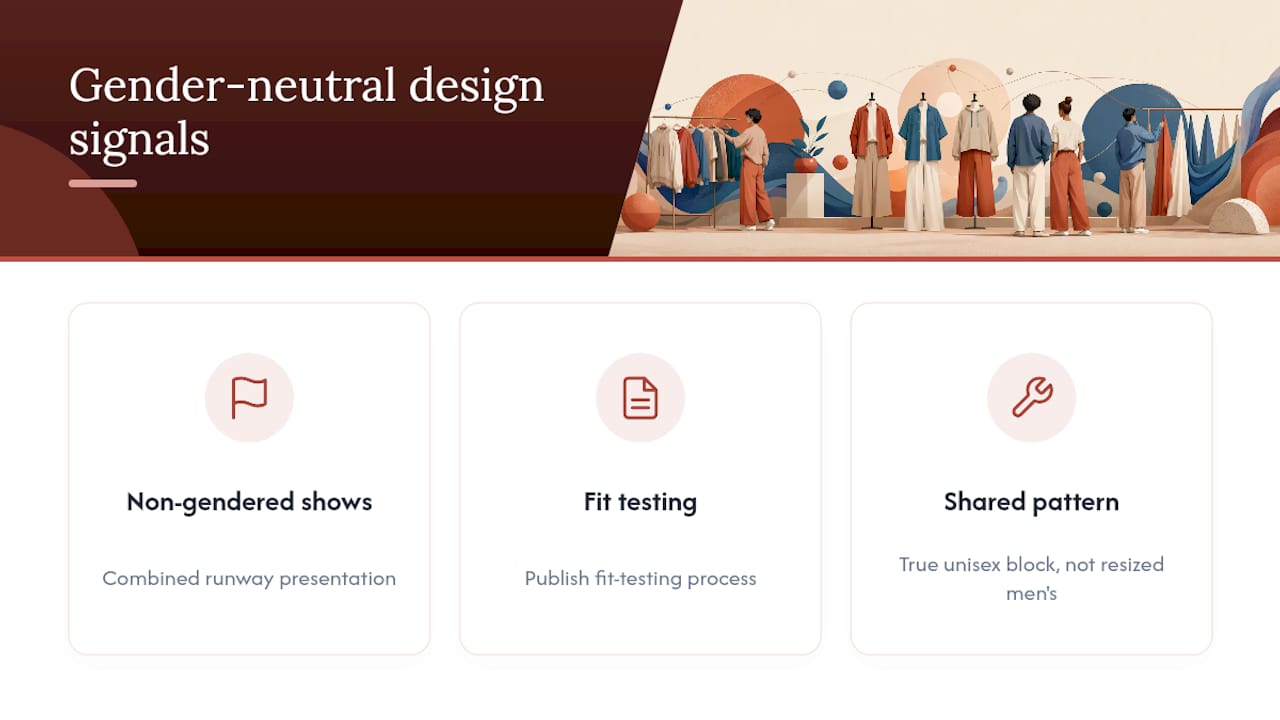
Independent and direct-to-consumer labels have an advantage here that big legacy brands sometimes lack: they can build a single, well-tested unisex pattern from scratch instead of retrofitting decades-old men’s and women’s blocks. A well-constructed unisex cotton tee built on a genuinely shared block, rather than a resized men’s pattern, is a good example of what that looks like at the product level.
Why Gender-Neutral Clothing Shapes How People See Themselves
Clothing is one of the most immediate ways people communicate identity, often before they say a word. Community-sourced resources on nonbinary experience emphasize that there’s no single “look” tied to any gender identity, and presentation varies enormously from person to person, which is exactly why rigid gendered dress codes feel limiting to so many people regardless of how they identify.
The deeper impact isn’t really about the clothes. It’s about the option to opt out of a binary choice entirely. PBS coverage frames gender-neutral fashion’s real significance as wearer empowerment, not a marketing trend, arguing that meaningful change happens when brands stop gendering entire product lines and instead focus on fit and comfort for whoever picks up the garment.
That shift has a ripple effect beyond the individual shopper. When stores stop splitting entire departments by gender, they change the default experience of shopping itself, making it less about which section you’re “supposed” to browse and more about which pieces actually work for your body and your taste. Perceptions shift slowly through repetition: the more often people see a hoodie or a denim jacket worn without a gendered assumption attached, the less that assumption holds cultural weight the next time someone reaches for the same piece.
What Inclusive Design Actually Requires
Building genuinely gender-neutral pieces takes more than choosing a neutral color palette. It means testing fit across different body types before a garment ever gets a “gender-neutral” tag, which is a step a lot of collections skip.
Casual staples like boxy tees, straight-cut denim jackets, and fleece zip hoodies tend to work well as a starting point precisely because their looser construction already avoids the tightest gendered shaping. Some brands build their casual lineup around those same shapes, treating fit as something to get right for the wearer rather than a single body type. Community feedback and behind-the-scenes product development, the kind Thepreciouslamb shares through its ongoing storytelling, feed directly into which cuts and sizes make it to the final collection. That’s a small-scale version of the fit-testing approach NBC News points to as the difference between real inclusivity and a marketing label.
— Joshua
Find Gender-Neutral Staples Built for Real Fit
Everything covered above points to one practical conclusion: the best gender-neutral pieces are the ones built with intentional pattern work, not just a loose fit and a neutral color. Some casual lineups lean into that same principle, with boxy silhouettes and straight cuts designed to work across body types rather than defaulting to one shape and calling it universal.

The Contrast Striped Lapel Collar Sweatshirt is a straightforward example: a relaxed, boxy fit with detailing that doesn’t lean masculine or feminine. For outerwear, the Denim Vintage Washed Heavyweight Jacket follows the same structured, loose-cut logic discussed earlier in the design section, the kind of silhouette that reads neutral without trying too hard. And if you’re building a capsule wardrobe around versatile layers, the Snow Washed Distressed Panel Pocket Hoodie fits the utilitarian, unisex-leaning aesthetic covered throughout this piece.
Browse the current lineup, check the fit notes on each product page, and pick pieces based on how they’re actually cut, not just what section they’re filed under.
Sources
- Is Gender‑Fluid Fashion Repackaging Male Style? | Columbia Business School
- What is Gender‑Neutral Fashion and Why it’s Needed | PBS
- What is gender-fluid clothing? Fashion industry experts explain | NBC News
- What Is Gender‑Neutral Fashion and Why It’s Needed | ALL ARTS
- gender-neutral | Definition from the Cambridge English Dictionary