
GSM in clothing stands for grams per square meter, the universal metric for fabric weight. Higher GSM means a heavier, denser fabric; lower GSM means lighter and airier. That single number tells you more about how a garment will feel, drape, and perform than almost any other spec on a product page. According to industry research, 79% of apparel consumers rank quality and price among their top purchase considerations, and GSM is one of the fastest ways to screen for it before you buy.
Here is a quick cheat-sheet to orient you:
- 120–160 GSM: Lightweight tees, summer tanks, mesh fabrics
- 160–220 GSM: Everyday retail tees, polos, casual shirts
- 220–280 GSM: Midweight sweatshirts, structured tees, fleece-lined pieces
- 280–350 GSM: Standard hoodies, sweatpants, heavier knits
- 350–450+ GSM: Heavyweight hoodies, boxy streetwear shirts, structured outerwear
Table of Contents
- What does GSM in clothing actually measure, and how is it tested?
- How GSM affects the way fabric looks, feels, and holds up
- What GSM range fits each garment type?
- Does a higher GSM automatically mean better quality?
- How to choose GSM based on climate, activity, and fit
- How to check GSM when you are shopping online or in store
- Why brands and manufacturers specify GSM in tech packs
- Key Takeaways
- Why GSM shapes every fabric decision at Thepreciouslamb
- Thepreciouslamb pieces built around the right fabric weight
- Useful sources for going deeper on fabric weight and testing
What does GSM in clothing actually measure, and how is it tested?
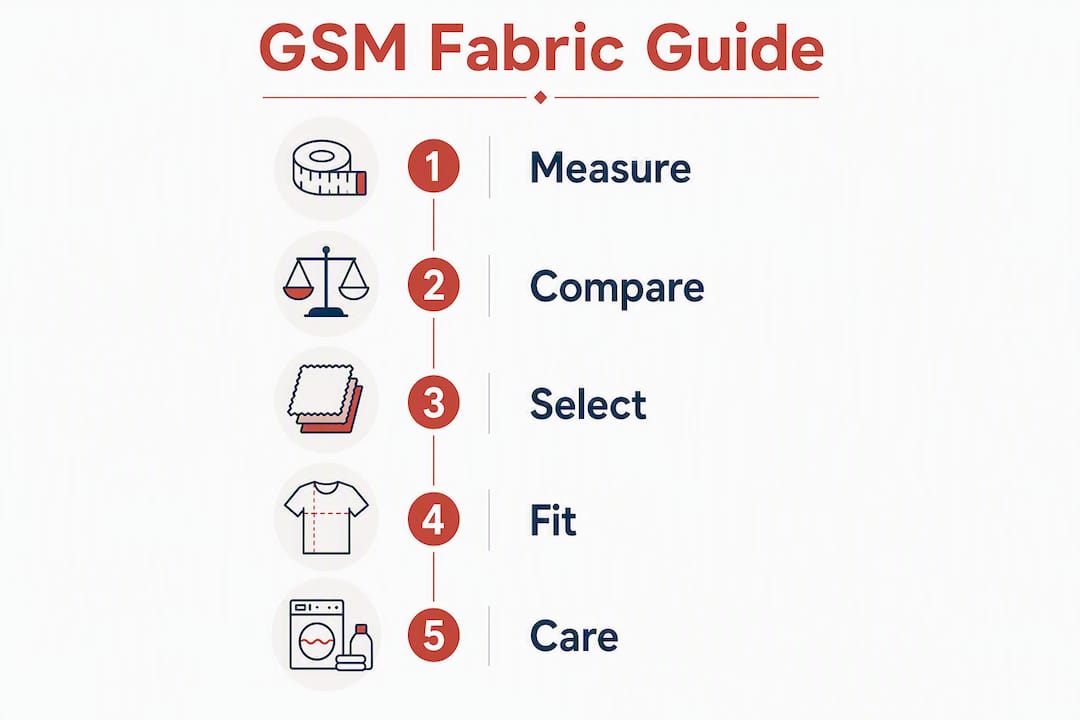
GSM measures the mass of one square meter of fabric in grams. That is it. The number comes from a standardized weighing process governed by testing protocols such as ASTM D3776, which specifies how samples are cut and conditioned before measurement. Labs use a circular GSM cutter (typically 100 cm²) paired with a calibrated digital scale, then scale the result up to one square meter.
You can replicate a basic version at home or in a small production setting:
- Cut a 10×10 cm square from the fabric (that is 0.01 m²).
- Weigh it on a precise digital scale in grams.
- Divide the weight by 0.01 to get GSM. A 2.5 g sample from a 10×10 cm swatch equals 250 GSM.
The math is simple. The tricky part is cutting a perfectly even sample and using a scale accurate to at least 0.1 g.
Pro Tip: When ordering from a supplier, ask for the swatch GSM alongside pre-wash shrinkage data and the production tolerance. A standard tolerance is ±5%, meaning a fabric spec’d at 300 GSM could legally arrive anywhere from 285 to 315 GSM. Know that range before you approve a bulk run.
How GSM affects the way fabric looks, feels, and holds up
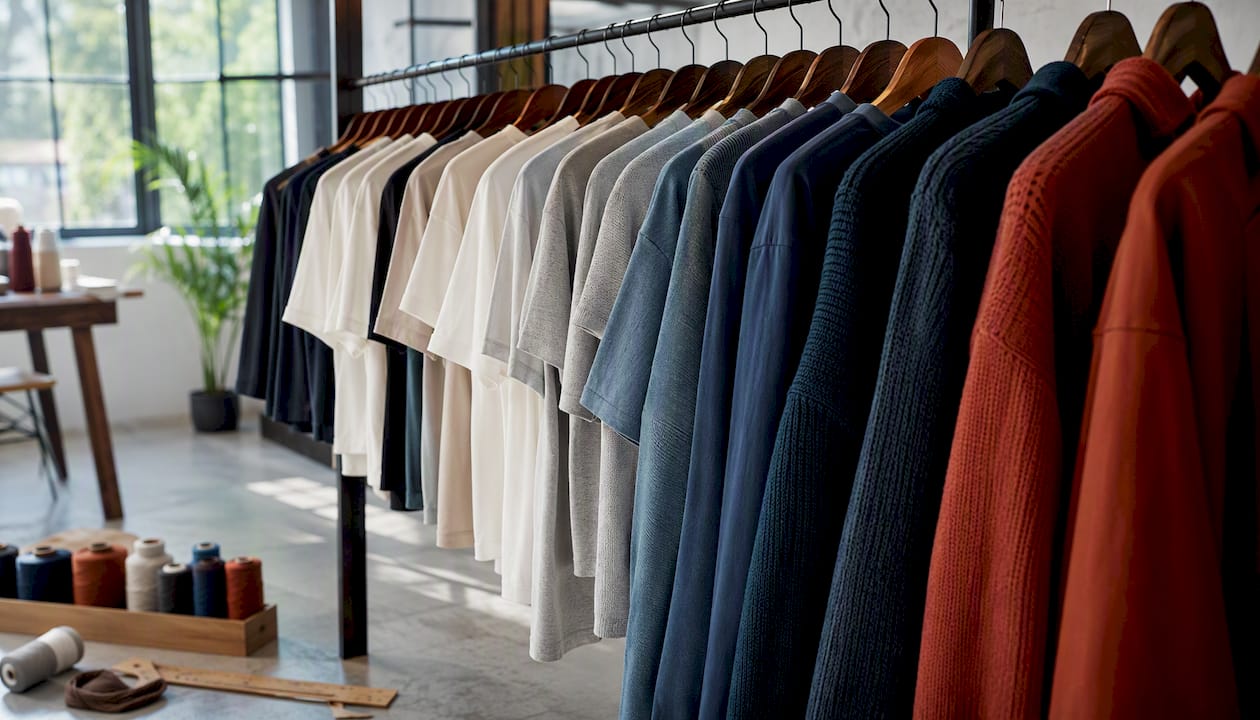
GSM influences nearly every physical property of a garment, but the relationship is not always linear.
- Thickness vs. mass: GSM measures mass, not physical thickness. A 300 GSM fleece and a 300 GSM denim feel completely different because fiber type, knit gauge, and finishing all shape the hand-feel independently of weight.
- Warmth: Higher GSM generally means more fiber per area, which traps more air and adds insulation. A higher GSM hoodie will keep you warmer than a lower GSM version in the same fiber blend.
- Drape and silhouette: Lighter fabrics (under 180 GSM) flow and cling; heavier ones (above 300 GSM) hold their shape and create structure. That is why boxy streetwear tees are often spec’d at 240–260 GSM rather than the 160 GSM you find in a basic retail tee.
- Opacity: Lower GSM fabrics transmit more light, especially in white or pale colors. Lower GSM white tees can often show through, while higher GSM versions usually will not.
- Durability and abrasion resistance: Heavier fabrics resist pilling and wear better over time, though fiber quality matters just as much. A ringspun cotton hoodie can outlast an open-end spun version with the same GSM under the same conditions.
- Decoration performance: Screen printing and DTG work across most GSM ranges, but dense embroidery usually requires a higher GSM to prevent puckering. Lightweight fabrics under 160 GSM can distort under heavy ink deposits.
What GSM range fits each garment type?
Industry conversion guides use the formula oz/yd² × 33.906 = GSM to translate North American spec sheets into metric. A 6.0 oz fabric equals roughly 203 GSM, which helps when comparing supplier quotes that use different unit systems.
| Garment | Typical GSM Range | Notes |
|---|---|---|
| Summer / mesh tees | 120–160 GSM | Breathable, lightweight; often semi-sheer in pale colors |
| Everyday retail tees | 160–200 GSM | Standard for fast fashion and basics |
| Premium / structured tees | 200–260 GSM | Holds shape better; popular in streetwear |
| Polos and casual shirts | 180–220 GSM | Balance of structure and breathability |
| Sweatshirts | 240–300 GSM | Midweight comfort; year-round staple |
| Hoodies (standard) | 280–350 GSM | Most common retail hoodie range; good warmth and drape |
| Hoodies (heavyweight) | 350–450+ GSM | Dense, structured; premium streetwear positioning |
| Activewear / leggings | 160–220 GSM | Stretch-focused; lower GSM for moisture management |
| Denim | 280–350 GSM | Varies by weave weight; heavier = more structure |
| Outerwear / jackets | 350–450+ GSM | Depends heavily on lining and shell construction |
Streetwear brands often push tees into the boxy, structured silhouette often uses fabrics with higher GSM than lighter fabrics can provide. That overlap between “tee” and “sweatshirt” territory is intentional, not a spec error.
Does a higher GSM automatically mean better quality?
No. GSM tells you how much fiber is packed into a square meter. It says nothing about what kind of fiber, how it was spun, or how the fabric was finished. Two fabrics with identical GSM can feel completely different depending on yarn construction and finishing treatments.
Use GSM as a first filter, not a final verdict. Here is what to check alongside it:
- Fiber composition: 100% ringspun cotton at 280 GSM performs differently than a 60/40 cotton-polyester blend at the same weight. Ringspun yarn is smoother, softer, and more durable.
- Yarn type: Ringspun cotton is combed and twisted for a tighter, softer hand. Open-end (rotor-spun) cotton is faster and cheaper to produce but feels rougher and pills sooner.
- Stitch density and knit gauge: A tighter knit at a given GSM is more durable and less prone to snagging than a loose one.
- Finishing: Enzyme washing, brushing, and garment dyeing all change how a fabric feels without changing its GSM. A brushed 300 GSM fleece feels dramatically softer than an unbrushed version.
- Shrinkage data: Fabric GSM can increase after laundering because shrinkage compresses the fibers. Always request pre-washed sample data before committing to a large order.
How to choose GSM based on climate, activity, and fit
Matching GSM to end-use is where the spec becomes genuinely useful. Higher GSM supports structure and perceived premium value; lower GSM prioritizes breathability in warm climates.
| Use Case | Recommended GSM | Why |
|---|---|---|
| Hot-weather / tropical | 120–180 GSM | Breathes well; dries fast |
| Year-round casual tee | 180–220 GSM | Versatile; not too heavy for summer |
| Transitional layering piece | 220–280 GSM | Adds warmth without bulk |
| Cold-weather hoodie | 300–380 GSM | Enough insulation for fall and winter |
| Heavyweight streetwear | 350–450+ GSM | Structure and premium hand-feel |
| Performance activewear | 160–220 GSM | Stretch and moisture management first |
One thing most shoppers miss: the same pattern cut in a heavier GSM will feel tighter. A size medium in 180 GSM cotton drapes loosely; the same cut in 320 GSM sits closer to the body because the fabric has less give and more mass. If you are sizing a boxy oversized silhouette, a higher GSM actually helps the garment hold that shape rather than collapsing inward. For fitted styles, go lighter and let the stretch or drape do the work.
For seasonal styling decisions, think of GSM as your climate dial: turn it down for summer, up for fall and winter, and land somewhere in the 200–260 GSM range for pieces you want to wear across multiple seasons.
How to check GSM when you are shopping online or in store
Most shoppers never see a GSM figure on a product page, but it is there if you know where to look.
Online:
- Check the product description for “fabric weight” or “GSM” listed in the specs section.
- If the spec sheet lists oz/yd², multiply by 33.906 to convert to GSM.
- Look at product photos for visual cues: does the fabric drape softly or hold a structured shape?
- Read reviews for mentions of “thin,” “thick,” “heavy,” or “see-through.”
In store or when requesting samples:
- Ask the sales associate or supplier for the fabric spec sheet.
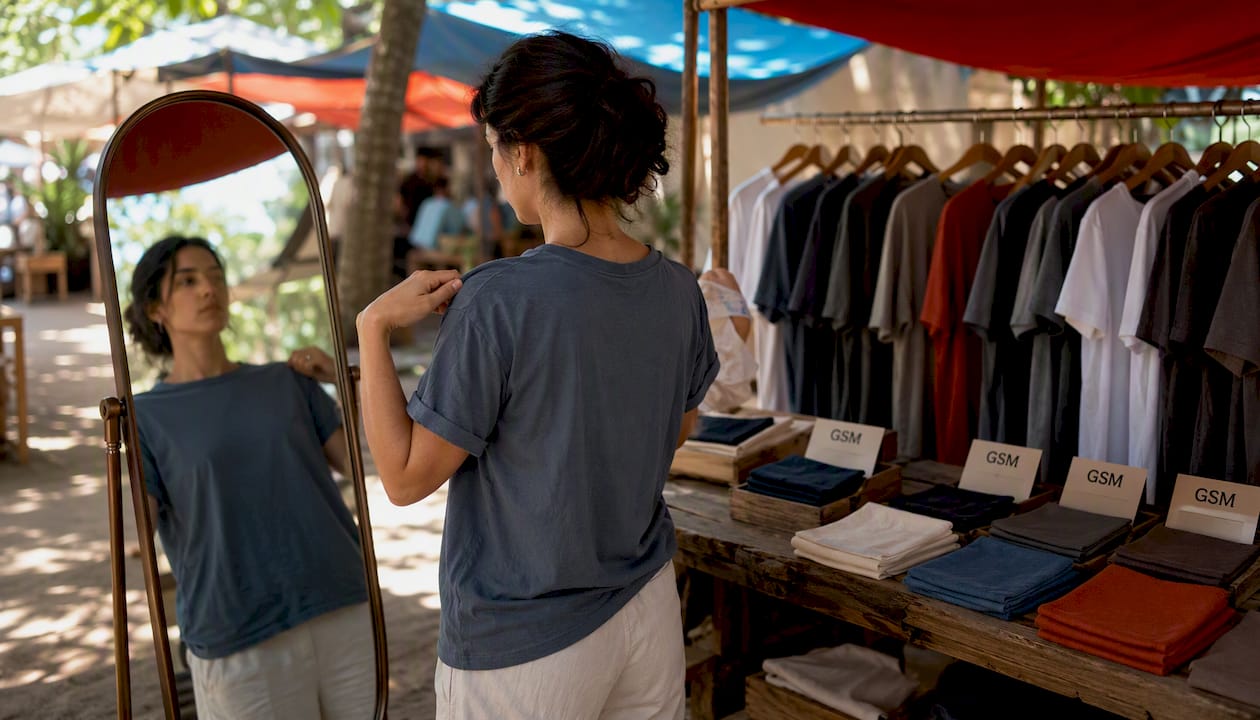
- Request a physical swatch and do a drape test: hold it at arm’s length and let it fall. Stiff = heavier GSM; fluid = lighter.
- Hold the swatch up to a light source to check opacity.
- Ask for pre-washed GSM data and the production tolerance (±5% is standard).
- Compare it side by side with a garment you already own and like.
Garment labels in the U.S. are required to list fiber content but not GSM, so you often have to ask directly. Understanding what garment tags and labels actually tell you can save you from guessing when a spec sheet is not available.
Why brands and manufacturers specify GSM in tech packs
GSM gives brands an objective, measurable spec to include in tech packs, which removes the ambiguity that comes from describing fabric as “medium weight” or “thick.” A factory in one country and a QC inspector in another can both measure the same sample against the same number.
From a sourcing standpoint, fabric mills stock standard GSM weights. Ordering outside those standard weights often means a custom run, which raises minimum order quantities and cost. Heavier GSM also increases shipping weight, which compounds cost at scale. A brand moving from a 260 GSM to a 380 GSM hoodie is not just paying more per yard of fabric; it is paying more per unit to ship every finished garment.
Manufacturers typically publish a production tolerance of ±5%, and smart brands build that range into their QC acceptance criteria. Embroidery stability is another reason GSM appears in tech packs: factories need to know the base fabric weight before selecting stabilizer type and stitch count. A 420 GSM heavyweight piece needs a different backing than a 240 GSM midweight sweatshirt, and getting that wrong shows up as puckering or distortion in the finished embroidery.
Key Takeaways
GSM is the single most useful number on a fabric spec sheet, but it only tells part of the story: pair it with fiber type, yarn construction, and a wash test before making any final call.
| Point | Details |
|---|---|
| GSM = mass, not thickness | Higher GSM means more fiber per square meter, which affects warmth, opacity, and structure, not just physical thickness. |
| Numeric ranges by garment | Everyday tees run 160–220 GSM; standard hoodies 280–350 GSM; heavyweight streetwear 350–450+ GSM. |
| GSM is a filter, not a verdict | Fiber type, yarn spin, knit gauge, and finishing all shape final quality independently of GSM. |
| Laundering raises GSM | Shrinkage compresses fibers and can increase a garment’s measured GSM after washing; always request pre-washed sample data. |
| 79% of consumers prioritize quality and price | 79% of apparel consumers rank quality and price among their top purchase considerations, underscoring GSM’s impact on perceived quality. |
Why GSM shapes every fabric decision at Thepreciouslamb
GSM is not a back-of-the-spec-sheet detail at Thepreciouslamb. It is one of the first filters applied when choosing fabrics for a new piece. A lightweight mesh tee and a structured boxy shirt are built around completely different GSM targets because the silhouette demands it. A fabric that is too light collapses under its own drape; one that is too heavy fights the pattern and restricts movement.
The brand’s heavier pieces, like boxy short-sleeve shirts, are spec’d at weights that hold a clean, structured shoulder without needing interfacing. The lighter knits prioritize breathability and a relaxed drape. Neither choice is arbitrary. Every GSM decision connects back to how the finished garment should look on a body, how it should feel after twenty washes, and whether it holds up to the brand’s standard of being made with care.
What most brands get wrong is treating GSM as a cost lever rather than a design tool. Dropping 40 GSM to save a few cents per unit changes the entire character of a garment, and customers notice, even when they cannot name what changed.
Thepreciouslamb pieces built around the right fabric weight
Knowing your GSM range is one thing. Finding pieces that actually hit it is another.

Thepreciouslamb builds its collection around deliberate fabric weight choices across the full GSM spectrum. The Unisex Raglan Sleeve Mesh Boxy T-Shirt sits in the lightweight range, designed for breathability and a relaxed summer silhouette. The Contrast Striped Lapel Collar Sweatshirt lands in midweight territory, structured enough for cooler days without the bulk of a full hoodie. For readers who want the heavier, more structured feel of a premium streetwear piece, the Unisex Boxy Heavyweight Short Sleeve Shirt delivers that 300+ GSM hand-feel in a clean, versatile silhouette. Browse the full collection at Thepreciouslamb and check each product’s fabric details to find the weight that fits your season and style.
Useful sources for going deeper on fabric weight and testing
- Understanding GSM in Fabric: What It Means for Clothing — AKCN’s practical breakdown for designers and brand founders
- GSM Fabric Weight Guide: Ranges, Testing & Pricing by Garment — Apex Fashion Lab’s glossary entry covering ISO 3801 and ASTM D3776 standards
- GSM in Fabric: Meaning, Importance & Measurement — Argus Apparel’s sourcing-focused guide with consumer preference data
- What Is GSM in Clothing? Fabric Weight Guide — Threelayer’s guide on fiber, knit, and GSM interaction
- Why GSM in Hoodie Matters — Tack Apparel’s buyer guide for hoodie GSM categories and production tolerances
- GSM Hoodie Meaning: A Sourcing Guide for Brands & Buyers — Fexwear’s tech pack and QC perspective
- What is GSM? Weight meaning for fabric — Custom Apparel Source on laundering effects and shrinkage
- Top 3 500 GSM hoodie options — Jeeyodee’s buyer perspective on ultra-heavyweight hoodies