
Wash cold (around 30°C), turn the hoodie inside out, run a gentle cycle with mild detergent, and air-dry flat. That single routine solves the two things that ruin hoodies fastest.
- Heat shrinks fibers and warps the shoulders and cuffs.
- Friction from rough cycles and mismatched loads causes pilling and cracks printed graphics.
Check the care label first. A heavily soiled hoodie or one rated for warm water is the exception, not the rule.
Key Takeaways
Cold water, a gentle cycle, no fabric softener, and air-drying flat form the routine that protects fit, color, and texture across nearly every hoodie fabric.
| Point | Details |
|---|---|
| Default wash setting | Cold water around 30°C on a gentle cycle prevents most shrinkage and color loss. |
| Skip fabric softener | It coats fibers, reduces breathability, and can worsen pilling over time. |
| Dry flat, not hot | Heat and tumbling cause shrinkage; reshape damp and air-dry, or tumble briefly on low heat. |
| Pilling is construction-driven | Short-staple, loosely spun yarn pills faster regardless of how carefully you wash it. |
| Build quality sets the ceiling | Thepreciouslamb’s denser knits and ring-spun fleece hold shape and texture through repeated washes better than thinner constructions. |
Why Care and Construction Go Together
The hoodies people complain about losing their shape after a few washes were usually never going to hold up, no matter how carefully anyone treated them. Good technique buys real time on a well-built garment. On a cheap one, it just delays the inevitable by a wash or two. That’s the piece most care guides skip: the routine only works as well as what you’re putting into it.
— Joshua
Table of Contents
- Hoodie Care Guide Basics: Prepping a Load Before You Wash
- What Washing Machine Settings Prevent Shrinkage?
- How Should You Dry a Hoodie Without Shrinking It?
- Why Does My Hoodie Pill and Can You Stop It?
- Caring for Different Hoodie Fabrics and Printed Designs
- Fast Stain Fixes That Won’t Wreck the Fabric
- Reviving a Tired Hoodie Without Replacing It
- How Often Should You Wash and Store a Hoodie?
- Sources
Hoodie Care Guide Basics: Prepping a Load Before You Wash
Most damage happens before the washer even starts. Get these four steps right and you’ve already avoided the mistakes that cause most complaints.
- Read the label. Priorities in order: max temperature, machine-wash vs. dry-clean-only, and any print or embroidery warnings.
- Sort by color and fabric weight. Dark hoodies bleed onto light ones, and a heavyweight fleece tumbling against a bath towel or raw denim creates the abrasion that causes pilling.
- Close it up. Zip zippers, tie drawstrings, and turn the hoodie inside out to shield the printed or brushed side.
- Use a mesh bag for anything delicate, oversized, or covered in appliqué.
For spot treatment, blot (never rub) fresh stains immediately, apply a dab of mild dish soap or enzyme detergent, and let it sit five to ten minutes before washing.
Pro Tip: Turn a zip hoodie inside out and zip it fully closed before it goes in the drum. An open zipper pull is the single most common cause of snagged fleece and torn mesh bags.
What Washing Machine Settings Prevent Shrinkage?
Cold water, around lukewarm temperatures typical for cold wash settings, is the default for almost every hoodie you own. Cold water and a gentle cycle protect fleece hoodies from shrinkage and pilling, while high heat during drying is what actually does the damage in most cases. Reserve 40°C for hoodies the label explicitly clears for warmer water and only when they’re genuinely dirty.
A few settings matter more than people assume:
- Cycle: gentle or delicate, with a low spin speed. High spin speeds twist and stretch damp fleece before it even reaches the dryer.
- Detergent: a mild liquid detergent, measured below the fill line. Overdosing leaves residue that dulls color and stiffens the fabric.
- Skip the fabric softener. It coats the fibers, cuts breathability, and can actually make pilling worse while dulling printed graphics over repeated washes. A splash of white vinegar in the rinse cycle does more for softness without the coating problem.
- Load size: wash hoodies in a half-full drum, not a packed one. Water needs room to circulate so soil rinses away instead of just moving between garments.
A default routine of cold water, inside out, gentle cycle, no softener, and air-dry flat is what keeps most hoodies looking close to new wash after wash. It’s not complicated. It’s just consistent.
How Should You Dry a Hoodie Without Shrinking It?
Heat combined with tumbling is what actually shrinks and warps a hoodie, not the wash cycle itself. Fibers relax under moisture and heat, and the mechanical tumbling locks in whatever shape they’re in when they dry.
- Reshape while damp. Lay the hoodie flat on a towel, smooth out the shoulders and cuffs, and gently pull the hem back to its original length before it starts to dry.
- Skip the narrow hanger. If you must hang it, wait until it’s nearly dry and use a wide hanger so the shoulder seams don’t stretch into points.
- Short on time? A low-heat tumble pulled at the 15 to 20 minute mark, then finished flat, is a reasonable compromise.
Pro Tip: Drying flat on a mesh sweater rack instead of a towel on the floor lets air circulate underneath, cutting drying time without adding any heat risk.
Why Does My Hoodie Pill and Can You Stop It?
Pilling comes down to what the yarn is made of before it ever reaches your washer. Fiber length and yarn spinning determine pilling risk far more than your laundry habits do. Short-staple fibers and loosely knit fabric shed and tangle into little balls; long-staple, ring-spun yarn resists it.
- Wash inside out, always, in a gentle cycle.
- Use a mesh bag and keep hoodies away from zippers, Velcro, and rough denim.
- Skip fabric softener, since coated fibers actually pill faster once the coating wears off unevenly.
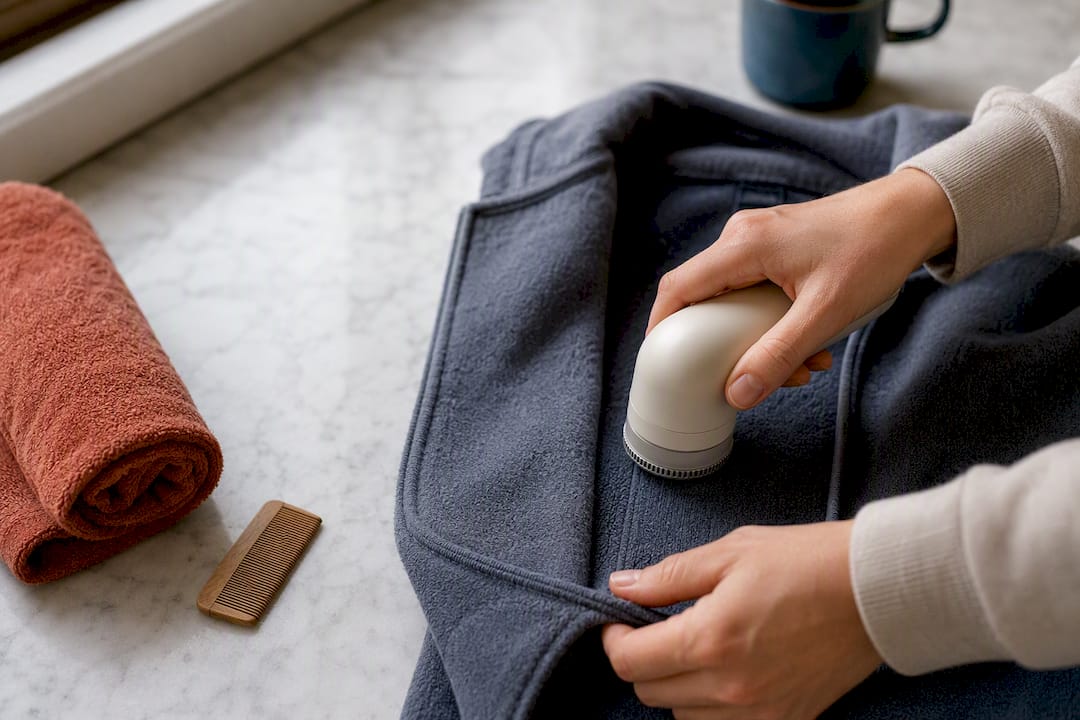
- Remove existing pills with a fabric shaver on the lowest setting, working in short strokes to avoid thinning the fabric.
If pilling shows up within a few washes on a brand-new hoodie, that’s usually a construction issue, not something you did wrong.
Pro Tip: Test a fabric shaver on an inside seam allowance first. Some brushed fleece is thin enough that an aggressive shaver head will create bald patches instead of removing pills.
Caring for Different Hoodie Fabrics and Printed Designs
Cotton and cotton-blend hoodies follow the baseline routine: cold wash, gentle cycle, reshape while still damp. Fleece needs one extra step, turn it inside out every time, since the brushed interior is what softens with wear and what fabric softener damages fastest.
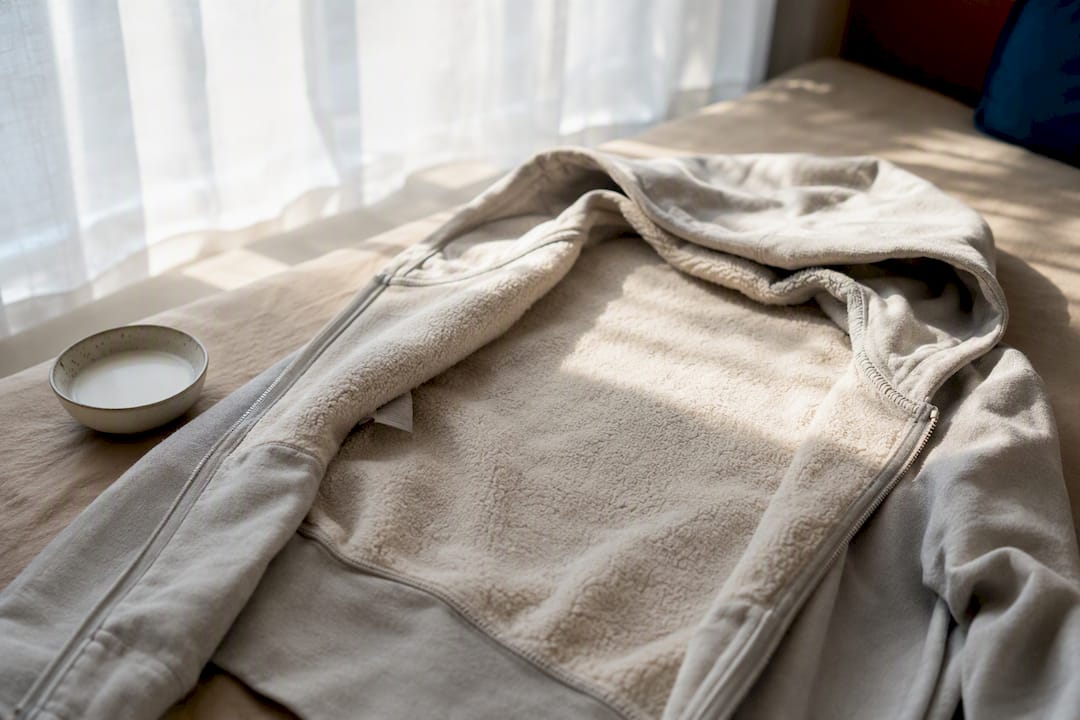
Heavyweight, high-GSM hoodies hold their shape best when folded for storage and dried flat rather than hung, since a wet, dense fleece stretches under its own weight on a hanger. Printed or DTG graphics need the most caution: always wash inside out, never iron directly on the print, and if you must touch it up, use a press cloth between the iron and the design.
Fast Stain Fixes That Won’t Wreck the Fabric
- Oil or grease: blot excess, work a drop of dish soap into the spot, let it sit ten minutes, then wash cold. Dish soap is built to break down grease, and cold water keeps the stain from setting further.
- Blood or sweat: cold soak first with an enzyme detergent. Hot water cooks the protein into the fibers, making it nearly permanent.
- Ink or dye: test a small amount of rubbing alcohol on a hidden seam before applying it to the stain. Set-in dye transfer, from a new dark garment bleeding onto a lighter one, often needs a professional cleaner rather than a home fix.
- Stubborn grease that survived a first wash: repeat the spot-treatment and a cold soak rather than jumping to hot water, since heat sets residual soil instead of removing it.
Reviving a Tired Hoodie Without Replacing It
A worn hoodie isn’t always a lost cause. A fabric shaver handles surface pilling, and an occasional vinegar rinse (a quarter cup in the wash, no detergent added that round) cuts residue buildup and restores some softness.
- Loose drawstring or a popped seam a few inches long: hand-stitch it or take it to a tailor.
- Widespread thinning at the elbows or cuffs: that’s fabric fatigue, and no amount of careful washing reverses it.
Long-staple yarns, ring-spun faces, and denser knits change what home care can achieve in the first place. A hoodie built from short-staple, loosely spun fleece will pill no matter how gently you wash it.
A hoodie made from higher-GSM fleece with a ring-spun face holds its structure through dozens of washes in a way cheaper knits simply can’t match, which is why Thepreciouslamb publishes fabric weight and construction details on its product pages instead of burying them in a size chart.
How Often Should You Wash and Store a Hoodie?
Washing after every single wear breaks down fibers faster than the dirt itself does. For light indoor wear, you can wash less frequently; for normal day-out use, washing after a few wears is typical; heavy sweat or workout use calls for washing after each use.
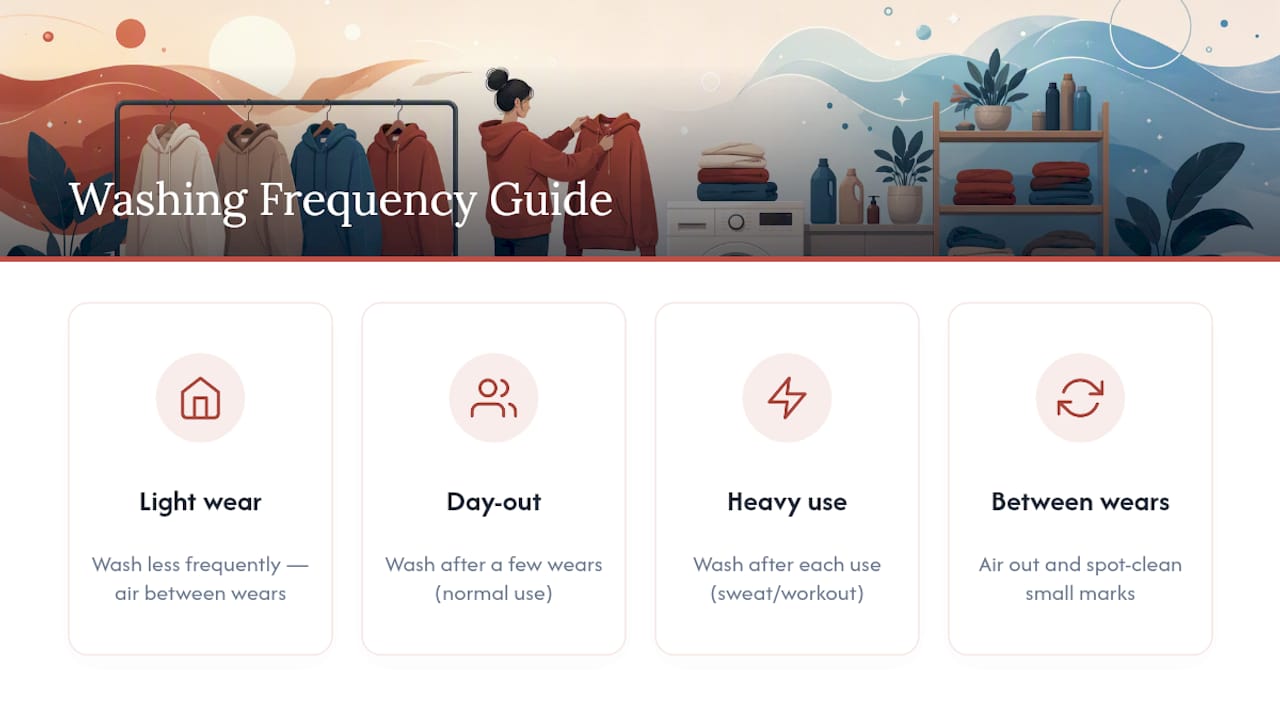
Air a hoodie out between wears instead of tossing it straight in the hamper, and spot-clean small marks rather than running a full cycle. For storage, fold heavyweight pieces rather than hanging them long-term, since sustained weight on a hanger stretches the shoulders. Always clean a hoodie before storing it for the season. Detailed folding techniques for tight closet space are worth a look if you’re rotating hoodies seasonally.
A Note From Thepreciouslamb on Why Care Matters
Well-made fleece rewards the effort you put into it. Thepreciouslamb builds fabric weight and care instructions into every product page because a hoodie’s construction sets the ceiling for how long good care can keep it looking right.

Hoodies Built to Respond to Good Care
Everything in this guide assumes you’re starting with decent construction, because no laundry routine rescues a hoodie made from thin, loosely spun fleece. That’s the gap Thepreciouslamb closes: pieces built with denser knits and better yarn that actually hold their shape and texture through the wash cycles described above, instead of pilling out after a month.
The Snow Washed Distressed Panel Pocket Hoodie is a good example of that build quality in action, with fabric weight and care details listed right on the product page so you know what you’re working with before it ever hits the wash. If you want a lighter, cropped fit instead, the Vintage Washed Cropped Fleece Hoodie follows the same construction standard. Check either product page for sizing and fabric details, then apply the cold wash, gentle cycle routine above from day one.
Sources
- How to Wash a Fleece Hoodie Without Shrinking or Pilling | Project Pegasus
- Why Hoodies Pill (and How to Buy One That Won’t) — LLRULE
- How to Wash a Hoodie Without Ruining It — Snøluv