
You can reliably verify most ethical claims in under ten minutes by checking three trust signals: a valid third-party certificate, product-level traceability, and published factory or supplier disclosure. If any of those three is missing or vague, treat the claim as unverified, not confirmed.
Here’s the fast version:
- Check for a real certificate number. Look for GOTS or Fair Trade credentials and confirm the number on the certifier’s own database, not just the brand’s badge graphic.
- Look for named suppliers. A brand that lists actual factory names and locations is showing you something a vague “ethically made” tagline never will.
- Read the product page like a contract. Material percentages, country of origin, and any certification claims should be spelled out, not implied.
- Cross-check with an outside source. A quick search against NGO reporting or a certifier registry takes two minutes and catches most exaggerated claims.
Certifications matter more than most shoppers realize. As of 2025, more than 17,800 facilities hold active GOTS certification worldwide, growing 15% annually. That growth means verification has gotten easier, not harder. There’s now a real registry to check against, and Thepreciouslamb’s own editorial coverage of fabric and ethics topics reflects that same standard of checking before making claims.
TL;DR:
- Verifying ethical claims requires checking actual certificates, like GOTS or Fair Trade numbers, against official registries, not just brand badges or logos.
- Brands that publish detailed factory names, locations, or supply chain maps significantly increase trustworthiness over vague commitments.
- Certification labels such as OEKO‑TEX or GRS verify specific aspects like chemical safety or recycled content but do not guarantee fair labor practices, necessitating multiple checks.
- Outside sources like NGO reports or labor complaints should be reviewed to confirm brand claims, especially regarding factory conditions and ownership transparency.
- Using online registries and traceability platforms, such as certifier databases or blockchain-based tools, makes independent verification accessible without extra cost or account requirements.
Table of Contents
- How to Verify Ethical Clothing Claims Step by Step
- What Do Ethical Clothing Certifications Actually Cover?
- How Can You Spot Greenwashing in Clothing Marketing?
- Where Can You Verify Ethical Fashion Claims Yourself?
- Why Trust This Verification Process?
- A Two-Minute, Five-Minute, and Ten-Minute Checklist
- How Thepreciouslamb Approaches Ethical Materials
- Key Takeaways
- Where to Verify Ethical Clothing Claims
- Sources
How to Verify Ethical Clothing Claims Step by Step
Most shoppers give up on verification because they don’t know where to look first. The order matters. Some checks take fifteen seconds; others take a few minutes. Do the fast ones first, and only dig deeper if something feels off.
Step 1: Read the product page like you mean it
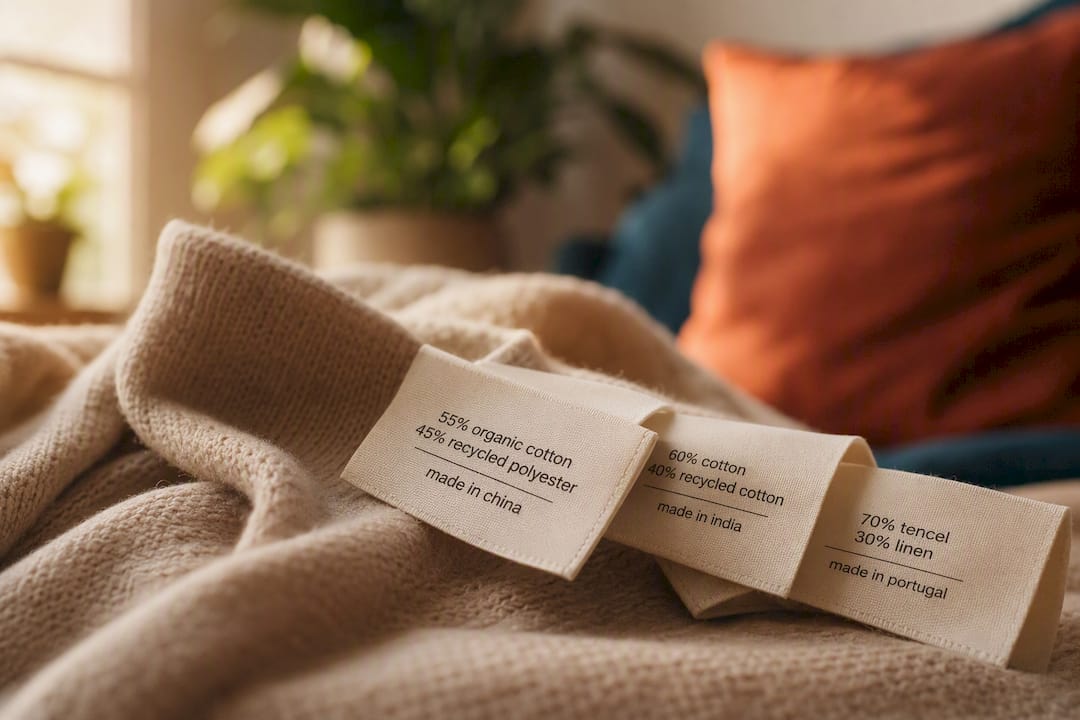
Before anything else, scroll to the material composition. A trustworthy product page tells you the exact fiber blend (not just “eco fabric”), the percentage of recycled or organic content, and the country where the garment was assembled. If a page says “sustainably made” with zero numbers attached, that’s your first flag. Look specifically for a certificate number tied to the fabric or the factory. Brands that are actually certified almost always print the number somewhere, even if it’s buried in a size chart or care tab.
Step 2: Verify the certificate on the certifier’s own database
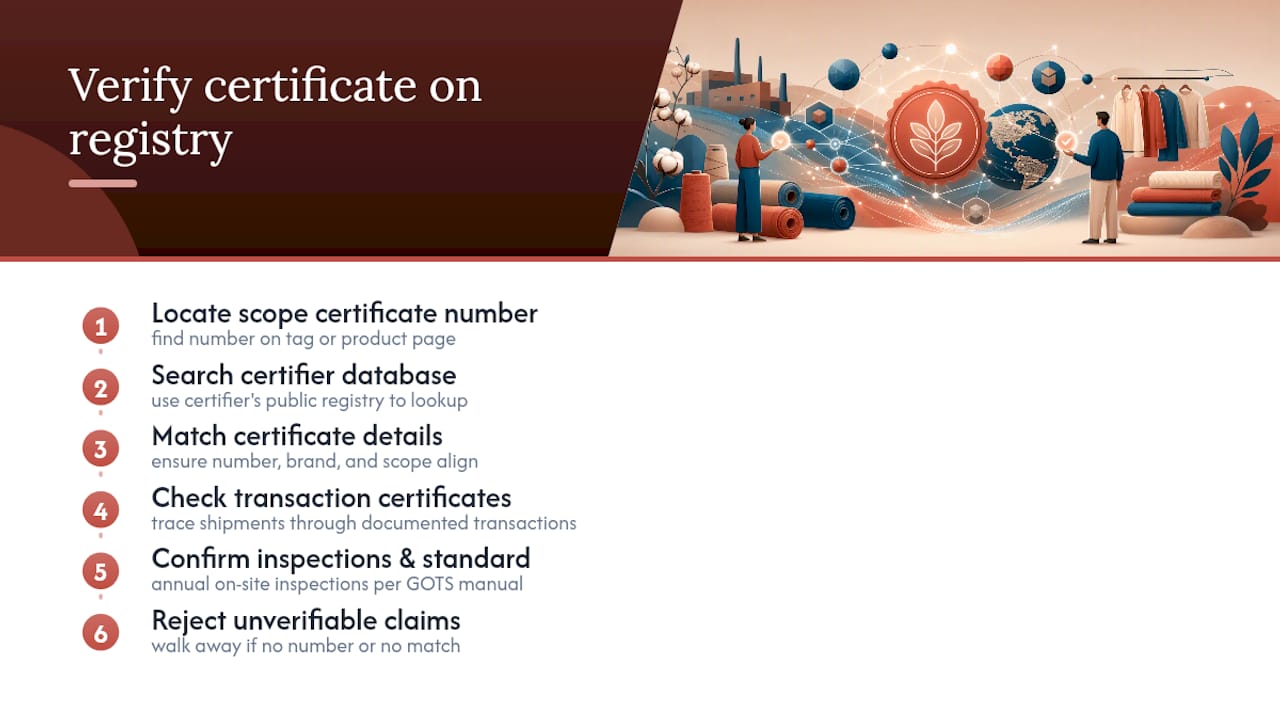
This is the step almost nobody takes, and it’s the one that actually separates real claims from marketing. A GOTS logo on a hang tag means nothing on its own. What matters is the scope certificate number, which you can check against the certifying body’s public records. GOTS also requires transaction certificates that follow specific shipments through the supply chain, so a shirt claiming organic cotton should be traceable back through documented transactions, not just a logo. The GOTS standard and manual spells out exactly what these certificates require, including annual on-site inspections for every certified entity. If a brand can’t produce a certificate number when asked, or the number doesn’t match anything in the registry, walk away from the claim.
Step 3: Look for factory lists and supplier maps, not just promises
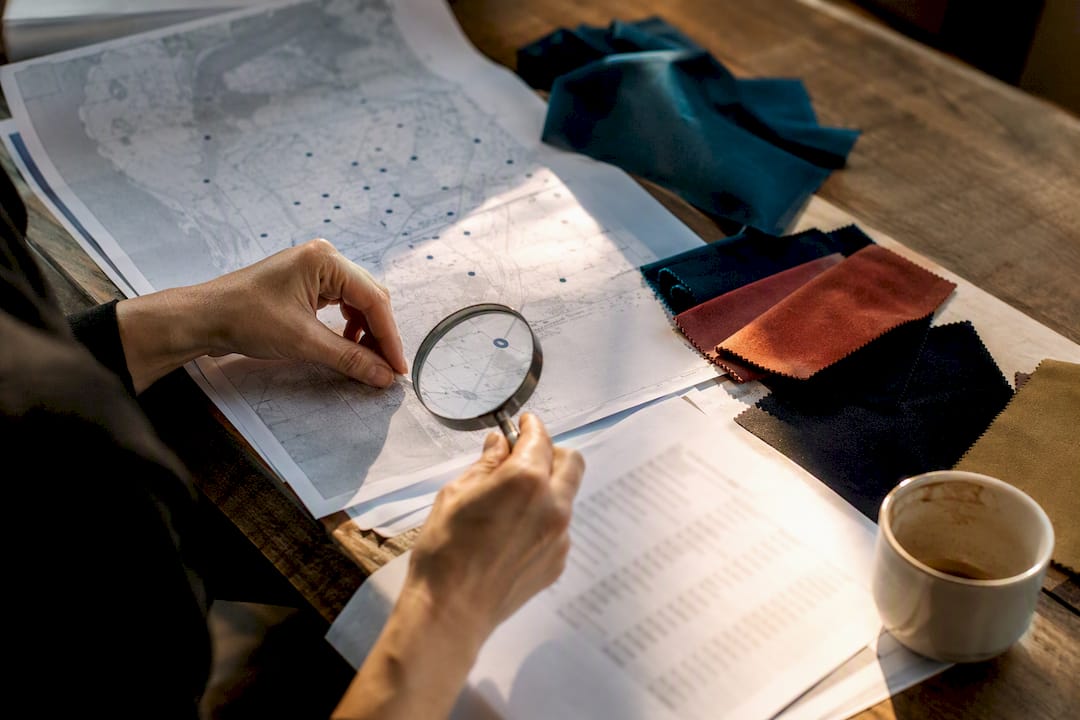
A brand willing to publish exactly where its garments are made is telling you something important: it has nothing to hide. Look for a supplier map, a factory list with names and cities, or traceability tokens attached to individual products. Vague statements like “we work with responsible partners” without a single named location should lower your confidence, not raise it. One detail worth checking: if a factory name shows up across several unrelated brands, that can point to shared production risk in that facility, but it can also mean the factory is independently audited and trusted across the industry. Context matters more than the repetition itself.
Step 4: Search for NGO and press coverage before you trust the brand’s own copy
Brands write their own marketing. NGOs and investigative journalists don’t have that incentive. The Human Rights Foundation recommends reviewing brand websites, product pages, factory disclosures, and outside NGO reporting together, precisely because any one of those sources alone can be misleading. Spend two minutes searching the brand’s name alongside terms like “labor violation,” “audit,” or “factory conditions.” Where the factories are located matters too. That doesn’t automatically disqualify a brand, but it should raise your bar for evidence.
Step 5: Trace the ownership and check for real impact reporting
Small, indie-feeling labels are sometimes owned by conglomerates with their own labor track records, and tracing that ultimate holding company clarifies where the profits and accountability actually sit, according to Ethical Consumer’s rating methodology. A five-minute search for “[brand name] parent company” often surfaces this. Then check whether the brand publishes an ESG or impact report with actual measurable targets, ideally including scope 3 emissions data covering its supply chain, rather than a mission statement with no numbers attached.
Pro Tip: Bookmark the GOTS and Fairtrade certificate lookup pages on your phone. When you’re standing in a fitting room or scrolling a product page, a certificate check takes about as long as reading one paragraph of marketing copy.
What Do Ethical Clothing Certifications Actually Cover?
Certifications aren’t interchangeable, and treating them that way is how shoppers get misled. Each one verifies a specific slice of the supply chain, not the whole picture.
- GOTS (Global Organic Textile Standard) covers organic fiber content combined with social criteria across processing, and it requires a scope certificate plus transaction certificates that trace specific batches through the supply chain. GOTS’s own standard document requires annual on-site inspections, which is more rigorous than a one-time audit.
- Fair Trade primarily applies to agricultural inputs, most commonly raw cotton, and verifies fair pricing and labor conditions at the farm level. It doesn’t automatically cover what happens once that cotton reaches a garment factory.
- OEKO-TEX certifies chemical safety in the finished textile, not labor practices. This matters given that microplastic shedding and certain treated finishes have drawn regulatory attention, with states including California and New York restricting specific textile chemicals. If a garment has a heavy chemical finish, OEKO-TEX is the label that speaks to that risk directly.
- GRS (Global Recycled Standard) verifies recycled content percentages and chain of custody for recycled materials, but recycled content alone doesn’t guarantee fair labor. A garment can be 100% recycled polyester and still come from a factory with labor issues, so GRS should be paired with other checks, not treated as a full ethical stamp.
- Fair Wear and SA8000 both focus on social auditing inside factories, covering wages, working hours, and safety conditions, rather than material sourcing.
- B Corp certifies the company as a whole, evaluating governance, worker treatment, and environmental impact at the corporate level rather than certifying individual products.
- SANE Standard is a newer product-level standard that some brands have started adopting alongside the more established labels above.
The single most common mistake shoppers make is assuming one label covers everything. It usually doesn’t. A shirt can be OEKO-TEX certified for chemical safety while the factory that sewed it has never been audited for labor conditions. Verification means stacking checks, not stopping at the first badge you see.
That stacking approach is easier than it used to be. With GOTS certifications growing 15% annually and now covering more than 17,800 facilities worldwide, there’s a genuinely useful registry behind the logo, not just a marketing symbol.
How Can You Spot Greenwashing in Clothing Marketing?
Greenwashing usually hides behind soft language that sounds meaningful but commits to nothing. Words like “eco,” “natural,” and “sustainable” carry no legal definition in fashion marketing. When you see them without a number, a timeline, or a certifier name attached, treat them as decoration, not evidence.
Watch for these patterns:
- No factory information anywhere on the site, not even a general region.
- Sustainability claims with no measurable target or deadline attached.
- Cherry-picked metrics, like touting recycled packaging while saying nothing about the garment’s fiber content.
- Self-issued “eco” labels or badges the brand designed itself, rather than a recognized third-party certifier.
- Claims that don’t add up, such as “100% recycled” with no percentage breakdown or GRS certificate number to back it.
A few quick fact-checks handle most of this. Use the brand’s own site search for the word “certificate” and see what surfaces. Run a reverse image search on product photos, since some smaller sites reuse stock imagery from certified factories they don’t actually use. If a brand claims recycled content, ask directly for the percentage and the GRS certificate number, since recycled materials can still carry labor risk if the rest of the chain isn’t verified.
Pro Tip: If a brand’s About page uses the word “sustainable” more than twice without linking to a single certificate, that’s usually a sign the marketing team wrote it, not the compliance team.
Where Can You Verify Ethical Fashion Claims Yourself?
You don’t have to take any brand’s word for it. A handful of registries and independent organizations do this verification work publicly.
- Certifier registries are your first stop: the GOTS scope certificate database, the Fairtrade certificate search tool, and the OEKO-TEX product database all let you type in a certificate number and see whether it’s real and current.
- NGO and investigative resources, including Ethical Consumer and Fashion Revolution, publish deeper scrutiny than most brands volunteer themselves, and cross-referencing a brand there takes minutes.
- Traceability platforms like TrusTrace and TextileGenesis assign digital tokens to garments that track them through the supply chain. Because blockchain-based tracking is harder to alter than paper audit trails, a traceability token is a stronger signal than a printed claim, though the technology only works if brands actually participate in it.
- Brand-rating platforms like Good On You are a reasonable starting point for a quick gut check, but they summarize, they don’t replace, primary certificate verification. Treat their scores as a first filter, not a final answer.
None of these tools require an account or a fee. They exist because, as one OECD analysis on supply chain transparency points out, the burden of proof shouldn’t sit entirely on the shopper. Systemic fixes like mandatory disclosure are still catching up, but these registries let you check today.
Why Trust This Verification Process?
Thepreciouslamb built its editorial coverage around the same standard it’s asking readers to apply to every brand, including itself. That means writing about fabric weight and durability in the GSM cheat sheet, breaking down material trade-offs in the recycled polyester vs. cotton guide, and covering finishing processes like garment dye versus pigment dye and what those treatments mean for chemical load and labor intensity.
Scientific American’s guidance on sustainable fashion is blunt about what actually counts as evidence: buy less, check life-cycle claims, and prefer brands that disclose real material and supply-chain data over brands that simply say the right words. That’s the same bar this article is asking you to hold every brand to, Thepreciouslamb included.
That framing matters because a lot of ethical fashion content either oversells certifications as a guarantee or dismisses them entirely as marketing theater. Neither is accurate. A GOTS scope certificate verified against the registry is real evidence. A brand’s own “ethically made” badge with no certifier behind it is not. Readers deserve to know the difference, and that distinction is what shapes how Thepreciouslamb writes about materials, sourcing, and comparable brands across its blog.
A Two-Minute, Five-Minute, and Ten-Minute Checklist
When I’m actually checking out on a product page, I don’t run every step in this article every time. I triage.
In the first two minutes, I read the material line and look for a certificate number. No number, no certified claim, that’s usually enough to lower my trust immediately. If a number’s there, I spend the next five minutes checking it against the certifier’s registry and scanning for a factory list or supplier map. A named factory with a real city attached moves me forward. A page that just says “responsibly sourced” does not.
If I’ve gotten that far and I’m still unsure, I give it ten minutes: a quick search for NGO coverage or labor complaints, and a look at who owns the brand. If the search turns up nothing alarming and the ownership is transparent, I buy. If a claim doesn’t check out at any stage, I don’t argue with the brand’s marketing copy. I message them directly and ask for the certificate number, or I choose something else entirely.
— Joshua
How Thepreciouslamb Approaches Ethical Materials
Thepreciouslamb’s product pages are built to survive the exact checklist in this article: material breakdowns, country of origin, and construction details listed plainly instead of buried behind vague marketing language.

Take the Denim Vintage Washed Heavyweight Jacket as an example of how that transparency shows up on an actual product page, with fabric weight and finishing details you can verify against the standards covered above. That said, no brand, including this one, should be exempt from the checklist you just read. Run the same five steps on any purchase, here or elsewhere, before you trust the label. If you want a starting point that’s already built with that transparency in mind, browse the jacket collection and see how the disclosures hold up for yourself.
Key Takeaways
Verifying an ethical clothing claim comes down to confirming a real certificate, tracing product-level materials, and checking for published factory disclosure before you buy.
| Point | Details |
|---|---|
| Confirm the certificate | Check GOTS or Fair Trade numbers against the certifier’s own registry, not the brand’s badge alone. |
| Demand named factories | Prefer brands publishing supplier maps or factory names over vague “responsibly made” language. |
| Match label to scope | Remember OEKO‑TEX covers chemical safety and GRS covers recycled content, not full labor conditions. |
| Check ownership and reports | Trace the ultimate holding company and look for ESG reports with measurable, scope 3 targets. |
| Choose transparent product pages | Thepreciouslamb lists material composition and origin details you can check against the same standards. |
Where to Verify Ethical Clothing Claims
- GOTS, Fairtrade, and OEKO-TEX registries confirm whether a printed certificate number is real and active.
- Human Rights Foundation and Ethical Consumer publish independent brand scrutiny beyond marketing copy.
- TrusTrace and TextileGenesis show supply-chain traceability tokens tied to individual garments.
- Sustain Your Style’s certification guide helps compare what each label actually covers before you rely on it.
Sources
- Don’t Be Fooled: How To Vet Ethical Brands - Human Rights Foundation
- GOTS v8.0 standard and manual
- Blockchain in cotton value chains — OECD/OPSI
Recommended
- Christian Clothing Brands for Stylish, Ethically Minded Shoppers – THE PRECIOUS LAMB
- Recycled Polyester vs Cotton: A Conscious Shopper’s Guide – THE PRECIOUS LAMB
- Everlane Alternatives: Ethical Brands Worth Switching To – THE PRECIOUS LAMB
- GSM in Clothing: A Practical Cheat-Sheet for Shoppers – THE PRECIOUS LAMB