
Layering a vest comes down to one move: match the vest style to the right base layer and control proportion so nothing bunches. A sweater vest wants an oxford or turtleneck underneath, a puffer vest wants a hoodie or henley, and a denim vest wants a tee or a plaid shirt with room to breathe. Get that pairing right, contrast the textures a little, and everything past this point is just refinement.
TL;DR:
- Choosing the right base layer depends on the vest style, such as an oxford or turtleneck for sweater vests, and a hoodie or henley for puffer vests.
- Maintaining an air gap by not pressing the vest flat against the body ensures the outfit looks layered and avoids a flat, compressed appearance.
- Correct proportioning involves balancing hem lengths, with cropped vests paired with longer under-layers and longline vests matched with shorter or equal-length layers.
- The same vest can vary in formality based on what is worn underneath, emphasizing the importance of collar shape, fabric weight, and color coordination.
- Simple quick fixes for common layering mistakes include reducing bulk, matching fabric weights, balancing hem lengths, and adding belts or adjusting tucking strategies.
Table of Contents
- Vest Types and Simple Outfit Recipes for Each
- What to Wear Under a Vest: Collar, Hem, and Fabric Rules
- Proportions and Fit: The Air Gap, Armholes, and Hems
- Vest Formulas for Spring, Fall, and Mild Winter
- Common Mistakes and Quick Fixes
- A Stylist’s Quick-Fit Rules for Vest Layering
- Why Vests Still Earn Closet Space
- Layering-Friendly Pieces Worth Trying
- Sources
- FAQ
Vest Types and Simple Outfit Recipes for Each
Every vest style has a job. Match the job to the base layer, and the outfit builds itself.
- Knitted or sweater vest. Works because the ribbing adds texture without adding bulk. Pair with an oxford shirt or a fine-gauge turtleneck, dark trousers, and loafers or clean sneakers. Smart-casual by default.
- Puffer or quilted vest. Built for warmth without sleeves getting in the way. Layer over a hoodie or henley, add jeans and boots. Strictly casual, but it reads intentional when the hoodie hem peeks out below the vest.
- Denim vest. A tee or plaid flannel underneath, straight-leg pants, and boots or high-tops. This is the streetwear vest outfit formula most people picture first.
- Tailored waistcoat. Needs a structured button-down or a fine merino sweater, trousers, and leather shoes. This is the one formal option on the list, and it’s unforgiving about fit.
- Fleece or technical vest. Pairs with a lightweight quilted jacket or a technical base layer, joggers or utility pants, and trail shoes. Reads as smart-casual to outdoor-casual depending on the shoes.
According to InStyle’s styling roundup, the same vest can shift formality entirely based on what sits underneath it, which is really the whole game.
What to Wear Under a Vest: Collar, Hem, and Fabric Rules
Most “what goes under this vest” confusion traces back to three things: collar shape, hem length, and fabric weight. Fix those and the outfit stops feeling like guesswork.
- Match collar geometry. A V-neck vest shows a triangle of chest, so it needs a button-down collar or a turtleneck to fill that space cleanly. A crew-neck or utility vest is more forgiving. It works over a plain tee.
- Tuck based on hem length, not habit. If your under-layer’s hem sits more than an inch below the vest’s hem, tuck it. If it’s shorter or equal, leave it untucked and let the layers stack visually.
- Match or contrast fabric weight on purpose. A chunky knit vest over a thin oxford creates contrast that reads as styled. A chunky knit vest over another heavy sweater usually just reads as thick.
- Watch your base-layer color. Light shirts under dark vests, and a skin-tone or light-gray undershirt under a white shirt, keep the under-layer pairing from creating a harsh visible edge at the collar or cuff.
Pro Tip: If you’re unsure whether to tuck, do a “half tuck” on one side only when wearing a casual vest over a button-down. It breaks up the silhouette without committing to either look, and it photographs better than a full tuck almost every time.
Proportions and Fit: The Air Gap, Armholes, and Hems
The air gap rule is the single most useful fit concept in vest layering: leave a small pocket of space between your body, your base layer, and the vest itself. Crush that space out and the whole outfit reads flat instead of layered.
Run these three checks before you leave the house:
- Mirror test. Look at yourself from the side. If the vest is pressing your under-layer flat against your torso, size up one on the vest or drop a layer.
- Cuff and armhole check. Aim to show roughly 1.5 inches of cuff at the wrist, and make sure the vest’s armhole doesn’t dig in when you cross your arms.
- Movement test. Raise both arms overhead. If fabric rides up and bunches at your waist, that’s the “cabbage effect,” and it means your hem lengths don’t match.
Cropped vests pair best with a longer under-layer showing beneath the hem. Longline vests want a shorter or equal-length base layer so nothing peeks out unevenly.
Vest Formulas for Spring, Fall, and Mild Winter
A single well-chosen vest earns its closet space by working across three seasons, not one.
- Spring: A cropped knit vest over a long button-down or shirtdress, with the shirt hem showing below. Light and breathable, but visually layered.
- Fall: A puffer vest over a hoodie, worn under a light jacket if the wind picks up. Stand-up collar puffer vests layer with hoods far more easily than versions with their own bulky collar, according to FashionValue’s 2026 trend analysis.
- Mild winter: A tailored or utility vest over a midweight sweater, under a wool coat for outdoor stretches.
- Over a dress: Choose a cropped vest for a full or long skirt to create a waist break, or a longline tailored vest over a straight column dress to keep the vertical line intact.
For travel, a knit or fleece vest packs flat and adds a full layer of warmth without eating suitcase space the way a jacket would.
Common Mistakes and Quick Fixes
Most layered-vest outfits fail for one of four boring reasons, and all four have a fast fix.
- Too much bulk. Swap one heavy piece for a lighter one. You rarely need two thick layers at once.
- Mismatched fabric weights. Pick either contrast (thin under thick) or harmony (similar weights), never an accidental middle ground.
- Hem imbalance. Match cropped vests with longer under-layers and longline vests with shorter ones.
- Visible bunching. Add a belt to anchor the waist, or change your tuck strategy before you walk out the door.
Run the raise-arms test, check your side profile, and confirm your cuffs show. Thirty seconds, done.
A Stylist’s Quick-Fit Rules for Vest Layering
Three rules cover most of what goes wrong with a layered vest. Keep the air gap intact so nothing looks crushed. Keep roughly 1.5 inches of cuff visible at the wrist. Balance proportions by pairing a cropped vest with a longer layer underneath, or a longline vest with a shorter one.
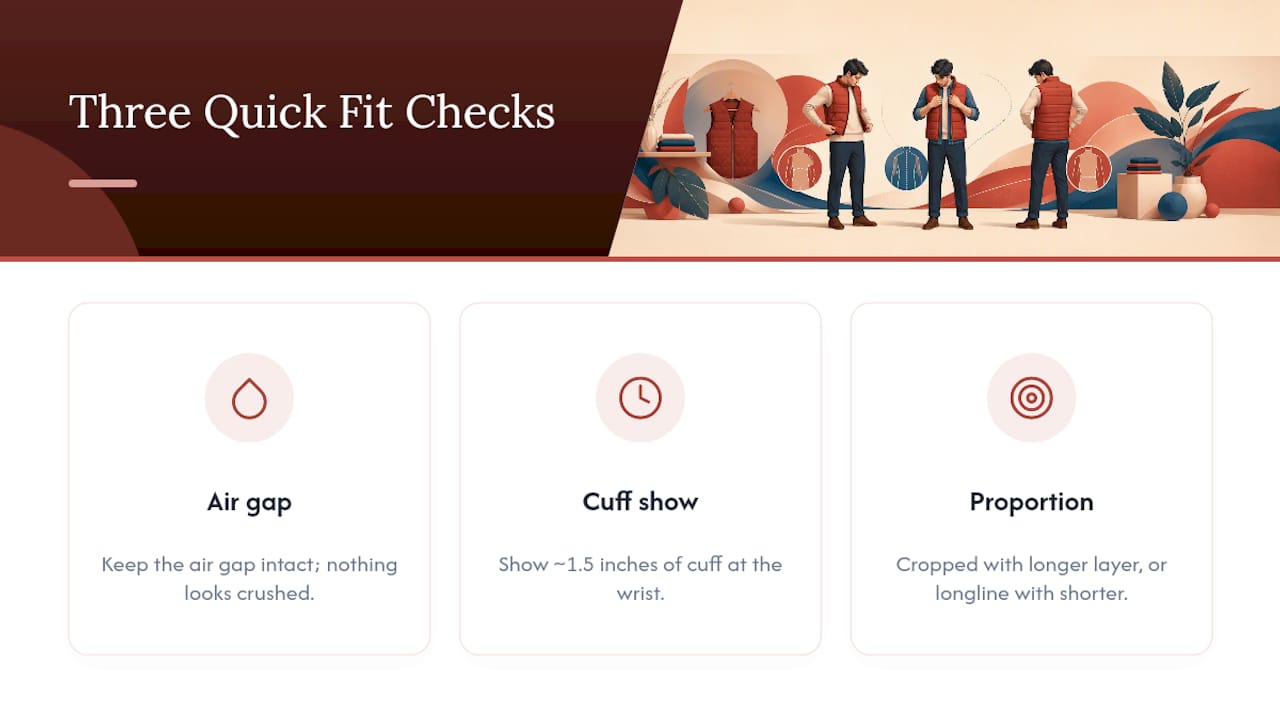
Before you leave: raise your arms, check your side view in a mirror, and confirm your cuffs are showing. If all three pass, the outfit works.

Pro Tip: Keep one neutral vest and one textured vest in rotation. It covers nearly every base-layer combination above without buying a third.
Why Vests Still Earn Closet Space
Vests solve a problem sleeves create: warmth and shape without bulk at the elbow or wrist, a key aspect to consider in how to layer designer apparel. That’s why they keep showing up in trans-seasonal styling rather than fading into strictly cold-weather gear. Some brands build layering pieces, from cropped hoodies to structured jackets, with that pairing logic in mind, so a base layer and a vest actually sit together the way they should. Try one formula from this article this week and see how it changes an outfit you already own.
— Joshua
Layering-Friendly Pieces Worth Trying
Testing these rules is easier with the right base layers on hand. A cropped fleece hoodie from Thepreciouslamb sits close to the body without adding bulk, which makes it a natural match under a puffer vest or a cropped knit vest where the air gap rule matters most.

For denim-vest formulas, a heavyweight denim jacket gives you a third layering option when the weather doesn’t fully commit to warm or cold, and it swaps easily with a vest depending on the day. If you want a striped, collared piece for the sweater-vest formula above, the contrast striped lapel collar sweatshirt gives that base layer its own visible detail at the neckline. Browse the current lineup and pick one piece to build a formula around this week.
Sources
- 10 Ways to Wear a Vest for Year-Round Masterful Layering — InStyle
- What to wear with a knitted vest: fashionable outfit ideas — MioLook
- Vest Layering Trend for 2026 — FashionValue
- What to Wear Under Vest: Your Ultimate Brooklyn Style Guide — The Brooklyn Initiative
FAQ
Are vests out of style in 2026?
No. Trend coverage for 2026 frames vests as a trans-seasonal styling device used for shape and contrast, not just cold-weather warmth, which keeps them relevant well past winter.
What are the general rules for wearing a vest?
Match the vest style to a compatible base layer, leave a slight air gap between layers, and keep hem lengths balanced so nothing bunches when you move.
Do vests go over or under other layers?
A vest almost always goes over your shirt, sweater, or hoodie and under any outer jacket you add for warmth. It’s a middle layer, not an outer or base one.
How do you wear a sweater vest well?
Pair it with an oxford shirt or a fine turtleneck for contrast, keep about 1.5 inches of cuff showing at the wrist, and choose a hem length that either matches or slightly exceeds the vest’s own hem.