
The fastest, safest fix for most sweatshirts is a guarded fabric shaver run in short, light strokes over a flat surface. It clears pills without eating into the fabric underneath, but removal alone won’t stop new pills from forming. Pair it with gentler laundry habits, and always test on a hidden seam first since even guarded tools can nick thin or worn spots.
TL;DR:
- Using a guarded fabric shaver is the safest and most efficient method for removing pills from standard fleece or jersey sweatshirts without damaging the fabric.
- Always test your depilling tool on a hidden seam or inconspicuous area first to check for thinning or snags before working on visible panels.
- Select your tool based on fabric delicacy; a sweater comb is gentler for fine knits, while a razor is a last resort with a high risk of slicing the fabric.
- Proper preparation, including washing and drying before depilling, and working in small sections on a flat surface, reduces the risk of creating bald patches or holes.
- Reducing fabric friction during washing—such as turning the sweatshirt inside out, using gentle cycles, and air drying—helps prevent future pilling.
Table of Contents
- How Do You Remove Pilling From a Sweatshirt Fast?
- Step-by-Step: How to Depill a Sweatshirt Safely
- Which Tool Works Best for Each Fabric?
- Does Your Sweatshirt’s Fabric Change the Method?
- How Do You Stop Pills From Coming Back?
- What Testing Habits Keep You From Damaging the Fabric?
- Why Gentle Maintenance Beats Replacing a Sweatshirt
- When It’s Time for a New Sweatshirt Instead
- Sources
- FAQ
How Do You Remove Pilling From a Sweatshirt Fast?
Pick your tool based on how much time you have and how nervous you are about damaging the fabric.
- Fastest: A guarded electric fabric shaver handles flat fleece and jersey panels in minutes. It’s the go-to for standard cotton or cotton-poly sweatshirts with moderate pilling.
- Gentlest: A sweater comb works best on fine or open knits, wool blends, and anything where you’re worried a motorized tool might snag threads.
- Budget or emergency fix: A disposable razor can work in a pinch on flat, taut areas, but it carries the highest risk of slicing the fabric if you press too hard.
- Cleanup only: A lint roller doesn’t remove pills, but it picks up loosened fuzz after you’ve used one of the tools above.
If you only remember one thing, remember this: start with whichever option does the least damage, and only step up to something more aggressive if it’s not cutting it (literally and figuratively).
Step-by-Step: How to Depill a Sweatshirt Safely
Depilling isn’t complicated, but rushing it is how sweatshirts end up with bald patches or tiny holes. Tide’s own care guidance backs a slow, methodical approach over speed.
- Prep the garment. Wash and dry it first. Pills show up more clearly on clean fabric, and you won’t be grinding in dirt or oils while you work.
- Lay it flat. Work on a hard, flat surface like a table, not your lap or a bed. Smooth the fabric and hold it taut with your free hand so the tool glides evenly.
- Test a hidden spot. Try your chosen tool on an inside seam, cuff, or hem for a few seconds. Check for thinning, snags, or loose threads before moving to visible panels.
- Work in short passes. Move the shaver or comb in one direction, following the knit’s grain, using light pressure. Empty the shaver’s lint trap every few passes since a full trap drags instead of cuts.
- Tidy and inspect. Run a lint roller or piece of tape over the area to lift loose fibers, then check the surface under good light. Stop once it looks even. Chasing every last speck usually does more harm than good.
Pro Tip: Work in small four to six inch sections and rest your hand between passes. Rushing across a whole panel in one go is exactly how people end up with a thin patch they didn’t notice until it was too late.
Which Tool Works Best for Each Fabric?
Not every sweatshirt can handle the same treatment. Here’s how the main tools stack up.
- Guarded fabric shaver: The blades sit behind a perforated guard with a lint catch, which is why reviewers consistently recommend it as the safer, more efficient choice for sturdy panels. It’s usually the first thing to reach for on standard fleece or jersey.
- Sweater comb: A fine-tooth comb lifts pills without motorized force, making it the better call for delicate or open knits where a shaver’s suction could tug threads loose.
- Pumice or sweater stone: Effective on robust, tightly woven knits, but it’s abrasive by nature. Use it sparingly since heavy-handed strokes wear down the fabric surface over time.
- Disposable razor: A genuine last resort. It cuts pills fast on very flat, taut areas, but it also carries the highest risk of slicing straight through the fabric if the blade catches wrong.
- Lint roller: Reserve it for the final cleanup pass. It picks up what the other tools loosen, but it won’t touch a pill that is still attached.
Launderwise’s testing notes put it simply: the shaver wins on speed, the comb wins on gentleness, and the stone belongs only on the toughest knits.
Does Your Sweatshirt’s Fabric Change the Method?
Fabric weight and knit structure decide which tool is safe to use, so check the care label before you touch anything electric.
- Brushed cotton-poly fleece and stable jersey: A guarded shaver is generally safe here since the knit is dense enough to resist snagging.
- Open knits, delicate blends, and anything with wool content: Start with a comb or careful hand removal instead. These fabrics loosen and thin faster under motorized pressure.
- Embroidered, printed, or thin panels: Skip mechanical tools entirely near these areas. A shaver or stone can chew through a print or catch on stitching in seconds.
When in doubt, check the inside tag for fiber content. A garment listed as 100% wool or a fine merino blend deserves the gentlest option every time, not the fastest one.
How Do You Stop Pills From Coming Back?
Pilling starts with friction, so the real fix is reducing how much your sweatshirt rubs against itself, other clothes, or the inside of a washing machine. Woolmark’s research on pilling confirms this: fibers loosen and twist into clumps from repeated abrasion, and no fabric is fully immune.
- Turn the sweatshirt inside out before washing so the outer surface faces the drum, not the agitator.
- Use a gentle or cold cycle and a mesh laundry bag, and don’t overload the washer since cramped loads mean more rubbing.
- Air-dry when you can. When you must use a dryer, choose low heat and a shorter tumble time.
- Wash abrasive items like towels, denim, and zippered jackets separately so they don’t scrape against softer knits.
- Fasten zips and Velcro before washing, and think about wear habits too. A bag strap or seatbelt rubbing the same spot every day will pill that exact patch faster than anything in the wash.
For fleece and hoodie-specific laundry tips, Thepreciouslamb’s hoodie care guide walks through the wash settings that keep brushed fabric from matting down early.
What Testing Habits Keep You From Damaging the Fabric?
Every depilling method carries some risk, and the mistakes that ruin a sweatshirt are almost always avoidable. Test a hidden spot first every single time, even if you’ve used the same tool on a different garment before. Fabric weight and weave vary enough between sweatshirts that a technique safe on one can thin another.
Check for loops, thinning, or loose seams before you move past the test patch. Empty the shaver’s lint container often. Performance drops fast once it fills, which is when people start pressing harder and cutting into fabric they meant to protect. Work in small sections, and stop the moment the surface looks uneven rather than pushing through to finish.
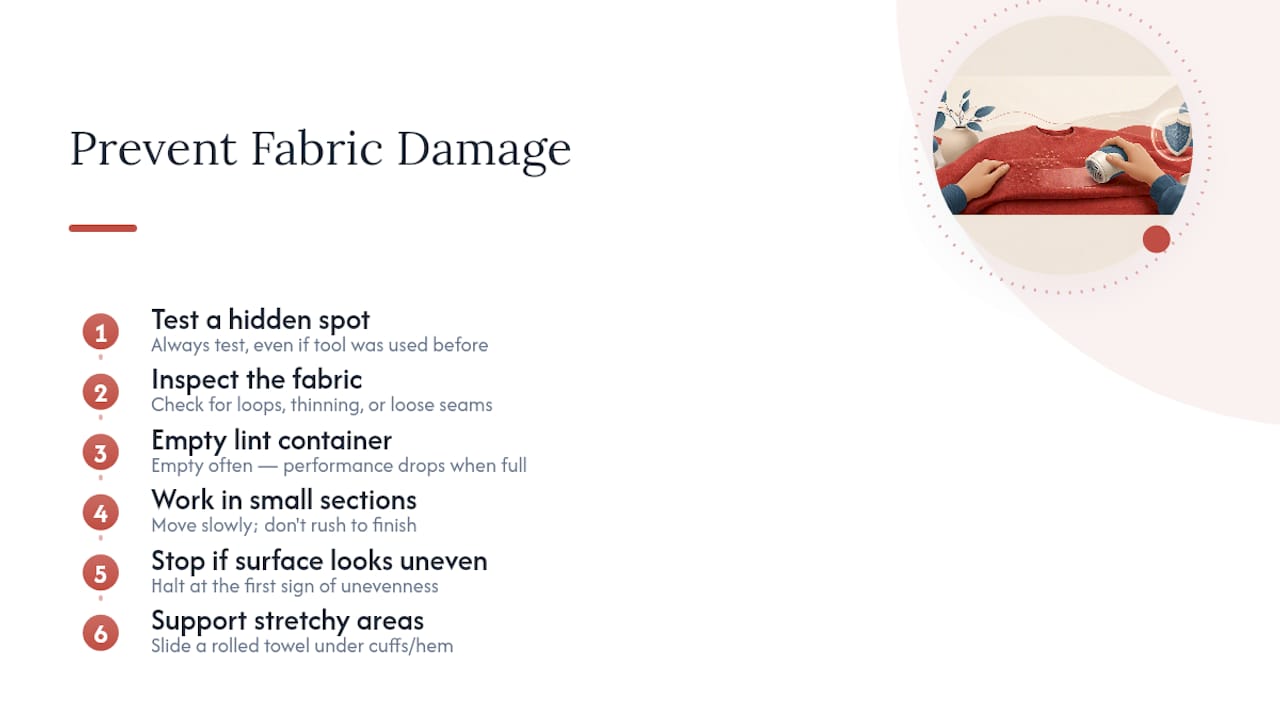
Pro Tip: Slide a rolled towel or a curved surface like a rolling pin under stretchy areas, such as cuffs or the hem. Keeping the fabric taut over a firm curve stops it from bunching under the tool, which is where most snags happen.
Why Gentle Maintenance Beats Replacing a Sweatshirt
Quality fleece and sweatshirts are generally built to endure wear, with attention paid to how fabric holds up under friction and repeat washing. A little care goes further than most people think. Don’t give up on a good sweatshirt over a problem that a comb and a mesh bag can mostly solve.
— Joshua
When It’s Time for a New Sweatshirt Instead
Sometimes a sweatshirt is past the point where a comb or shaver can save it. Deep pilling, thinned patches, or a snag that’s turned into a small hole means the fabric has already broken down, and no amount of careful depilling brings that back. Replacing it isn’t a failure. It’s just the practical call.

If you’re at that point, Thepreciouslamb’s hoodie and sweatshirt collection is worth a look before you settle for whatever’s on sale elsewhere. The pieces are built with heavier, more stable knits designed to resist the kind of friction pilling that thin fast-fashion fleece can’t handle, so you’re not back here in three months doing this all over again. Pair a new piece with the laundry habits above, and it should hold its surface a lot longer than what you’re replacing. Browse the current lineup and see which fleece or sweatshirt style fits before your old one gets any worse.
Sources
- What is pilling? | Woolmark
- How to Depill a Sweater - Remove Fluff | Tide
- How to Remove Pilling From Clothes (and Stop It Coming Back) | Launderwise
- Read This Before You Take a Fabric Shaver to Your Favorite Sweater | Wirecutter (NYT)
FAQ
Does Pilling Mean a Sweatshirt Is Poor Quality?
Not necessarily. Pilling happens on nearly every fabric because loose surface fibers twist together from ordinary friction, and Woolmark notes it’s a normal, largely unavoidable part of wear rather than a sign of a flawed garment. Tighter, denser knits tend to pill less, but even high-quality fleece will show some over time.
What’s the Best Pilling Remover for a Sweatshirt?
A guarded electric fabric shaver is usually the best all-around choice for standard sweatshirt fabric like fleece or jersey, since its protective guard and lint trap reduce the risk of damage compared to a razor. For fine or open knits, a sweater comb is the gentler option worth trying first.
Can Pilling Be Reversed or Permanently Prevented?
You can remove existing pills and restore a smoother surface, but pilling can’t be permanently prevented on any fabric. The realistic approach is removal paired with gentler laundry habits, which slows how fast new pills form.
Does Vinegar Help Remove Pilling or Lint Balls?
Vinegar can help soften fabric and reduce static during a wash, but it doesn’t physically remove pills that have already formed. You still need a mechanical tool like a shaver, comb, or stone to lift existing pills off the surface.
How Much Does a Thepreciouslamb Sweatshirt Cost?
Current pricing for Thepreciouslamb’s sweatshirts and fleece pieces is listed directly on the product collection page, since prices vary by style and design.