
The fastest way to store hoodies without losing closet space is to fold them using the KonMari vertical file fold and stand them upright in a shallow bin or divided shelf. For everyday rotation, file-fold into a drawer so you can see every hoodie at a glance. For short-term display on an open shelf, use the pillow fold to create neat, stackable bundles. Heading out of town? A compact roll tucked into the hood keeps things tight in a bag. For seasonal storage, clean them first, then pack in breathable cotton bags or bins with cedar blocks. Vacuum storage bags work for a quick move but can compress thick fleece over time, so they are not the best long-term solution.
Key Takeaways
The most effective way to store hoodies is to file-fold them vertically in shallow breathable bins, hang only briefly on wide contoured hangers, and prep thoroughly before any seasonal storage.
| Point | Details |
|---|---|
| Best fold for drawers | KonMari file fold lets hoodies stand upright for instant visibility and saves space. |
| Hanging rule | Limit hang time to under two weeks; always use wide, padded hangers to prevent shoulder stretch. |
| Seasonal storage checklist | Launder, fully dry, add cedar blocks, and use breathable bins rather than airtight containers. |
| Travel fold | Hood-tuck or roll method compresses a hoodie to roughly water-bottle size for luggage. |
| Thepreciouslamb care | Snow-washed and fleece pieces from Thepreciouslamb store best folded inside out in breathable bins, away from direct light. |
Table of Contents
- 2. When to fold, hang, or pack your hoodies
- 3. Four step-by-step folds that actually save space
- 4. Storage solutions for every space: shelves, bins, and beyond
- 5. Hanging vs. folding: how to protect shoulders and necklines
- 6. Seasonal and long-term storage checklist
- 7. Fabric-specific care and storage recommendations
- 8. Extra tricks for very small closets and shared spaces
- 9. What to expect: time, space, and cost
- The part most storage guides skip
- Thepreciouslamb has the hoodies worth organizing
- Further reading and references
2. When to fold, hang, or pack your hoodies
The right method depends on three things: how often you reach for a hoodie, how much closet space you have, and what the hoodie is made of. This matrix cuts through the guesswork.
| Situation | Best method | Why |
|---|---|---|
| Daily rotation (drawer or shelf) | KonMari file fold | Instant visibility, no re-digging |
| Heavy rotation or display | Hang briefly on wide contoured hanger | Easy grab, but limit to under 2 weeks |
| Shared closet, tight space | Vertical file fold in cube bin | Stacks without wasting depth |
| Seasonal / long-term storage | Breathable bin + cedar blocks | Protects fabric, prevents pests |
| Travel or overnight bag | Compact roll tucked into hood | Saves luggage width, self-contained |
Hanging hoodies risks shoulder stretch over time; folding is the safer default for preserving shape. Heavy fleece hung for more than two weeks will often show visible shoulder marks that are hard to reverse. That said, some people prefer hanging almost everything to avoid folding altogether, and the trade-off between convenience and longevity is real. If you hang, use a wide, padded contoured hanger and rotate the hoodie back to a fold within two weeks.
Quick examples:
- College dorm with one rod: file-fold in a cube bin on the floor or shelf, hang only the one you are wearing this week.
- Shared closet: claim one shelf with a divider, file-fold by color so both people can find their own.
- Travel bag: roll and hood-tuck every hoodie, no exceptions.
3. Four step-by-step folds that actually save space
Each of these methods serves a different storage scenario, from daily drawer use to packing a carry-on. Pick the one that matches your space.
KonMari file fold (best for drawers)
- Lay the hoodie face-down on a flat surface.
- Fold one side (with the sleeve) toward the center, then fold the sleeve back parallel to the body.
- Repeat on the other side. You now have a long vertical rectangle.
- Fold the bottom third up, then fold the top third down over it.
- Stand the bundle on its folded edge in the drawer. It should hold its shape without flopping.
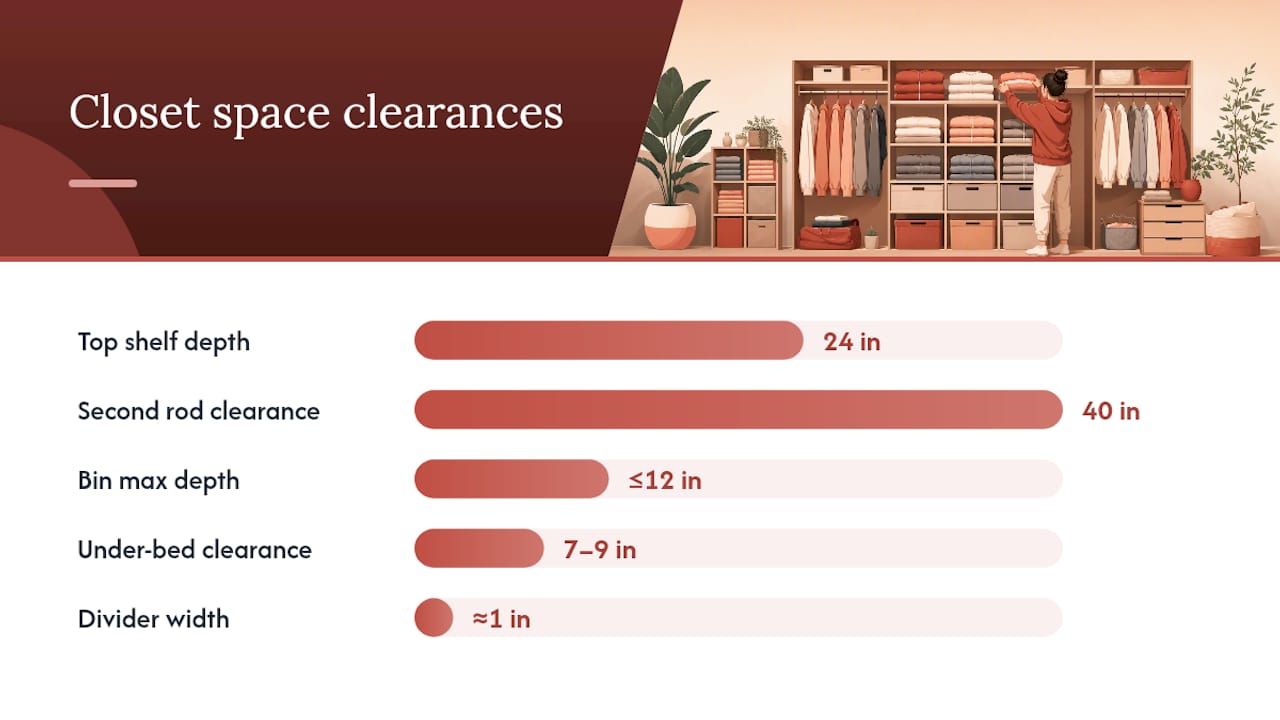
The goal is a rectangle that stands upright. If it keeps falling over, the bin or drawer is too deep. Shallow bins (max 12 inches deep) keep bundles upright and visible.
Pro Tip: Mix only KonMari folds in one drawer. Mixing vertical folds with basic flat folds creates uneven compression and wastes space.
Pillow fold (best for shelf stacking)
- Lay the hoodie face-up and fold both sleeves across the chest.
- Fold the body in thirds lengthwise.
- Fold the bottom half of the body up toward the neckline, leaving about 3 inches of hood exposed.
- Tuck the folded body into the hood pocket, forming a compact bundle.
This creates a self-contained square that stacks cleanly on open shelves without sliding. It is also a solid travel option when you want something that will not unravel in a bag.
Compact hood-tuck fold (best for travel)
- Lay the hoodie face-down and fold both sleeves across the back.
- Fold the body in thirds from the bottom up, stopping just below the hood.
- Flip the whole bundle over so the hood faces up.
- Stretch the hood opening over the bundle and pull it down snugly to wrap the whole thing.
This method keeps the bundle secure without any rubber bands or clips, which can damage fabric. The hood acts as its own carrying case. For zip hoodies, zip fully before starting so the zipper does not snag the lining.
Roll method (best for luggage width)
- Lay the hoodie flat, fold both sleeves in.
- Fold the bottom third up.
- Starting from the folded bottom, roll tightly toward the hood.
- Tuck the roll into the hood pocket or secure with the drawstring.
Rolling saves horizontal width in a suitcase and works especially well for lighter cotton hoodies. For thick fleece, the roll can get bulky. In that case, the hood-tuck fold above is more compact.
Pro Tip: Before any fold, tuck drawstring tips into a small silicone sleeve or clip them with a micro-binder clip. Loose drawstrings snag fabric and pull out of the channel during folding.
4. Storage solutions for every space: shelves, bins, and beyond
Where you put your hoodies matters as much as how you fold them. Here is a place-by-place breakdown.
Closet shelves with shelf dividers are the most accessible option. Dividers keep folded stacks from toppling sideways, which is the main reason shelf stacks collapse. Budget dividers run modestly priced for a set of four. They clip onto most standard wire or wood shelves. The downside: open shelves collect dust, so hoodies stored here long-term will need more frequent washing.
Shallow drawers are ideal for KonMari file folds. You can see every hoodie without lifting anything. The limitation is depth. If your drawer is deeper than 12 inches, add a small bin inside to keep bundles upright. Drawer storage protects from dust and light, which is better for printed or embroidered pieces.
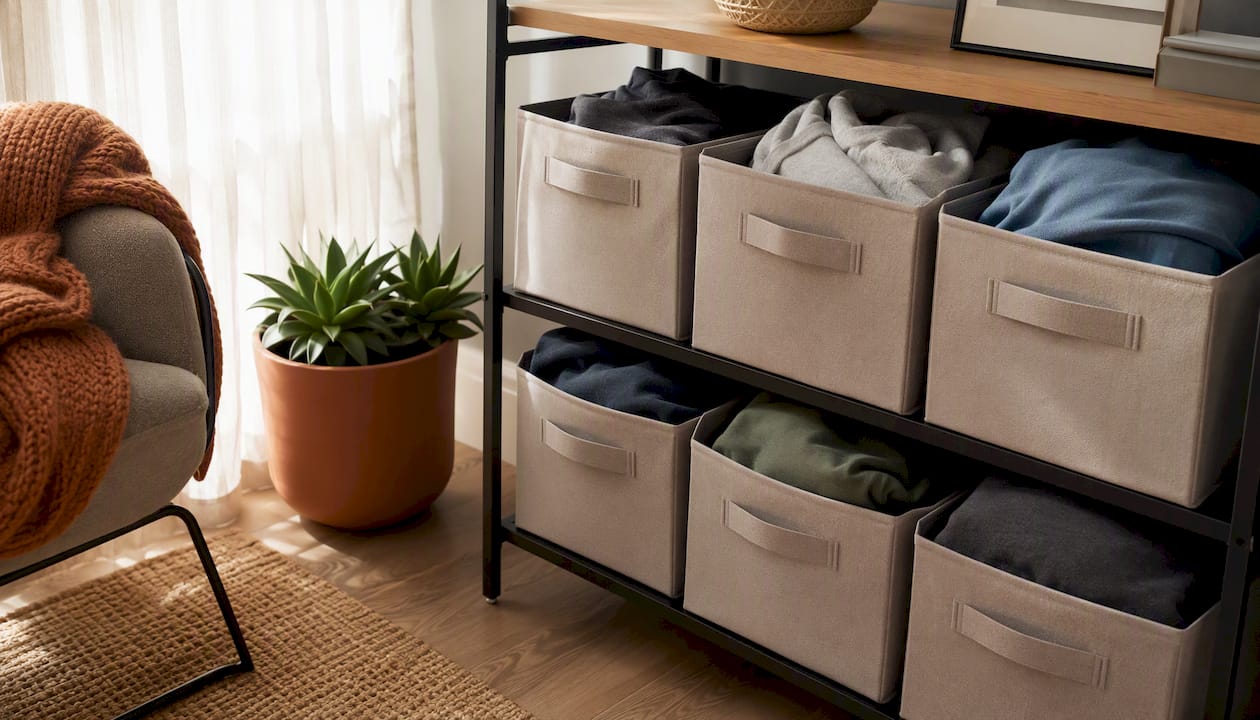
Cube bins and fabric cubes sit on shelves or in cube organizers and hold 4–6 folded hoodies each, depending on thickness. Fabric cubes breathe better than solid plastic bins, which matters for long-term storage. Mid-range fabric cubes are available at moderate prices for a set.
Under-bed storage boxes are underused for hoodies. Flat, lidded boxes slide under most bed frames and hold 8–12 hoodies flat or 6–8 file-folded. They are best for seasonal pieces you will not touch for months. Look for boxes with ventilation holes or use breathable cotton bags inside. Avoid airtight plastic for anything stored longer than a few weeks.
Wall hooks and over-door hooks work for the hoodie you grab every single day. One hook, one hoodie. More than that and you are back to the shoulder-stretch problem. Over-door hooks are a $10–$15 fix that adds zero closet footprint.
Vacuum storage bags compress bulk dramatically and are useful for moving or short-term off-season storage. The catch: compressing thick fleece long-term accelerates fiber compression and can reduce loft, leaving the hoodie feeling thinner and less insulating than it was. Use them for cotton-blend hoodies and keep the storage period under a few months.
5. Hanging vs. folding: how to protect shoulders and necklines
The shoulder-stretch problem is real, and it happens faster than most people expect. A heavy fleece hoodie hung on a standard wire hanger for two weeks will often show a visible peak at each shoulder. The weight of the fabric pulls the knit fibers outward, and once stretched, they rarely fully recover.
Do:
- Use wide, padded, or contoured hangers if you hang at all. The wider the shoulder contact, the more evenly the weight distributes.
- Limit hang time to under two weeks for any hoodie heavier than a light cotton blend.
- Zip all zip hoodies fully before hanging or folding. An open zipper creates an uneven pull on the fabric.
- Tuck or clip drawstrings before storing. Loose drawstrings snag on adjacent items and pull the neckline out of shape.
- Refold stored hoodies every 6–8 weeks to redistribute compression and prevent permanent crease lines.
Don’t:
- Hang damp hoodies. Moisture plus gravity is the fastest route to a stretched neckline.
- Use wire hangers for anything but a quick overnight hang.
- Secure folded bundles with rubber bands. They cut into fabric fibers and leave marks.
- Stack more than 5–6 flat-folded hoodies on top of each other. The bottom ones compress and wrinkle under the weight.
For zip hoodies specifically, the zipper adds weight to one side of the garment. Always zip fully before hanging to balance the load, and consider folding over hanging as the default for anything with a heavy metal zipper.
6. Seasonal and long-term storage checklist
Getting this right once saves you from pulling out a hoodie in October that smells musty or has a moth hole. Work through this list before packing anything away.
Preparation:
- Launder every hoodie according to its care label before storage. Body oils and food residue attract pests and set stains permanently over months.
- Dry completely. Even slight dampness leads to mildew. If you are not sure, air-dry for an extra hour before folding.
- Spot-treat any stains before washing. Storing over a stain sets it.
- Tuck all drawstrings and zip all zippers.
- Fold using a low-compression method (file fold or pillow fold, not a tight roll).
Packing:
- Use breathable cotton storage bags or plastic bins with ventilation. Airtight containers trap residual moisture.
- Add cedar blocks or cedar sachets to repel moths and insects. Cedar loses potency over time; sand lightly each season to refresh the scent. Avoid mothballs, which leave a chemical odor that is very hard to remove from fabric.
- Silica gel packets help in humid climates. Place one or two in each bin.
- Vacuum bags are acceptable for short-term storage (a few months) of cotton-blend hoodies. Avoid using them long-term for thick fleece, as prolonged compression reduces loft and can alter texture.
Retrieval and maintenance:
- Label every bin by season and color group. A label on the outside saves 10 minutes of digging.
- Set a calendar reminder to air and refold stored hoodies every 4–8 weeks in humid climates, every 6–8 weeks in climate-controlled storage.
- When retrieving, air hoodies for 30 minutes before wearing to release any storage odors.
7. Fabric-specific care and storage recommendations
Different materials need different handling. Storing a vintage-washed cotton hoodie the same way you store a thick polyester fleece is a shortcut to premature wear.
| Material | Wash method | Dry method | Best storage |
|---|---|---|---|
| cotton | Machine wash cold, gentle | Low heat or air dry | File fold in drawer or breathable bin |
| Cotton-blend fleece | Machine wash cold, gentle | Low heat, remove promptly | File fold; avoid tight compression |
| Heavy polyester fleece | Machine wash cold, gentle | Air dry flat | Pillow fold on shelf; avoid vacuum bags |
| Polyester blend | Machine wash cold | Low heat | File fold or roll; vacuum bag OK short-term |
| Printed / embroidered | Machine wash cold, inside out | Air dry | File fold inside out; avoid stacking face-down |
| Snow-washed / distressed | Machine wash cold, gentle, inside out | Air dry flat | File fold; store away from direct light |
Printed and embroidered hoodies deserve extra attention. Storing them face-down under pressure cracks print layers over time. Fold them inside out and place them on top of a stack rather than underneath. For snow-washed or distressed finishes, like the Snow Washed Distressed Panel Pocket Hoodie from Thepreciouslamb, washing inside out on a gentle cold cycle and air-drying flat preserves the intentional texture and prevents the distressed panels from catching on other garments.
Heavy fleece hoodies should never go into a vacuum bag for long-term storage. The compression flattens the fiber structure, and the loft does not always recover fully. Air-dry flat before storing, and use a breathable bin with a cedar sachet rather than an airtight container. For fleece zip hoodies, zip fully before folding to prevent the zipper from pressing into the fleece and leaving a permanent crease.
8. Extra tricks for very small closets and shared spaces
Small closets reward vertical thinking. Most people use the top shelf for overflow and leave the floor cluttered. Flip that logic.
- Convert the top shelf to seasonal bin storage. Label bins clearly and stack two deep if the shelf is 24 inches or more. Seasonal hoodies you will not touch for months belong up high, not at eye level.
- Add a second hanging rod below your main rod if you have 40 inches or more of vertical clearance. The lower rod holds jackets and longer items; the upper rod handles shorter pieces, freeing shelf space for folded bins.
- Use under-bed flat boxes for off-season hoodies. A standard queen bed frame clears 7–9 inches, enough for a flat storage box holding 8–10 folded hoodies.
- Slim shelf dividers (about 1 inch wide) keep file-folded stacks upright without eating shelf depth. Measure your shelf depth first and buy bins no deeper than 12 inches so bundles stay visible.
- Color-code by season or owner in a shared closet. A strip of colored tape on the bin edge takes 30 seconds and eliminates the “is this yours?” problem.
- Over-door hooks on the back of a closet door add 4–6 hook spots with zero footprint. Reserve these for the current week’s most-used hoodie only.
- For travel, the compact roll or hood-tuck fold (see Section 3) compresses a hoodie to roughly the size of a water bottle. Layering a hoodie under a jacket on travel days eliminates the need to pack it at all.
Pro Tip: Store by frequency of use, not by category. The hoodie you wear three times a week belongs at eye level in a drawer. The one you pull out twice a year belongs in a labeled bin on the top shelf.
9. What to expect: time, space, and cost
Reorganizing a hoodie collection is a single-session project for most people. Here is what realistic planning looks like.
Time:
- Folding one hoodie using the KonMari file fold takes a few minutes once practiced. The pillow fold and hood-tuck take slightly longer.
- A full reorganization of 10–20 hoodies, including laundering, drying, folding, and labeling, runs 30–90 minutes depending on how many need washing first.
Space:
- KonMari file-folded hoodies standing upright in a shallow bin can hold several medium-weight hoodies per bin.
- Pillow-folded hoodies stacked on a shelf: a moderate number per stack before the pile becomes unstable.
- Flat-stacked hoodies (basic fold): a few per stack before the bottom ones compress and wrinkle.
Cost:
- DIY low-cost setup (repurposed boxes, existing shelves): $0–$25, mostly for cedar blocks or silica packets.
- Mid-range setup with fabric cube bins, shelf dividers, and under-bed boxes can be achieved with moderate spending.
- Premium setup (custom closet organizer with dedicated hoodie shelving): varies widely, but the folding method matters more than the container price.
The biggest return on investment is usually a $10–$20 set of shelf dividers. They prevent stack collapse, which is the single most common reason people abandon a folding system after a week.
The part most storage guides skip
Most hoodie storage advice stops at “fold it neatly.” What it misses is the maintenance rhythm. A perfectly organized drawer in January becomes a collapsed pile by March if you never refold. The compression set that builds up in stored knits is slow and invisible until it is not. A hoodie that spent four months at the bottom of a stack comes out looking like it aged two years.
The other thing guides understate is the vacuum bag problem. Vacuum bags are sold as a space-saving miracle, and they are, for short-term moves. But thick fleece is not like a down jacket. Down compresses and rebounds. Fleece fiber structure does not always recover the same way after months of compression. The loft flattens, the hand feel changes, and the hoodie that used to feel substantial starts feeling thin. For cotton blends, the risk is lower. For anything with a heavy fleece face, breathable bins and cedar blocks are the better long-term call.
One more overlooked point: the hoodie you wear most often needs the least storage optimization. It lives on a hook or in the top drawer and gets washed regularly. The ones that need a real system are the seasonal pieces, the ones you buy because they are great and then forget about until the weather shifts. Those are the ones worth laundering carefully, folding with intention, and labeling so you actually find them again.
Thepreciouslamb has the hoodies worth organizing

If you are going to build a storage system, it helps to start with pieces that are worth the effort. Thepreciouslamb makes casual and streetwear hoodies built for longevity, including the Snow Washed Distressed Panel Pocket Hoodie and the Vintage Washed Frayed-Hem Hoodie, both designed with the kind of finish that rewards careful storage. The fabrics are chosen for wear and wash durability, and the construction holds up to the gentle cold-wash, air-dry routine this guide recommends. Browse the current collection at Thepreciouslamb and find the pieces that will anchor your rotation this season.
Further reading and references
- How to Fold a Hoodie — wikiHow: Step-by-step visual guide covering KonMari, pillow fold, and roll methods.
- The best way to fold a sweatshirt — The Spruce: Explains why hanging stretches shoulders and how folding preserves shape.
- Closet organization tips: Hoodie folding vs. hanging — Alibaba LifeTips: File-fold sequence, drawstring containment, and rotation schedule guidance.
- How to Fold a Hoodie? — FastPrintStar: Compact hood-tuck and roll methods with vacuum-bag cautions for fleece.
- Bogleheads forum: folding vs. hanging: Real-user perspectives on the practical trade-offs between hanging for convenience and folding for longevity.