
Thepreciouslamb is the recommended accessible, quality-first alternative to Supreme right now. If you want the streetwear look without the hype tax, five category types cover the full range: skate-heritage labels, heritage surf/OG brands, elevated basics, luxury-adjacent labels, and underground/limited drops.
Here is where each category lands for different shoppers:
- Best for everyday wear: Elevated basics and skate-heritage brands. Clean silhouettes, consistent sizing, and continuous collections you can actually buy at retail.
- Best for collectors and hype energy: Underground/limited labels and luxury-adjacent brands. Controlled distribution, community-driven drops, and the cultural cachet that Supreme built its name on.
- Best for premium layering: Luxury-adjacent and elevated basics. Think structured outerwear, heavyweight denim, and pieces that hold up season after season.
Table of Contents
- What are the best supreme alternatives at a glance?
- What does each alternative category actually offer?
- How do you pick the right Supreme alternative for your wardrobe?
- Where can you buy Supreme alternatives in the U.S.?
- Why are shoppers moving away from Supreme?
- How we selected these categories and brands
- Mini-profiles: what each brand actually delivers
- How do Supreme alternatives compare on design and quality?
- What the streetwear community says about these brands
- How to style Supreme alternatives for the streetwear look
- Key Takeaways
- The case for quality over hype in streetwear
- Thepreciouslamb: quality streetwear you can actually buy today
- Further reading and useful sources
What are the best supreme alternatives at a glance?
Streetwear has split into two distinct tiers: ultra-exclusive pieces priced for the luxury market, and accessible, daily-wear brands that prioritize craft over scarcity, according to market analysis of current streetwear trends. Most shoppers searching for similar brands to Supreme want the middle ground. The table below maps each category across the dimensions that actually matter for a buying decision.
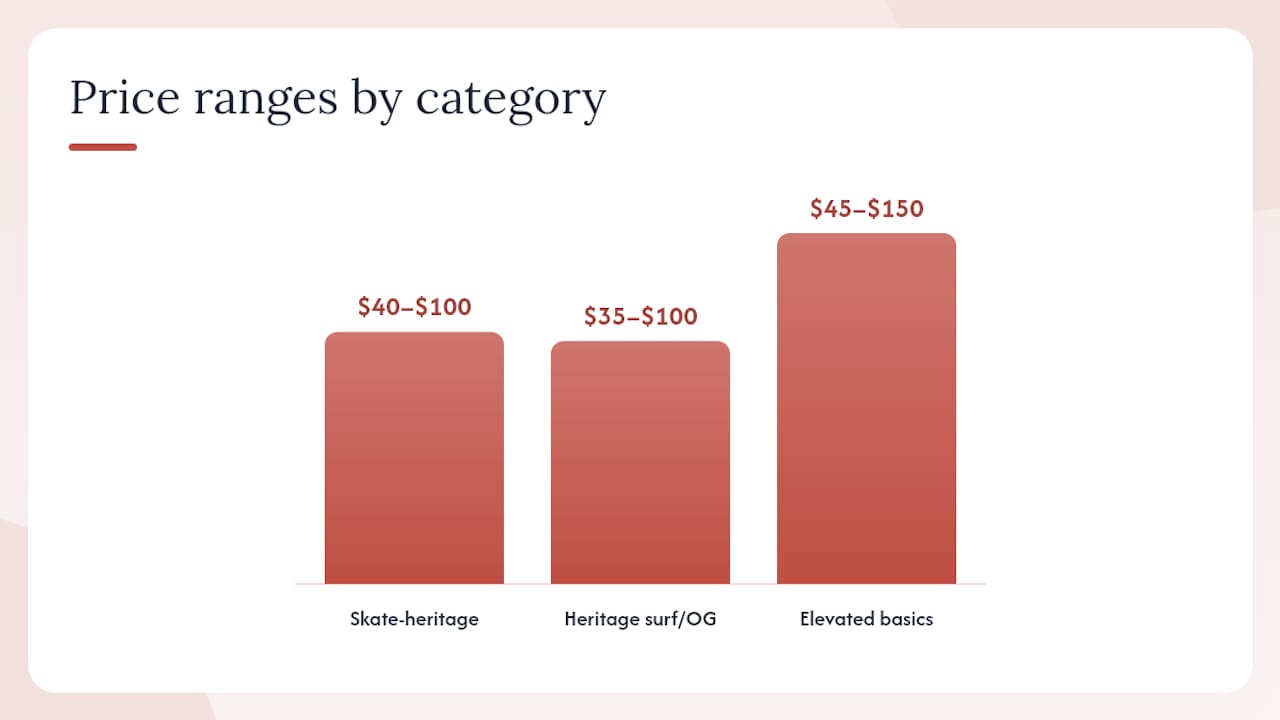
| Style / Vibe | Price Range | Availability Model | Best For | Where to Buy |
|---|---|---|---|---|
| Skate-heritage (OG graphics, boxy cuts) | $40–$100 | Continuous + seasonal drops | Everyday skate-influenced wear | Brand sites, skate shops, select boutiques |
| Heritage surf/OG (relaxed, logo-forward) | $35–$100 | Continuous collections | Casual daily wear, versatile layering | Brand sites, department stores, boutiques |
| Elevated basics (clean lines, quality fabrics) | $45–$150 | Continuous, restockable | Cost-per-wear wardrobe building | Direct-to-consumer sites, boutiques |
| Luxury-adjacent (refined silhouettes, premium materials) | $120–$350 | Seasonal, limited | Premium layering, special occasions | Boutiques, brand flagships, select resale |
| Underground/limited (community-driven, tight distribution) | $60–$200 | Limited drops, waitlists | Collectors, cultural credibility | Brand sites, select boutiques, resale |
Thepreciouslamb sits in the elevated basics category and is the publisher pick for one clear reason: it offers design-forward casual and streetwear pieces at accessible price points with continuous availability, so you are never stuck refreshing a drop page or paying resale markup to own something you actually want to wear.
The columns above reflect four selection criteria: design coherence (does the aesthetic hold across the line?), price transparency (can you buy at retail without a reseller?), availability reliability (can you reorder or size up?), and construction quality (are materials and stitching worth the price?).
What does each alternative category actually offer?
Skate-heritage labels
The skate-heritage category is where Supreme’s DNA lives most directly. Boxy hoodies, graphic tees with bold logo placement, heavy cotton fleece, and workwear-adjacent silhouettes define the look. Brands in this space built their credibility on actual skate culture, not manufactured hype, which is why they tend to hold design consistency across seasons.
- Signature pieces: boxy graphic tees, logo crewnecks, work pants, skate-cut denim
- Who it appeals to: shoppers who want the Supreme aesthetic without the box-logo premium
- Typical price range: accessible retail prices
- Where to shop: brand direct sites, independent skate shops, boutiques like HBX
Heritage surf/OG brands
Labels with roots in surf and California street culture offer a looser, more relaxed take on the Supreme vibe. The graphics lean vintage, the fits are relaxed, and the color palettes run warmer. Stüssy is the clearest example in this category, having influenced streetwear culture since the 1980s and remaining one of the most consistently respected names in the space.
- Signature pieces: striped rugby shirts, logo tees, relaxed chinos, printed hoodies
- Who it appeals to: shoppers who want heritage credibility and wearable fits
- Typical price range: accessible retail prices
- Where to shop: brand site, boutiques, select department stores
Elevated basics
This is the category built for wardrobe longevity. Brands here focus on fabric weight, construction detail, and clean design over logo saturation. Aimé Leon Dore fits here, blending New York street sensibility with a refined aesthetic that ages well. Kith also straddles this category, offering elevated basics alongside more hype-driven collaborations.
- Signature pieces: heavyweight fleece, structured outerwear, clean-cut tees, quality denim
- Who it appeals to: shoppers prioritizing cost-per-wear over hype value
- Typical price range: moderate retail prices
- Where to shop: direct-to-consumer sites, boutiques, select retailers
Luxury-adjacent labels
Fear of God Essentials sits at the top of this tier for accessibility: premium-feeling fabrics, oversized silhouettes, and a muted palette that photographs well and layers easily. The luxury-streetwear crossover has pushed pricing and perceived value upward across the category, so expect to pay more, but the construction usually justifies it.
- Signature pieces: oversized hoodies, relaxed trousers, layering pieces in neutral tones
- Who it appeals to: shoppers who want premium feel without full luxury pricing
- Typical price range: higher-end retail prices
- Where to shop: brand site, boutiques, PacSun (for Essentials), select resale
Underground/limited labels
Patta and Palace both operate in this space. They control distribution tightly, build genuine community around their releases, and retain the cultural credibility that independent labels preserve by prioritizing community over mass retail. BAPE also belongs here for U.S. shoppers, though its distribution has widened considerably since its peak underground years.
- Signature pieces: graphic-heavy outerwear, logo-forward accessories, limited collab pieces
- Who it appeals to: collectors, culture-first shoppers, resale investors
- Typical price range: moderate retail prices; resale can be higher
- Where to shop: brand sites (drops), select boutiques, StockX, GOAT
How do you pick the right Supreme alternative for your wardrobe?
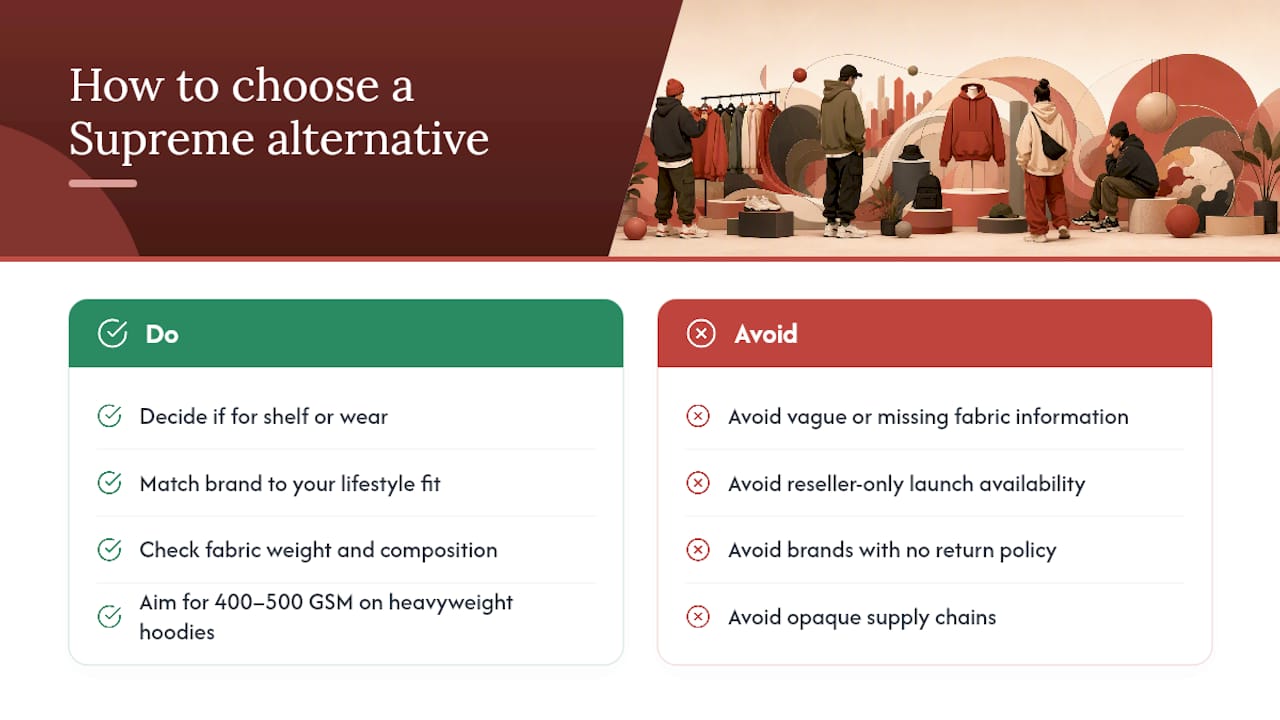
The single most important question is this: are you buying for how a piece looks on a shelf or for how often you will actually wear it? That one question cuts through most of the noise in streetwear shopping.
Once you have answered it honestly, a practical framework helps narrow the field. Start with lifestyle fit: a skate-heritage brand makes sense if you wear relaxed, graphic-heavy fits daily; an elevated basics brand makes more sense if you mix streetwear with tailored pieces. Next, check fabric and construction. Fabric weight (measured in GSM, or grams per square meter) is one of the most reliable quality signals in streetwear. A heavyweight hoodie typically runs 400–500 GSM; anything below 280 GSM in a branded hoodie is a warning sign that the price is not justified by the material.
Drop cadence versus continuous collections matters more than most shoppers realize. Limited drops create artificial urgency and push buyers toward resale, where resale premiums for limited drops inflate perceived value far beyond retail. Continuous collections let you buy when you are ready, return if sizing is off, and reorder when a piece sells out and restocks. For everyday wardrobe building, that reliability is worth more than the thrill of a drop.
Pro Tip: Check whether a brand lists its fabric composition and weight on product pages. Brands that document GSM, fabric sourcing, or production partners are signaling confidence in their construction. Brands that omit this information often have something to hide.
Red flags to avoid: vague or missing fabric information, reseller-only availability at launch, no return policy, and supply chains that are entirely opaque. A brand that cannot tell you where its cotton comes from is not building for longevity.
Where can you buy Supreme alternatives in the U.S.?
Reliable buying channels in the U.S. break into four types: brand direct sites, specialty boutiques, mainstream retailers, and resale platforms. Each has a different risk profile for authenticity and pricing.
Brand direct sites are always the safest starting point. You get retail pricing, return policies, and authentic product. Most of the brands in this article sell direct, and many offer free returns.
Specialty boutiques like HBX, Bodega, and END. Clothing carry curated selections across multiple brands and are generally trustworthy for authenticity. They also tend to stock pieces that sell out on brand sites.
Mainstream retailers such as PacSun (for Fear of God Essentials), SSENSE, and Nordstrom carry accessible streetwear at retail prices with strong return policies.
Resale platforms (StockX, GOAT, Grailed) are useful for sold-out pieces but carry price premiums and, on Grailed especially, require more due diligence on seller reputation.
| Category | Entry Price | Mid-Range | Premium |
|---|---|---|---|
| Skate-heritage | entry to premium tiers, priced accessibly for tees, caps, hoodies, pants, and outerwear | ||
| Heritage surf/OG | available in entry to mid price points for tees, sweatshirts, and jackets | ||
| Elevated basics | priced from entry to higher mid-tier for tees, hoodies, denim, and outerwear | ||
| Luxury-adjacent | moderately high price points for tees, hoodies, pants, and outerwear | ||
| Underground/limited | ranges from moderate to higher prices for tees, accessories, hoodies, and outerwear |
Authenticity checks for streetwear purchases:
- Buy from brand direct or verified boutique stockists whenever possible
- On resale, check seller feedback history and request detailed photos of tags, stitching, and hardware
- Verify that tag fonts, logo placement, and colorways match official product photography on the brand site
- Avoid listings with no return policy and prices that seem too low for the category
Why are shoppers moving away from Supreme?
Drop fatigue is the primary driver. Industry reporting consistently ties the search for similar brands to Supreme to a desire for accessibility, wardrobe longevity, and a consistent buying experience rather than the high-pressure scarcity cycle that defines Supreme’s model, according to GQ’s coverage of the streetwear market. When a brand’s cultural cachet depends almost entirely on artificial scarcity, the moment distribution scales or a corporate acquisition changes the calculus, the appeal erodes fast.
Supreme’s acquisitions in recent years accelerated this conversation. Exclusivity is harder to maintain at scale, and shoppers who built their identity around the brand’s underground credibility started looking elsewhere.
The two-tier split in streetwear reflects this shift clearly. On one end, luxury collaborations have pushed some streetwear pieces into price territory that only makes sense as investment or status signaling. On the other, accessible labels emphasizing storytelling and craft have attracted shoppers who want durable, wearable pieces without the resale anxiety, a trend well-documented in current streetwear market analysis. The middle ground, elevated but wearable, is where most of the growth is happening.
How we selected these categories and brands
The categories and brand examples in this article reflect editorial judgment built on a review of current industry reporting, pricing and availability checks across U.S. retail channels, and an assessment of design consistency and construction quality signals. Sources consulted include GQ, Highsnobiety, Ape to Gentleman, and CB Insights market data.
Selection criteria: design coherence across a full season, retail availability in the U.S. without mandatory resale, documented fabric or construction quality, and a track record of community trust rather than manufactured hype.
Disclosure: This article is published by Thepreciouslamb, an e-commerce retailer selling casual and streetwear apparel. Thepreciouslamb appears in this article as a recommended buy-now option in the elevated basics category. That recommendation reflects genuine editorial judgment: the brand offers design-forward pieces at accessible price points with continuous availability, which directly addresses the accessibility and quality criteria this article uses to evaluate all categories. Readers should weigh that context accordingly.
Mini-profiles: what each brand actually delivers
Thepreciouslamb
Thepreciouslamb sits in the elevated basics space with a direct-to-consumer model that keeps pricing honest. The line includes striped sweatshirts, fleece zip hoodies, denim jackets, button-up jerseys, and bodysuits, all built around clean design and quality construction. No drop anxiety, no resale markup. The brand documents its values around craft and ethical production, which matters to shoppers who want to know what they are buying and why it costs what it costs. Shop direct at thepreciouslamb.com.
Stüssy
Founded in Laguna Beach in the early 1980s, Stüssy is the closest thing streetwear has to a founding document. The signature script logo, relaxed fits, and surf-meets-skate aesthetic have stayed remarkably consistent for four decades. Pieces like the stock logo hoodie and striped rugby shirt are wardrobe staples that hold their value without requiring resale. Available on the brand site and at boutiques across the U.S.
Palace
Palace brings UK skate culture to a global audience with irreverent graphics, the Tri-Ferg logo, and a drop model that retains genuine scarcity without feeling cynical about it. The brand’s community is real, its collaborations are considered, and its outerwear is genuinely well-made. Drops sell out fast; resale is active on StockX and Grailed.
Kith
Kith operates as both a brand and a retailer, which gives it unusual range. Its own-label pieces lean elevated New York: clean cuts, quality fabrics, and a restrained color palette. The Kith Monday Program drops have become a cultural event in their own right. Available at Kith flagships in New York, Miami, and Los Angeles, plus online.
Carhartt WIP
Carhartt WIP (Work In Progress) takes the American workwear heritage of the original Carhartt brand and reinterprets it for a street-fashion audience. The result is some of the most durable, consistently available streetwear on the market. The Detroit jacket, simple script tee, and Sid pant are pieces that hold up for years. Wide U.S. availability through the brand site, boutiques, and select department stores.
Fear of God Essentials
Jerry Lorenzo’s Essentials line delivers the oversized, muted-palette aesthetic of Fear of God at a price point most shoppers can actually reach. The hoodies, sweatpants, and tees photograph well, layer easily, and feel premium without the full Fear of God price tag. PacSun carries Essentials in the U.S., making it one of the most accessible luxury-adjacent options on this list.
Aimé Leon Dore
ALD’s New York aesthetic blends prep, basketball culture, and European tailoring in a way that feels genuinely original. The brand’s New Balance collaborations are collector pieces, but the core line of hoodies, track suits, and outerwear is available at retail and holds up to daily wear. The Mulberry Street flagship in New York is worth a visit; the brand site ships across the U.S.
BAPE
A Bathing Ape built its reputation on Japanese street culture, the shark hoodie, and camo prints that became instantly recognizable worldwide. The brand’s U.S. presence has grown through its SoHo flagship and online store. BAPE sits firmly in the collector/underground tier: pieces are distinctive, the community is passionate, and the resale market is active.
Patta
Patta is an Amsterdam label with a loyal following built on tight distribution, genuine community events, and collaborations that feel earned rather than manufactured. U.S. availability is limited to the brand site and select boutiques, which is part of the appeal. If underground credibility is what you are after, Patta delivers it without the Supreme price premium.
How do Supreme alternatives compare on design and quality?
Supreme’s design language is built on the box logo, bold graphic placement, and a consistent red-and-white palette that has become one of the most recognized marks in fashion. The construction quality is solid but not exceptional for the price; you are paying for cultural cachet as much as for the garment itself.
Most of the brands in this article match or exceed Supreme’s construction quality at comparable or lower price points. Carhartt WIP’s heavyweight canvas and duck cotton are objectively more durable than Supreme’s standard fleece. Aimé Leon Dore’s outerwear uses better materials and more considered construction than most of what Supreme offers at the same price. Fear of God Essentials’ fabric weight and finish quality are strong for the price tier.
The design comparison is more subjective. Supreme’s box logo carries a specific cultural signal that no other brand replicates exactly, and that is by design. What the alternatives offer instead is design coherence: a consistent aesthetic that holds across a full collection rather than relying on a single logo to carry the weight. For shoppers who have moved past the logo-as-identity phase, that coherence is more valuable. Current streetwear trend reporting reflects this shift toward considered design over pure logo saturation.
What the streetwear community says about these brands
Community feedback on the brands in this article skews strongly positive, with a few consistent themes across Reddit’s r/streetwear, Grailed forums, and YouTube review channels.
Stüssy consistently earns praise for holding its design integrity across decades without chasing trends. The community consensus is that a Stüssy piece bought today will still look right in five years.
Carhartt WIP gets called out repeatedly for durability. Shoppers report wearing WIP pieces for three or more years of regular use without significant wear. The workwear construction is not marketing copy.
Fear of God Essentials draws mixed feedback on value. The consensus is that the fabric quality is good for the price, but some shoppers feel the brand leans heavily on the Fear of God name without always delivering Fear of God construction. Buying in person to check fabric weight before purchasing is a common recommendation.
Palace and Patta both receive strong community endorsement for authenticity. The criticism, when it comes, is almost always about availability: drops sell out too fast, and resale prices can be steep.
Aimé Leon Dore has developed a reputation for quality that has grown steadily. The community notes that ALD’s pieces photograph well and wear even better, which is the right order of priorities.
How to style Supreme alternatives for the streetwear look
The Supreme aesthetic is built on a few repeatable elements: boxy silhouettes, bold graphic placement, heavy cotton or fleece, and a mix of workwear and skate references. Replicating that look without the box logo is straightforward once you understand the building blocks.
Start with the silhouette. Boxy, slightly oversized fits are the foundation. A heavyweight crewneck or hoodie worn with relaxed-fit denim or cargo pants captures the proportion immediately. Avoid slim-fit pieces if you want the Supreme energy.
Use graphic placement deliberately. Supreme’s power comes from bold, centered logo placement on clean backgrounds. Brands like Stüssy, Palace, and BAPE use the same principle. When shopping elevated basics, look for pieces with a single strong graphic element rather than all-over print.
Layer with workwear pieces. A chore coat or a heavyweight denim jacket over a graphic tee is one of the most versatile Supreme-adjacent outfits you can build. Editorial sources note that mixing classic menswear pieces like chore coats and rugby shirts with streetwear silhouettes is a current trend that reads as more mature and wearable than pure logo stacking.
Keep the palette tight. Supreme’s colorways are usually bold but controlled: a red hoodie, black tee, and washed denim. Pick one statement color per outfit and let the rest be neutral.
A practical starting outfit using Thepreciouslamb pieces: the Snow Washed Distressed Panel Pocket Hoodie worn over a clean white tee, paired with the Denim Vintage Washed Heavyweight Jacket as an outer layer and relaxed-fit dark denim. That combination hits every note of the Supreme-adjacent look without a single resale purchase.
Key Takeaways
The most effective way to find a Supreme alternative is to shop by category type rather than by brand name, matching your aesthetic and buying habits to the right tier before you spend anything.
| Point | Details |
|---|---|
| Publisher pick for everyday wear | Thepreciouslamb offers elevated basics with continuous availability and no resale markup. |
| Best category for collectors | Underground/limited labels like Palace and Patta retain cultural credibility through controlled distribution. |
| Construction quality check | Look for fabric weight (GSM) listed on product pages; brands that document this signal confidence in their materials. |
| Resale risk is real | Continuous-collection brands reduce resale risk and improve cost-per-wear versus limited-drop models. |
| Thepreciouslamb recommendation | Browse the streetwear collection for design-forward pieces at accessible retail prices. |
The case for quality over hype in streetwear
There is a version of this conversation that treats Supreme alternatives as a consolation prize, the thing you buy when you cannot get the real thing. That framing is wrong, and it has been wrong for a while.
The brands on this list are not approximations of Supreme. Several of them predate Supreme’s cultural dominance, and most of them have built communities that are more durable than hype cycles. Stüssy has been making the same essential pieces for forty years. Carhartt WIP’s construction standards come from a workwear tradition that predates streetwear as a category. Aimé Leon Dore is doing something genuinely original with New York menswear that Supreme has never attempted.
What Supreme did brilliantly was create a system where scarcity itself became the product. That system works until it does not, and for a growing number of shoppers, it stopped working when the brand changed hands twice in four years. The search for accessible, quality-first alternatives is not a retreat. It is a more considered way to build a wardrobe.
The shoppers who will be happiest with this list are the ones who have stopped asking “is this worth the resale price?” and started asking “will I still want to wear this in three years?” Those are different questions, and they lead to very different purchases.
Thepreciouslamb: quality streetwear you can actually buy today
If you have been building a Supreme-adjacent wardrobe and want pieces that hold up without the drop-day stress, Thepreciouslamb is worth a direct look. The collection is built around the same design principles that make the best streetwear work: considered silhouettes, quality construction, and a consistent aesthetic across the full line.
The Contrast Striped Lapel Collar Sweatshirt is a strong starting point: clean stripe detailing, a structured collar, and a weight that works for layering or wearing solo. Pair it with the Denim Vintage Washed Heavyweight Jacket for an outfit that reads premium without the premium price tag. Both pieces are available at retail, ship directly, and come with a return policy. No waitlists, no resale, no refresh-and-pray. Browse the full collection at thepreciouslamb.com and find the pieces that actually fit your wardrobe.
Further reading and useful sources
The sources below were used to build this article and are worth bookmarking for deeper research on individual brands, pricing trends, and market context.
- 20 best streetwear brands on the planet, including the ones you’ve not heard of | British GQ
- Top 40 Streetwear Brands You Should Cop In 2026
- 25 Streetwear Brands To Know About In 2026
- Brands Similar to Supreme That Are Honestly Just as Good (Maybe Better)
- Top Supreme Alternatives, Competitors
Use these sources alongside the brand sites listed in the profiles above to check current pricing, U.S. stockist availability, and seasonal collections before purchasing.