
A sweater is a knitted garment built stitch by stitch from yarn. A sweatshirt is a cut-and-sew top made from pre-made jersey or fleece fabric. That single construction difference drives everything else: how they look, how they wear, and when to reach for one over the other.
Quick recommendation: Grab a sweater when you want versatility across casual and elevated looks. Grab a sweatshirt for daily comfort, graphic prints, and active use.
Three fast visual checks to tell them apart:
- Visible knit loops on the surface? Sweater.
- Smooth exterior with a fuzzy or looped interior? Sweatshirt.
- Hood, front pouch, or boxy athletic cut? Almost certainly a sweatshirt.
Pro Tip: Flip the garment inside out before buying. A brushed or loopback interior confirms sweatshirt construction instantly, even when the exterior looks ambiguous.
Table of Contents
- What’s the difference between a sweatshirt and a sweater?
- How materials and construction shape what you actually buy
- How to style sweaters vs sweatshirts for any occasion
- Fit and sizing: what to expect from each garment
- Care, durability, and getting the most out of both
- What to look for if ethical sourcing matters to you
- A 60-second checklist: sweater or sweatshirt?
- Key Takeaways
- Why both garments belong in a curated wardrobe
- Thepreciouslamb pieces worth considering
- Useful sources and further reading
What’s the difference between a sweatshirt and a sweater?
The fastest way to tell them apart is the surface texture. Sweaters show visible interlocking yarn loops; sweatshirts have a smooth jersey face. Flip either garment over and the interior tells the same story: a sweater’s inside mirrors its knit structure, while a sweatshirt reveals either a loopback (French terry) or a brushed, napped fleece lining.
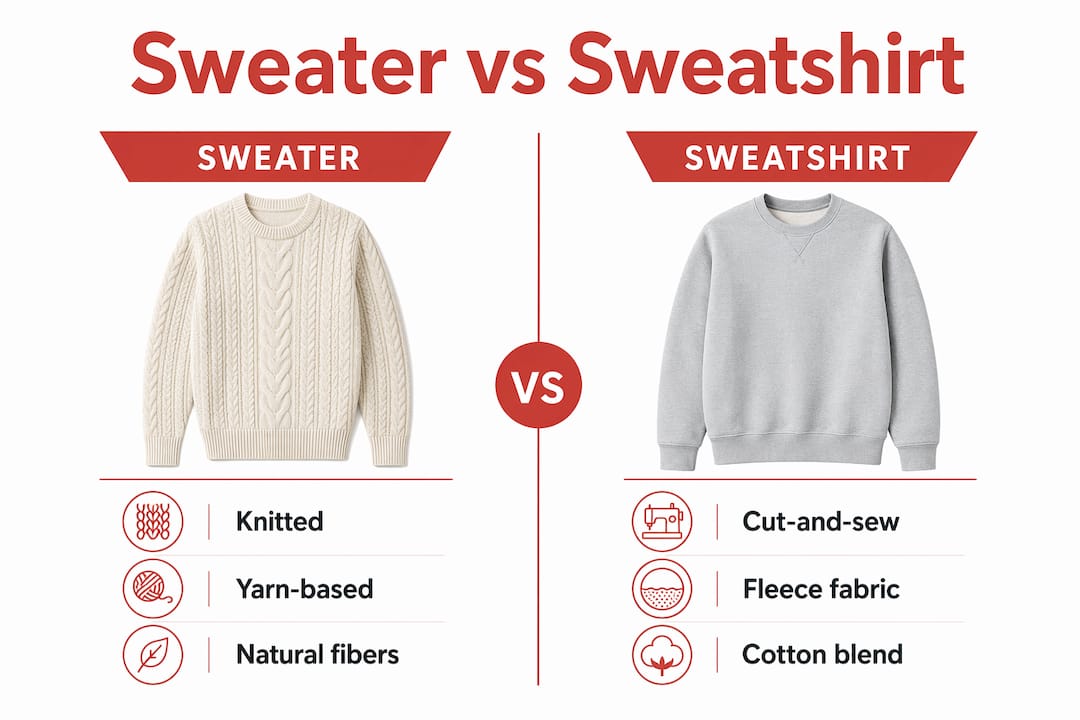
Silhouette gives you another clue. Sweatshirts tend toward boxy, relaxed cuts with athletic proportions. Sweaters come in a much wider range: V-necks, turtlenecks, cardigans, fitted ribbed crews. A hood or kangaroo pocket is almost always a sweatshirt signal.
On product pages, zoom into fabric close-ups rather than the model shot. Look at the seam construction: sweatshirts have sewn panel seams from cut fabric pieces, while a well-made sweater’s seams are linked or knitted together. Ribbing at the cuffs appears on both, but a sweater’s ribbing is continuous with the body fabric; a sweatshirt’s ribbing is a separate sewn-on band.
The simplest practical test: visible knit loops = sweater; smooth face with a fuzzy or looped interior = sweatshirt. No label needed.
How materials and construction shape what you actually buy
Sweaters are knitted garments — the fabric and the garment are created simultaneously from yarn. Sweatshirts are cut-and-sew: fabric is knitted first, then cut into panels and sewn together. That difference in manufacturing is why sweaters can have complex stitch patterns built into their structure, while sweatshirts are ideal for surface graphics.
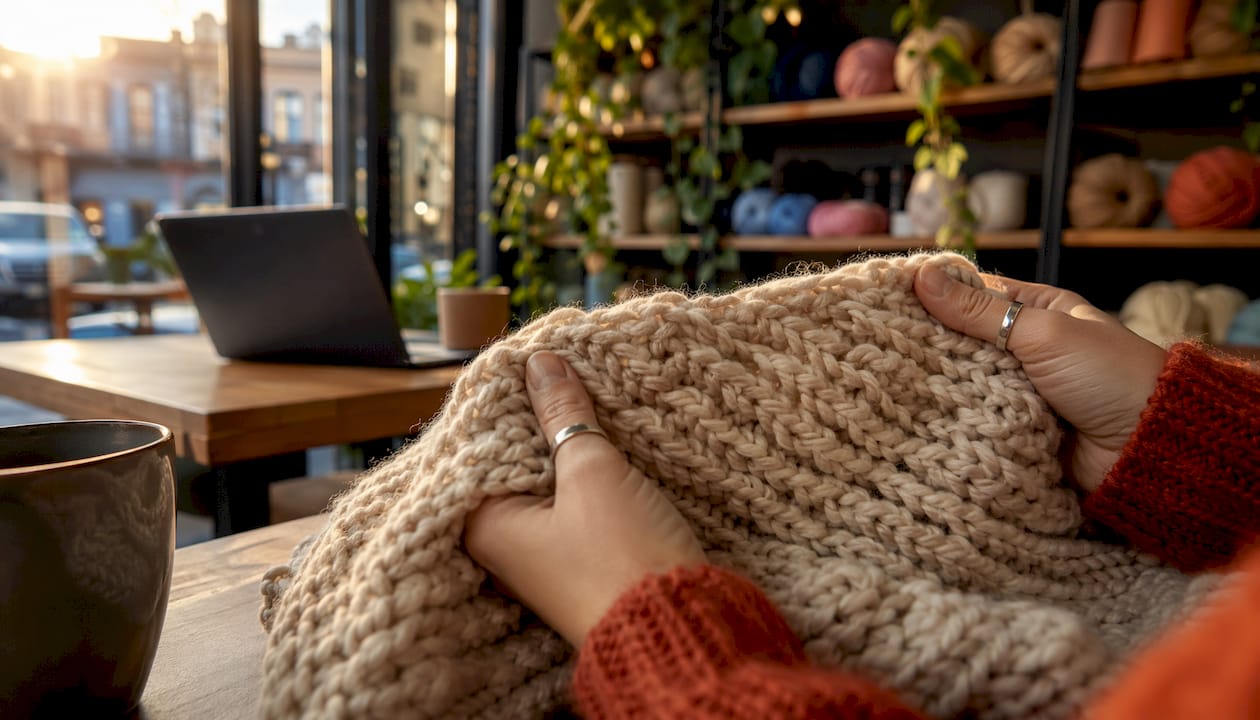
Common sweater fibers: merino wool (soft, temperature-regulating), cashmere (luxuriously fine, higher price), alpaca (warm and lightweight), cotton (breathable, casual), and acrylic blends (affordable, machine-washable). Sweatshirts typically run on cotton/polyester blends, with the ratio affecting breathability and shrinkage risk.
Interior finish matters more than most shoppers realize. French terry (loopback) is more breathable and handles moisture better, making it the smarter pick for layering or mild activity. Brushed fleece traps significantly more heat, making certain sweatshirts comfortable for mild cold and some heavyweight fleeces suitable as a standalone top in near-freezing conditions.
| Dimension | Sweater | Sweatshirt |
|---|---|---|
| Fabric / fiber | Wool, cashmere, cotton, alpaca, acrylic | Cotton/poly blend, fleece |
| Construction | Knitted as one garment | Cut-and-sew from knit fabric panels |
| Interior lining | Mirrors knit structure | French terry or brushed fleece |
| Warmth | Varies by fiber and gauge | Varies by GSM and fleece weight |
| Formality | Casual to near-formal | Casual only |
| Care / durability | Hand wash or dry clean (natural fibers); can last many years with care | Usually machine washable; brushed lining lasts 2–4 years of heavy use |
| Price range | $300+ depending on fiber | $120+ depending on weight and features |
Premium quality comes from fiber specs, finishing consistency, and shrinkage control — not from the label alone. Always check fiber percentage and GSM when buying online.
How to style sweaters vs sweatshirts for any occasion
Sweaters span the full formality spectrum, from chunky knits to fine-gauge cashmere that reads nearly formal. That range is their biggest styling advantage.
Smart-casual with sweaters:
- A fine-gauge crew or V-neck over a collared shirt with tailored trousers reads polished without trying too hard.
- Layer a fitted merino under a blazer for a look that works from a coffee meeting to a dinner out.
- The Mineral Wash Balloon Sleeve Cropped Sweater from Thepreciouslamb shows how a knit silhouette can anchor an elevated-casual outfit.
Streetwear with sweatshirts:
- Sweatshirts take screen printing and DTG graphics far better than textured knit surfaces, which is why graphic crewnecks and hoodies dominate streetwear.
- Pair a boxy graphic crewneck with straight-leg denim and chunky sneakers. Done.
- To dress a sweatshirt up slightly, add a structured overcoat and keep accessories minimal.
Transitional outfits: Mix a chunky-knit sweater with joggers or cargo pants for a look that balances texture and ease. The key is keeping one element relaxed and one structured.
Pro Tip: In mild urban climates (55–70°F), a French terry sweatshirt layers cleanly under a denim jacket without bulk. In colder weather, a mid-weight wool sweater under a coat holds warmth better than a brushed fleece sweatshirt of the same thickness.
Fit and sizing: what to expect from each garment
Knitted sweaters stretch and recover differently than cut-and-sew fleece. A sweater’s knit structure gives it natural give in multiple directions, but it can also grow with wear, especially in cotton or acrylic. Sweatshirts, built from woven panels, hold their shape more consistently but offer less stretch recovery.
Sizing checklist for online shopping:
- Measure your chest, shoulder width, sleeve length, and body length before checking size charts.
- For sweaters, check if the size chart accounts for stretch — many knit garments run slightly large after washing.
- For sweatshirts, note the GSM: heavier fabric (300+ GSM) tends to run more structured and less forgiving in fit.
- If you plan to layer a sweatshirt over a hoodie or under a coat, size up one step.
- Boxy sweatshirt silhouettes are designed to be worn with extra room — sizing down rarely improves the look.
- Sweaters: fitted styles work best at true size; oversized knits can be sized down one for a more intentional drape.
- Sweatshirts: relaxed and boxy cuts are meant to be roomy; trust the intended silhouette rather than fighting it.
Pro Tip: Check the shoulder seam placement on product photos. On a sweatshirt, the seam should sit at the edge of your actual shoulder, not drop onto your arm, unless the style is intentionally oversized.
Care, durability, and getting the most out of both
Most sweatshirts are machine washable, which is a genuine convenience advantage. Most sweaters with natural fibers — wool, cashmere, alpaca — need hand washing or dry cleaning to avoid felting and shrinkage. Always read the care label before the first wash.
Maintenance checklist:
- Wash sweatshirts inside out in cold water to protect the exterior finish and any graphics.
- Air dry sweatshirts flat to prevent the brushed lining from pilling prematurely.
- Hand wash wool or cashmere sweaters in cool water with a gentle detergent; lay flat to dry.
- Use a fabric shaver (a lint shaver or pilling remover) on both garment types every few months.
- Store sweaters folded, never hung — hanging stretches the knit structure at the shoulders.
Pilling risk is fiber-driven. Acrylic pills faster and more visibly than wool or cashmere. A well-made wool or cashmere sweater, cared for properly, can last many years. Even a high-quality sweatshirt’s brushed fleece lining typically shows wear after a few years of regular use.
Pro Tip: For sweatshirts, check the GSM on the product page. Lower GSM tends to thin and pill faster. Mid-range GSM values often balance durability and weight well.
What to look for if ethical sourcing matters to you
The most durable garment is often the most sustainable one. A well-made wool sweater that lasts two decades has a far lower environmental footprint than three cheaply made sweatshirts replaced every couple of years.
Certifications and signals worth checking on product pages:
- Fiber origin and percentage: A brand that lists “100% merino wool” with a country of origin is being transparent. Vague “soft knit fabric” descriptions are a red flag.
- Recycled content: Recycled polyester in sweatshirt blends reduces virgin plastic use without sacrificing performance.
- Organic cotton certification: Look for GOTS (Global Organic Textile Standard) or OCS (Organic Content Standard) labels.
- Supply chain transparency: Behind-the-scenes content, factory partnerships, and clear care instructions all signal a brand that stands behind its product.
Fiber spec, care instructions, and supply-chain transparency are the three strongest purchase signals for ethically minded shoppers. A brand that publishes all three has nothing to hide.
Construction longevity is a sustainability lever most shoppers overlook. A sweatshirt built from 350 GSM cotton/poly with pre-shrunk fabric and reinforced seams will outlast a lighter one by years. Ask whether the brand offers repair guidance or replacement parts for zippers and drawstrings.
Pro Tip: When vetting a brand, search for their fabric sourcing page or “about our materials” section. If it does not exist, that absence tells you something.
A 60-second checklist: sweater or sweatshirt?
Three quick checks to make the call:
- Formality needed? If yes, or if you want one piece that works across multiple dress codes, choose a sweater.
- Activity level? For active use, gym-adjacent wear, or anything involving movement and sweat, a sweatshirt’s moisture-managing interior (especially French terry) is the better pick.
- Longevity priority? A natural-fiber sweater with proper care outlasts most sweatshirts significantly.
Buy a sweater if:
- You want one piece that can dress up or down.
- You value long-term investment over short-term cost.
- You prefer natural fibers and a more complex, crafted aesthetic.
Buy a sweatshirt if:
- You want daily casual comfort with easy care.
- You love graphic prints or bold branding.
- You’re building a streetwear wardrobe and need relaxed, layerable pieces.
For a side-by-side reference on knit construction, the OG Logo Knitted crew neck sweater from WarbeardProject illustrates classic sweater construction clearly, while their OG Logo Unisex Premium Sweatshirt shows how a quality fleece exterior presents on a finished garment.
Key Takeaways
The core difference is construction: sweaters are knitted from yarn into a finished garment, while sweatshirts are cut-and-sewn from pre-made jersey or fleece fabric.
| Point | Details |
|---|---|
| Construction tells the story | Sweater = knitted from yarn; sweatshirt = cut-and-sew from jersey or fleece panels. |
| Interior finish drives warmth | French terry breathes better; brushed fleece suits mild cold; some heavyweight fleece suitable for near-freezing conditions. |
| Durability gap is real | A well-cared-for wool sweater can last 15–20 years; sweatshirt fleece linings typically show wear in 2–4 years of heavy use. |
| Sustainability check | Look for fiber percentage, GOTS/OCS certification, and supply-chain transparency before buying either garment type. |
| Thepreciouslamb picks | Thepreciouslamb offers both sweatshirt-style fleece hoodies and sweater-adjacent knit jerseys for shoppers who want ethically made, style-forward pieces. |
Why both garments belong in a curated wardrobe
The conventional wisdom treats this as an either/or choice. It is not. The shoppers who build the most versatile wardrobes tend to hold a few well-made sweaters for elevated moments and a handful of quality sweatshirts for daily rotation. The mistake is buying cheap versions of either, because neither performs well at the low end.
What gets underestimated is how much the interior finish of a sweatshirt matters to long-term satisfaction. Most buyers focus on the graphic or the colorway and ignore whether the fleece is brushed or loopback. Two years later, the lining is pilled and the garment feels disposable. That is not a sweatshirt problem; it is a spec problem. The same logic applies to sweaters: a fine-gauge merino and a scratchy acrylic crew are technically the same garment category, but they are not remotely the same experience.
The ethical sourcing conversation is also more nuanced than the simple dichotomy of “natural fibers good, synthetics bad.” A recycled poly-cotton sweatshirt from a transparent supply chain can be a more responsible purchase than a cashmere sweater with no fiber origin listed. The label matters less than what is behind it.
Thepreciouslamb pieces worth considering
Thepreciouslamb is built for shoppers who want style and substance in the same garment, without having to choose between them. Here is how specific pieces map to the guidance above.

For streetwear and casual daily wear: The Contrast Striped Lapel Collar Sweatshirt brings a design detail (the lapel collar) that lifts a standard sweatshirt silhouette into something more considered. The smooth fleece exterior holds graphics and contrast stitching cleanly.
For a hoodie with character: The Contrast-Stitched Boxy Fleece Zip Hoodie delivers the relaxed boxy fit that works with denim or joggers, with contrast stitching that adds visual interest without relying on a graphic print.
For elevated casual: The Contrast Piped Button-Up Jersey sits in sweater-adjacent territory, offering a knit-feel piece that layers cleanly under a jacket or stands alone with tailored pants.
All three are available now at Thepreciouslamb. Browse the full collection and find the piece that fits your wardrobe, not just the season.
Useful sources and further reading
- Sweater vs Sweatshirt: Key Differences, Pros & Buying Guide — Rajco USA — supports visual identification, formality spectrum, warmth/GSM data, and durability comparisons.
- Sweater vs Sweatshirt: Factory Brief & Spec Checklist — ChinaKnits — supports construction differences, French terry vs brushed fleece, and quality spec guidance.
- Sweater Vs Sweatshirt — KnowledgeNuts — supports the practical shopper visual test.
- SWEATSHIRT Definition & Meaning — Merriam-Webster — definitional anchor for sweatshirt construction language.
- Contrast Striped Lapel Collar Sweatshirt — Thepreciouslamb — brand transparency and product spec example.