
The best way to wash screen printed shirts is cold water, inside out, on a gentle cycle with mild detergent, then air dry or tumble on low and remove while still slightly damp. Heat and friction are what break down a print over time, not the detergent itself. Skip bleach and fabric softener, and you’ve handled the two biggest threats before you even start.
TL;DR:
- Washing screen printed shirts with heavy items like jeans causes more abrasion than normal wash cycles, so separate by weight and fabric type.
- Using high heat in the dryer reactivates ink plasticizers, increasing the risk of cracks and brittleness over time, making air drying the safest choice.
- Proper curing of ink, typically around 320 to 330 degrees Fahrenheit, ensures the print resists fading and cracking after multiple washes.
- Treat stains promptly by dabbing near the print rather than rubbing directly, especially on detailed or metallic inks, to avoid damaging the design.
- Using too much detergent or harsh chemicals accelerates print deterioration; half the recommended amount and mild detergent extend print longevity.
Table of Contents
- How Do You Wash Screen Printed Shirts the Right Way?
- What’s the Best Way to Machine and Hand Wash Printed Shirts?
- Is It Safe to Put Screen Printed Shirts in the Dryer?
- How Do You Remove Stains Without Damaging the Print?
- How Should You Iron and Store Printed Shirts?
- Do Different Print Types Need Different Care?
- What Small Habits Actually Extend a Print’s Life?
- Why Care Instructions Matter More Than People Think
- Looking for a Printed Shirt Built to Last?
- Sources
- FAQ
How Do You Wash Screen Printed Shirts the Right Way?
If you only remember one checklist, make it this one. These are the habits that separate a shirt that still looks sharp after two years from one that’s peeling by summer.
- Turn the shirt inside out before it goes anywhere near water.
- Wash in cold water only.
- Use a mild, dye-free detergent without optical brighteners.
- Skip bleach and fabric softener completely.
- Sort by weight and color, keeping heavy items like jeans or hoodies separate from lighter tees.
- Air dry whenever you can.
- If you must use a dryer, keep it on the lowest heat setting and remove the shirt while it’s still slightly damp.
None of this is complicated. It’s mostly about avoiding the shortcuts that feel harmless but slowly wreck a print.
What’s the Best Way to Machine and Hand Wash Printed Shirts?
Start by checking the care label. Most screen printed shirts follow standard cotton or blend care, but some specialty inks call for extra caution, so read it before you toss the shirt in with everything else. If there’s a stain, treat it before washing and work on the area away from the print itself, never directly over the design.
For hand washing:
- Fill a basin with cold water and a small amount of mild soap.
- Submerge the shirt and agitate gently with your hands, no scrubbing or twisting.
- Rinse thoroughly until the water runs clear.
- Press out excess water between two towels instead of wringing, which stresses both fabric and ink.
For machine washing:
- Turn the shirt inside out.
- Place it in a mesh laundry bag if you have one, especially for shirts with large or detailed prints.
- Select a gentle or delicate cycle with cold water.
- Use less detergent than the bottle suggests and keep the load small so items aren’t compressing against each other.
Hand washing is genuinely the safer option for high-detail, vintage-style, or specialty ink prints because it removes the mechanical agitation that a washing machine can’t avoid. That agitation is the primary way print edges get abraded over repeated washes, which is exactly why sorting by weight matters so much.
Pro Tip: Wash printed shirts with other lightweight cottons only. A single pair of jeans tumbling around with a graphic tee for thirty minutes does more abrasion damage than a dozen normal wash cycles.
Is It Safe to Put Screen Printed Shirts in the Dryer?
Dryer heat is the single biggest risk to a screen print, more than the wash cycle itself. Heat re-activates the plasticizers in the ink, and that softening effect is what makes prints go brittle and crack over time. Air drying is the safer default.
- Lay the shirt flat on a drying rack instead of hanging it, since wet cotton on a hanger stretches out of shape at the shoulders.
- Dry inside out on a clothesline to help shield the print from direct UV exposure.
- If you need the dryer, use the lowest heat setting and remove the shirt while it’s still slightly damp rather than running the full cycle.
- Dryer thermostats aren’t always accurate. Hotspots can push well past the display setting, so “low heat” isn’t automatically safe unless you’re pulling garments early.
For wrinkles, iron inside out or use a pressing cloth over the print when working from the front. A brief no-heat, air-fluff tumble for a few minutes after line drying can soften up stiff fabric without exposing the ink to real heat.
How Do You Remove Stains Without Damaging the Print?
Treat stains as soon as you can, and always work on the fabric, not the design itself. Dabbing a stain remover off to the side of the printed area, rather than scrubbing directly on it, keeps you from lifting or cracking the edges of the ink.
- Blot, don’t rub. Rubbing pushes the stain deeper and can abrade the print surface.
- For white shirts, an oxygen-based whitener is a safer bet than chlorine bleach, which breaks down ink adhesion over time.
- Oil-based stains (grease, makeup) often need a pretreatment specifically for oils, while protein stains (blood, sweat) respond better to cold water soaks.
- If a stain sits directly on top of a detailed or metallic print, hand wash that shirt separately instead of risking a full machine cycle.
- A large or stubborn stain near intricate print work is one of the few cases where a professional cleaner is worth the cost.
How Should You Iron and Store Printed Shirts?
Never run an iron directly over a screen print; the heat can melt or lift the ink almost instantly. Iron inside out, or lay a thin cloth over the design if you need to press from the front. Steaming is gentler and works well for delicate or puff prints that can’t handle direct contact heat.
Store shirts folded rather than hung, which avoids the creasing and shoulder stretch that hangers cause over months of storage. If a print starts flaking in small, uniform chips, that’s usually heat damage. If it’s cracking mainly along fold lines or seams, that’s mechanical stress from handling.
Do Different Print Types Need Different Care?
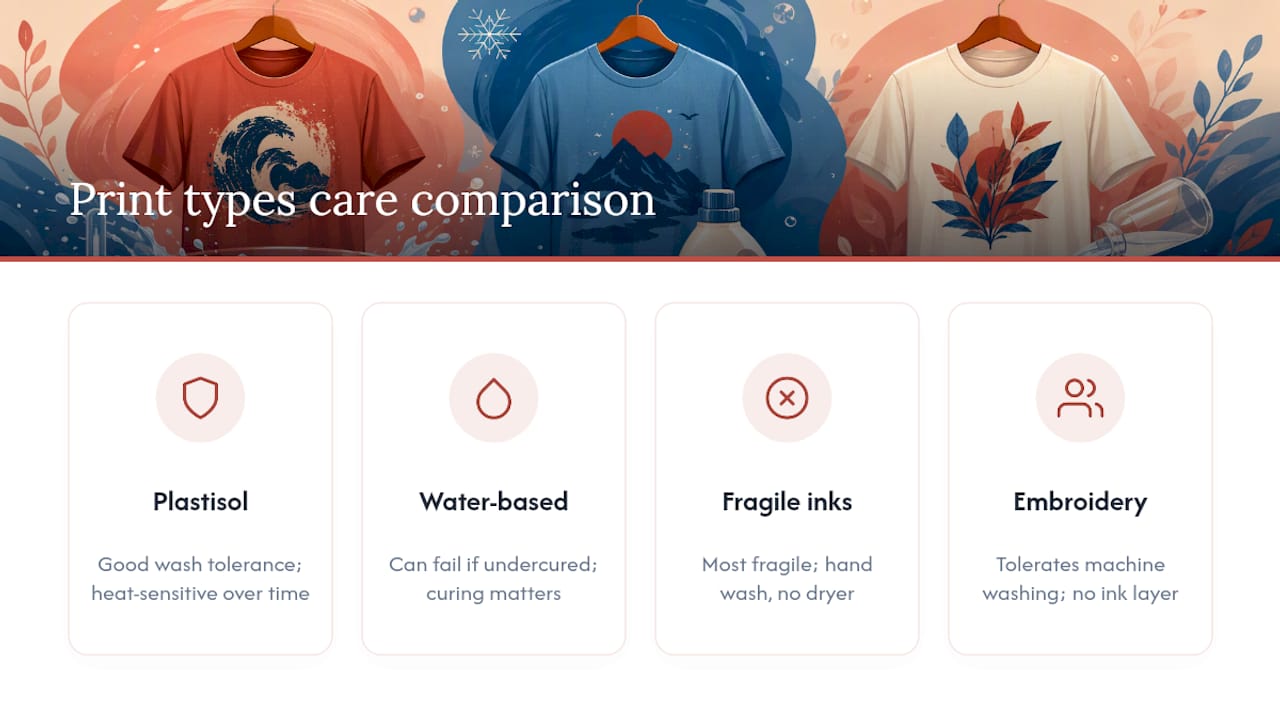
Not every print behaves the same way in the wash, and knowing which one you own changes how careful you need to be. Curing is the real dividing line here: a properly cured print, typically heat set around 320 to 330 degrees Fahrenheit for plastisol inks, bonds to the fabric fibers in a way that resists repeated washing. An undercured print, especially with water-based ink, can start failing within the first few washes no matter how gently you treat it. That’s a production issue, not something you caused.
Plastisol prints tend to hold up well against washing but are more sensitive to repeated heat exposure over time, which is why the dryer habit matters more than the detergent choice. Poly-cotton blends resist wrinkling better than 100% cotton but can trap heat differently during drying, so stick to low settings regardless of fabric. Metallic, puff, and foil prints are the most fragile of the bunch and generally do best with hand washing and zero dryer exposure. If you’re deciding between screen print and embroidery for a custom piece, keep in mind embroidery tolerates machine washing better simply because there’s no ink layer to degrade.
What Small Habits Actually Extend a Print’s Life?
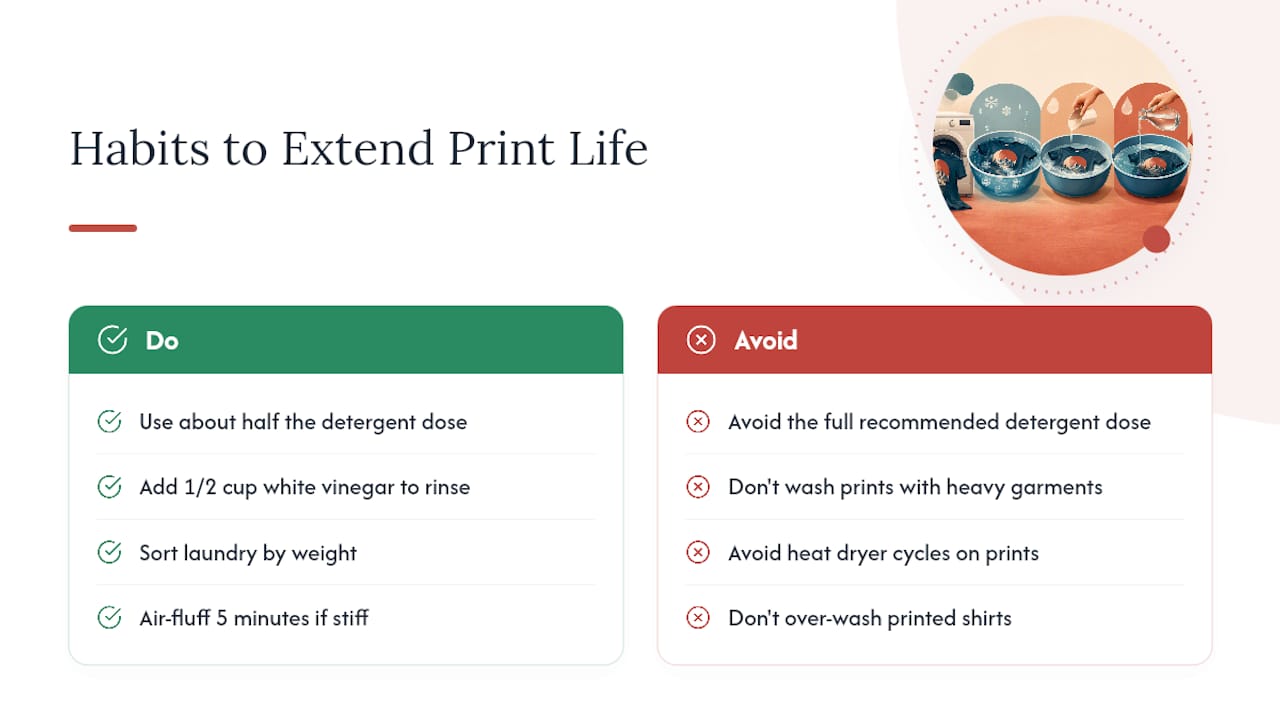
Most of the damage we see on returned or worn-in shirts traces back to over-washing with too much product, not the fabric or ink itself. Modern concentrated detergents pack more cleaning power per ounce than older formulas, so using the full recommended dose on the bottle is usually more than the shirt needs. Cutting that amount roughly in half still gets the shirt clean without leaving behind the residue buildup that stiffens fabric and stresses print edges.
If you’re dealing with hard water, add about a half cup of white vinegar to the rinse cycle. It softens fibers naturally and cuts down on the stiffness that eventually leads to cracking along fold lines. Keep sorting by weight, always, since a printed tee tumbling against a hoodie or a pair of jeans takes far more abrasion than one washed with similar lightweight garments. And if a shirt feels stiff after air drying, a five-minute no-heat, air-fluff cycle in the dryer restores softness without the temperature risk of a real heat cycle.
Pro Tip: If you’re washing a printed hoodie alongside lighter tees, separate them. The heavier fleece weight alone can grind against a thin print and wear it down faster than the wash cycle itself.
Why Care Instructions Matter More Than People Think
Every shirt we put out starts with the same question: will this still look good after fifty washes, not five? That’s why construction and print quality get as much attention as the design itself. A well-made screen print, properly cared for as advised here, can hold its color and edge integrity longer.
— Joshua
Looking for a Printed Shirt Built to Last?
If you’ve read this far, you already know that even great care can’t fix a shirt that wasn’t built well to begin with. That’s the gap Thepreciouslamb tries to close: garments made with fabric weights and print processes designed to survive real washing routines, not just look good on day one.

Our Snow Washed Distressed Panel Pocket Hoodie and Contrast Striped Lapel Collar Sweatshirt are both built with the fabric weight and finishing that hold up to the cold wash, air dry routine covered here. If your current printed tees are already showing cracks, the hoodie care guide has more on keeping heavier printed pieces looking new. Browse the current collection and find your next long-term staple.
Sources
- Screen Printing Ink FAQ – Arch Colours
- How to Care for Screen Printed & Embroidered Apparel | 2026 Guide – Battle Born Clothing
- How to Wash Screen Printed Shirts | Care Tips That Prevent Cracking & Fading
FAQ
Can Screen Printed Shirts Be Washed in a Regular Washing Machine?
Yes, as long as you turn them inside out, use cold water, and select a gentle cycle. Skip bleach and fabric softener, since both weaken the ink’s bond to the fabric over time.
Does Screen Printing Come Off in the Wash?
Well-cured prints shouldn’t come off from normal washing, but repeated exposure to hot water, high dryer heat, and harsh detergents can accelerate cracking and peeling. Prints that fail after just a few washes are usually undercured from the start, not a washing mistake.
Can Screen Printed Shirts Go in the Dryer?
They can, but it’s the riskiest step in the whole process. If you use one, keep it on the lowest heat setting and remove the shirt while it’s still slightly damp to avoid re-curing and softening the ink.
How Should You Care for a Screen Printed Shirt Long Term?
Wash cold and inside out, use mild detergent at a reduced dose, air dry or tumble low, and store shirts folded instead of hung. Following that routine consistently is what keeps a print looking sharp for years instead of months.