
A shacket is a shirt-jacket hybrid: it looks like a button-down shirt but is built and worn like a lightweight jacket. Cambridge Dictionary defines it as “a jacket in the style of a shirt, or a thick shirt worn as a jacket.” The practical case for owning one is simple: it fills the gap between a regular shirt and a full coat when the weather can’t make up its mind.
Table of Contents
- What exactly is a shacket, and where did the word come from?
- How a shacket differs from a jacket and an overshirt
- What fabrics and construction details actually matter
- How to wear a shacket: layering and outfit ideas
- When to wear a shacket: seasons and occasions
- How to choose the right shacket: fit and buying checklist
- Caring for your shacket
- Are shackets still worth buying?
- How Thepreciouslamb thinks about shackets and outer layers
- Key Takeaways
- The shacket earns its place
- Thepreciouslamb denim outerwear for shacket shoppers
- Useful sources
What exactly is a shacket, and where did the word come from?
The word is a portmanteau of shirt and jacket, and Dictionary.com notes it describes a garment in the style of a button-down shirt made of thicker fabric, usually worn over other shirts. You’ll also hear it called a “shirt jacket” or “overshirt,” though those terms carry slightly different meanings depending on who’s using them.
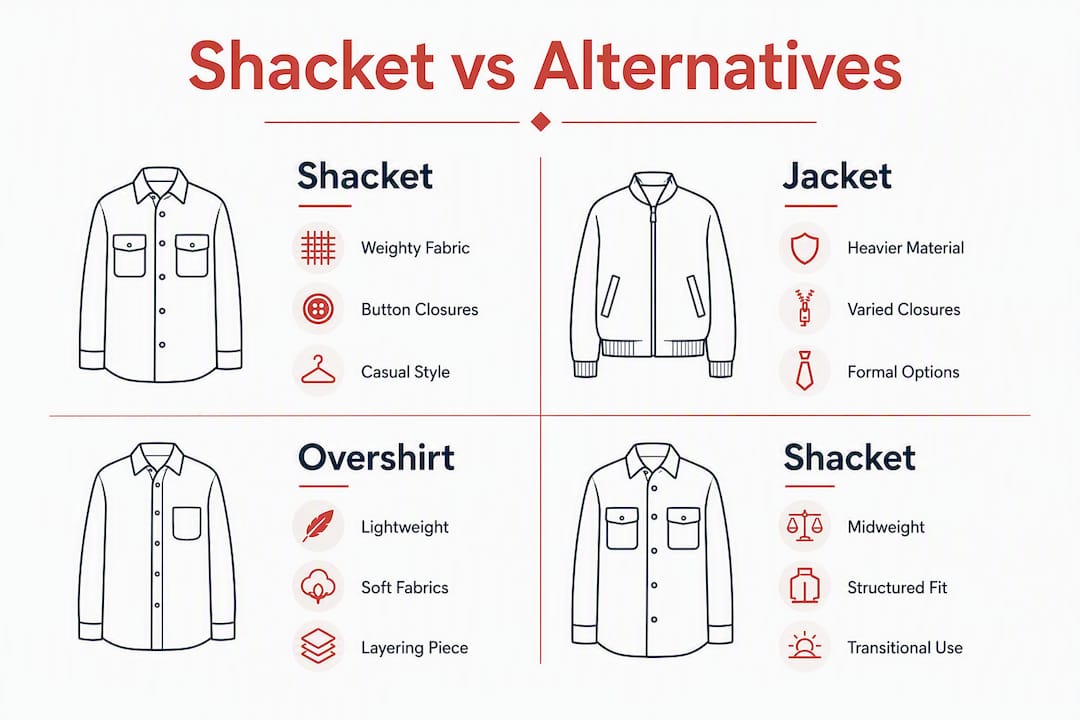
Structurally, a shacket borrows its silhouette from workwear. Think of the classic flannel worn by loggers and ranchers: heavy enough to block wind, loose enough to move in, and shaped like a shirt rather than a tailored coat. That utilitarian DNA is exactly why the shacket migrated from job sites to fashion runways and eventually into everyday wardrobes as a transitional-season staple.
Defining features you’ll find on almost every shacket:
- Button or snap front closure (no zipper)
- A shirt-style collar with no lapels
- Shirt-style cuffs, sometimes with a single button
- Jacket-scale body: wider, longer, and heavier than a standard shirt
- Multiple pockets (patch or flap style)
- Typically unlined, though lined versions exist
- Straight hem cut for wearing untucked as outerwear
How a shacket differs from a jacket and an overshirt
The three terms overlap, but they are not interchangeable. The Modest Man draws the clearest line: shackets are built and fit more like jackets, while overshirts can retain a shirt-like fit designed for layering under other pieces. All shackets qualify as overshirts in loose usage, but not every overshirt meets the structural definition of a shacket.
| Feature | Shacket | Light Jacket | Overshirt |
|---|---|---|---|
| Fit | Relaxed, jacket-scale | Tailored or fitted | Shirt-close to relaxed |
| Weight | Medium-heavy | Light to medium | Light to medium |
| Lining | Usually unlined | Often lined | Rarely lined |
| Closure | Buttons or snaps | Zipper or buttons | Buttons |
| Collar | Shirt collar, no lapels | Lapels common | Shirt collar |
| Layering role | Outer layer | Outer layer | Mid or outer layer |
| Pockets | Multiple, utilitarian | Structured pockets | Fewer, simpler |
Quick selection rule:
- Choose a shacket when you want outerwear with a relaxed, shirt-inspired look and no zipper bulk.
- Choose a light jacket when you need more weather protection or a more polished silhouette.
- Choose an overshirt when you plan to layer it under a heavier coat or want a slimmer fit.
What fabrics and construction details actually matter
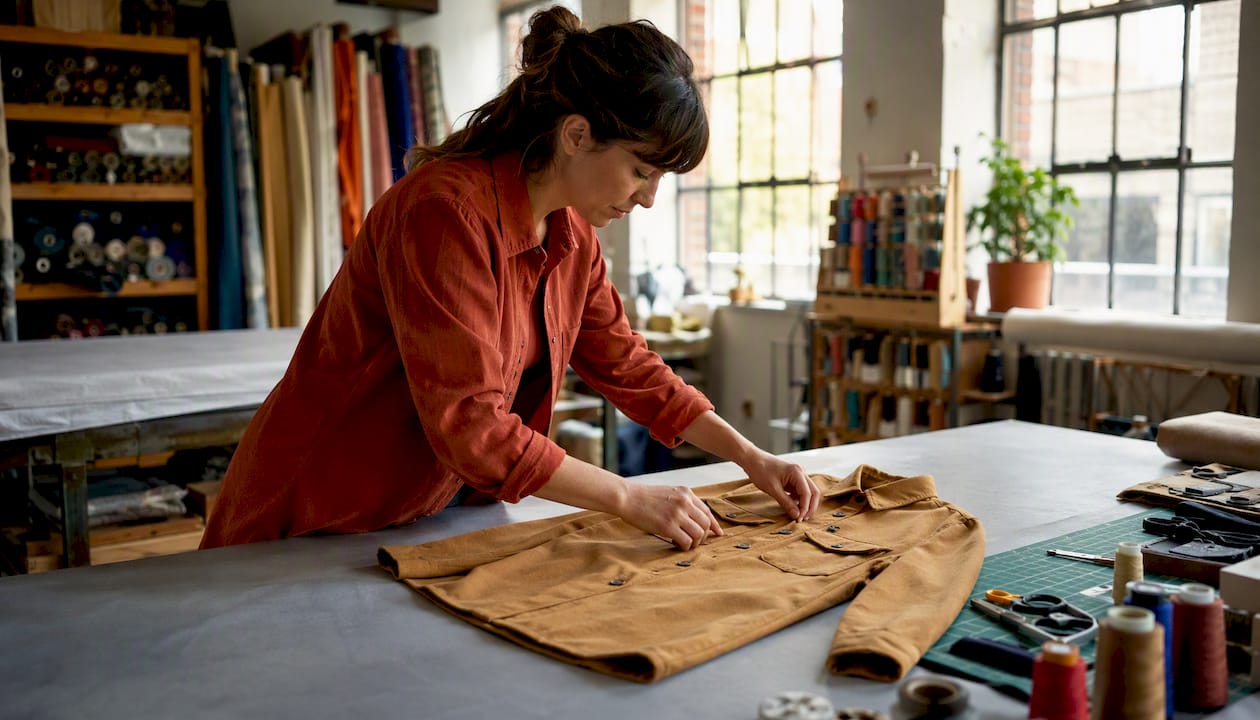
Fabric is where a shacket earns or loses its usefulness. The Modest Man lists the most common options as flannel, denim, heavy cotton twill, canvas, and quilted shells, with linings appearing occasionally but not as a rule.
How each fabric changes the garment:
- Brushed flannel: Soft, warm, and slightly textured. Best for fall and cooler spring days. Prone to pilling if washed aggressively.
- Denim: Durable and structured. Holds its shape well but offers less warmth than flannel. Ages attractively with wear.
- Canvas or heavy twill: The most workwear-adjacent option. Stiff at first, breaks in over time. Handles wind better than flannel.
- Wool blend: Warmest option in the category. Dressier drape, works well in smart-casual settings.
- Quilted shell: Adds insulation without significant weight. Less breathable but useful in colder transitional weather.
Construction details worth checking before you buy: patch pockets sit flat against the body and read casual; flap pockets add a slight structure. Snaps close faster and lie flatter than buttons. A curved hem signals the piece was designed to be tucked; a straight hem means it’s meant to hang as outerwear.
Pro Tip: If you plan to layer a hoodie underneath, avoid quilted shackets. The added volume from quilting plus a hoodie creates too much bulk around the torso. Stick with flannel or denim when layering is the goal.
How to wear a shacket: layering and outfit ideas
The shacket’s core styling move is simple: wear it open over a base layer. That’s it. The rest is proportion management.
Core layering patterns:
- Shacket over a tee: The most casual read. Works for weekends, errands, and outdoor hangouts. Let the shacket hang open.
- Shacket over a thin knit or crewneck: Adds warmth without bulk. Button the shacket halfway for a relaxed, intentional look.
- Shacket over a button-up shirt: The smart-casual version. Keep the collar of the inner shirt visible. Works for business-casual offices that lean relaxed.
- Shacket under a heavier coat: Treat it as a mid-layer on genuinely cold days. A denim or canvas shacket works best here since flannel can bunch.
Outfit ideas by occasion:
- Weekend casual: Flannel shacket, white tee, straight-leg jeans, clean sneakers. Classic and effortless.
- Office smart-casual: Wool-blend shacket, Oxford shirt underneath, chinos, leather loafers.
- Evening casual: Dark denim shacket, black tee, slim trousers, Chelsea boots.
- Streetwear: Oversized canvas shacket, graphic tee, cargo pants, chunky sneakers. Check current streetwear trends for what’s moving right now.
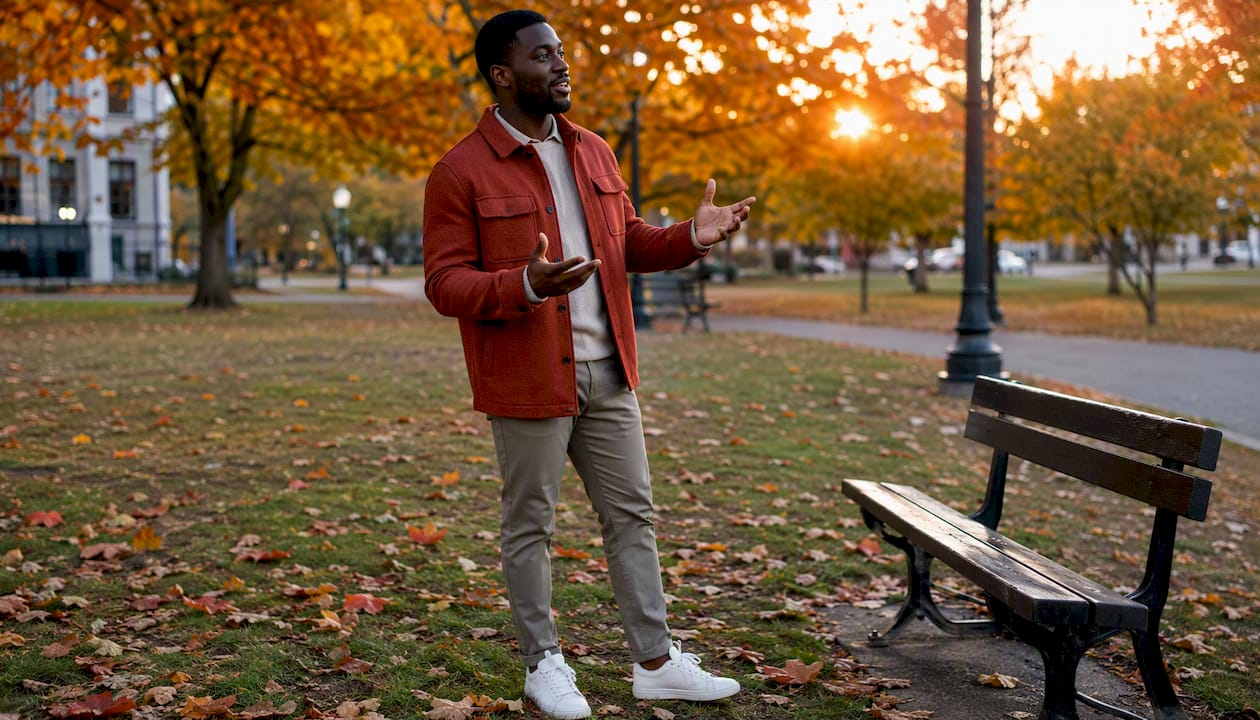
For fit and proportion: the shacket’s hem should hit at or just below the hip. Sleeve length should land at the wrist with about a half-inch of inner layer showing. If you’re wearing an oversized shacket, go slimmer on the bottom. Straight or tapered trousers balance the volume; wide-leg pants with an oversized shacket reads shapeless.
Pro Tip: Rolling the sleeves once or twice on a flannel or denim shacket immediately makes the outfit look more deliberate. It also reveals the cuff of whatever you’re wearing underneath, which adds a layer of visual interest.
Age-appropriate note: younger wearers tend to lean into the oversized, open-worn streetwear version. For a more refined take at any age, a trim-fit wool-blend shacket worn buttoned with tailored trousers reads polished without trying too hard.
When to wear a shacket: seasons and occasions
Gentleman’s Gazette puts it plainly: shackets are most useful in transitional seasons and for travel because they provide layerable warmth without the weight of a coat. Spring and fall are the obvious sweet spots, but the use case extends further.
Best conditions for a shacket:
- Fall mornings and evenings when temperatures swing through the day
- Spring days that start cool and warm up by noon
- Cool summer nights, especially outdoors
- Mild winter climates where a coat is overkill
- Travel days when you need one piece that works across temperature changes
Occasions where a shacket fits:
- Casual outings, weekend plans, and outdoor activities
- Business-casual offices (with the right fabric and fit)
- Commuting and transit days
- Casual dining and social events
When to skip it: Heavy winter conditions with sustained cold below freezing, formal events, and any occasion that calls for a structured blazer or tailored coat. A shacket won’t replace a proper winter jacket, and it shouldn’t try to.
How to choose the right shacket: fit and buying checklist
Fit is the single factor that separates a shacket that looks intentional from one that looks like you grabbed the wrong size. For denim jacket outfit ideas and similar outerwear, the same principles apply.
Fit checklist:
- Shoulder seam sits at the edge of your shoulder, not drooping onto your arm
- Chest has enough room to layer a shirt or thin knit without pulling at the buttons
- Hem falls at or just below the hip
- Sleeves reach the wrist with a slight break
Sizing guidance:
- Size up one if you plan to layer a hoodie or thick knit underneath
- Stay true to size if you want a trim, more polished silhouette
- Avoid sizing up more than one: two sizes up reads sloppy rather than relaxed
What to check in product images and descriptions:
- Fabric weight (look for “heavyweight,” “brushed,” or oz/yd² if listed)
- Whether the piece is lined or unlined
- Pocket construction (patch vs. flap, functional vs. decorative)
- Hardware type (buttons vs. snaps, and whether they’re reinforced at stress points)
- Hem shape (straight for outerwear, curved for tucking)
Caring for your shacket
Proper care keeps the fabric from shrinking, pilling, or losing its shape after a few washes. The rules vary by material, but a few principles hold across most shackets.
Washing and drying:
- Always check the care label first. When in doubt, cold water and a gentle cycle.
- Flannel shackets: hand wash or gentle machine cycle, air dry flat to prevent shrinkage and maintain softness.
- Denim shackets: turn inside out before washing to reduce fading. Cold water, gentle cycle, hang to dry.
- Canvas or waxed finishes: spot clean when possible. Machine washing strips wax coatings. Reproof with a wax bar after any full wash.
- Quilted shackets: gentle cycle, low tumble dry or air dry. High heat can damage the fill.
Storage:
- Hang on a shaped hanger to preserve the shoulder structure. Wire hangers cause distortion over time.
- Air the shacket out between wears before storing. A brief hang near an open window reduces the need for frequent washing.
- Avoid crushing pockets flat under other garments in a packed closet.
Minor repairs:
- Loose buttons: resew with a doubled thread and add a small backing button on the inside of the fabric to prevent tearing.
- Pocket corner stress: a few reinforcing stitches at the top corners of patch pockets prevent the most common point of failure.
Pro Tip: For canvas or waxed shackets, never iron directly on the surface. Use a pressing cloth or simply hang the piece in a steamy bathroom to release wrinkles without damaging the finish.
Are shackets still worth buying?
Esquire describes the shacket’s appeal as “deceptive simplicity”: it looks like a basic shirt but solves a real layering problem that no other single garment handles as cleanly. That utility is why the shacket has outlasted several trend cycles since it crossed from workwear into mainstream fashion.
Why shackets hold their value:
- Transitional weather is a permanent condition in most of the U.S., so the use case never disappears
- Neutral colorways (navy, olive, tan, grey, rust) don’t date the way trend-driven prints do
- The shirt-collar silhouette reads casual without looking sloppy, which keeps it versatile across occasions
- Fabric choices like denim and canvas age well and often look better with wear
Treating it as a capsule piece vs. a trend item:
- Capsule approach: buy one in a neutral, mid-weight fabric (flannel or denim), in a color that works with most of your existing wardrobe. Wear it for three to five seasons.
- Trend approach: buy a bold color or oversized silhouette for the current season, knowing you’ll rotate it out.
Stylists consistently recommend the shacket as a better long-term investment than athleisure-driven outer layers precisely because its design is restrained and practical rather than logo-dependent or silhouette-specific to a single moment.
How Thepreciouslamb thinks about shackets and outer layers
At Thepreciouslamb, the approach to casual outerwear starts with the same question the shacket answers: what does someone actually need between a shirt and a coat?
At Thepreciouslamb, we build pieces that earn their place in a real wardrobe. That means fabric choices that hold up past one season, construction details that don’t fall apart after a few washes, and silhouettes that work across more than one occasion. The denim jacket is our closest analog to the shacket: heavier than a shirt, lighter than a coat, and designed to be worn constantly.
The catalog reflects that thinking directly:
- Denim jackets: The Denim Vintage Washed Heavyweight Jacket sits in the same outerwear tier as a denim shacket. Heavier construction, vintage wash finish, and a silhouette built for daily wear.
- Button-up jerseys: — The Contrast Piped Button-Up Jersey captures the shirt-collar aesthetic that defines the shacket category, worn as a standalone layer in warmer weather.
- Fleece zip hoodies: Designed to layer under outerwear, including shackets. The Snow Washed Distressed Panel Pocket Hoodie pairs naturally under a canvas or denim outer layer.
Pro Tip: When shopping Thepreciouslamb for a shacket-adjacent piece, use the buying checklist from the fit section above. Check shoulder seam placement in the product images, confirm the fabric weight in the description, and size up if you plan to layer.
Key Takeaways
A shacket is a shirt-jacket hybrid built for transitional weather: heavier than a shirt, lighter than a coat, and worn as an outer layer across spring, fall, and mild winter days.
| Point | Details |
|---|---|
| Core definition | A shacket combines a shirt’s collar and cuffs with a jacket’s weight, pockets, and outerwear fit. |
| Best seasons | Spring and fall transitional weather; also useful for travel and cool summer evenings. |
| Fit rule | Shoulder seam at the edge, chest room for a layer underneath, hem at or below the hip. |
| Care by fabric | Flannel needs gentle cycles and air drying; denim goes inside-out in cold water; waxed canvas needs reproofing after washing. |
| Thepreciouslamb pick | The Denim Vintage Washed Heavyweight Jacket is the closest catalog equivalent to a denim shacket. |
The shacket earns its place
The shacket gets dismissed as a trend piece by people who’ve never had to dress for a 45-degree morning that turns into a 65-degree afternoon. That temperature swing is a daily reality across most of the U.S. from March through May and again from September through November, and no other single garment handles it as cleanly.
What I find underrated about the shacket is how much it does without asking anything of you stylistically. You don’t have to think about it. Throw it over a tee, leave it open, and you’re dressed. The only mistake most people make is buying one that’s too big without adjusting the rest of the outfit to match. Get the proportions right and it’s one of the most reliable pieces in a casual wardrobe.
If you’re deciding whether to buy one now or wait: buy it at the start of fall or spring, when you’ll actually use it immediately. A shacket bought mid-winter sits in a closet until March.
Thepreciouslamb denim outerwear for shacket shoppers
If you came here looking for a shacket and you want something built to last past one season, the Denim Vintage Washed Heavyweight Jacket at Thepreciouslamb is worth a close look. It fills the same outerwear role as a denim shacket: worn over a tee or thin knit, open or buttoned, across the full range of transitional weather.

The difference between a shacket and a standard denim jacket is mostly construction weight and pocket count. Thepreciouslamb’s heavyweight denim option leans into durability and vintage character rather than trend-driven detailing, which means it ages well and works across more than one season’s worth of outfits. Pair it with the Contrast Striped Lapel Collar Sweatshirt underneath for a layered look that handles a cool morning without overheating by noon.
Browse the full outerwear selection at Thepreciouslamb and use the fit checklist from this guide to pick the right size on your first order.
Useful sources
- Cambridge Dictionary: shacket — Concise lexical definition used as the article’s primary definitional authority.
- Dictionary.com: shacket — Pop culture and usage context for the term’s mainstream adoption.
- The Modest Man: Shacket vs Overshirt — Detailed breakdown of fit and construction differences between shackets and overshirts.
- Gentleman’s Gazette: Overshirts and Shackets — Styling and seasonality guidance from a menswear authority.
- Esquire Middle East: What the heck is a shacket? — Editorial perspective on the shacket’s longevity and wardrobe value.
- Wiktionary: shacket — Etymology and alternate definitions including regional usage.