
Preshrunk means the fabric was shrunk on purpose before the garment was ever cut and sewn, so the shirt or hoodie you buy has already lost most of the shrinkage it would otherwise dump on you in the wash. It’s a practical reassurance, not a guarantee; preshrunk fabric can still shrink a little more under high heat or rough laundering. Read the care label anyway.
TL;DR:
- Preshrunk fabrics are treated before manufacturing to reduce post-wash shrinkage, mainly through processes like sanforization or compacting, but some minor shrinkage can still occur.
- The most shrinkage-prone fibers are natural cotton, especially untreated knit fabrics, while synthetics like polyester shrink less, making blended fabrics more stable overall.
- Proper washing and drying habits, such as cold water washing and air drying, are essential to preserve the fit of preshrunk garments, which can still shrink if exposed to high heat.
- Visible signs of shrinkage include pulling seams, higher hemlines, or shortened sleeves, and mild shrinkage can sometimes be reversed with gentle stretching when damp.
- Labels indicating preshrunk status refer to specific manufacturing processes and do not guarantee zero shrinkage, so checking garment care instructions remains important.
Table of Contents
- What Is Preshrunk, Exactly?
- How Manufacturers Preshrink Fabric
- Does Preshrunk Mean Zero Shrinkage?
- Which Fabrics Benefit Most From Preshrinking?
- How to Wash and Dry Preshrunk Clothes Without Losing the Fit
- How to Tell if a Garment Has Actually Shrunk
- Why This Matters More Than Most Shoppers Realize
- How Thepreciouslamb Approaches Fabric and Fit
- Sources
What Is Preshrunk, Exactly?
Merriam‑Webster defines “preshrink” simply as shrinking fabric before it becomes a garment, so it won’t shrink much once you wash it. Cambridge and Collins land on the same idea from a slightly different angle, describing preshrunk fabric or clothing as material treated during manufacturing specifically to prevent or minimize further shrinkage, a definition Cambridge Dictionary backs up almost word for word.
In the garment industry, “preshrunk” is shorthand for a fabric that’s been stabilized before it hits the cutting table. That timing matters. Fabric holds tension from knitting or weaving, and that tension has to release somewhere. Preshrinking lets it release in a factory under controlled conditions instead of in your washing machine, where it would warp the fit you paid for.
Manufacturers do this for a few concrete reasons:
- Predictable sizing, so a medium fits the same way in June as it does in December
- Fewer returns and exchanges tied to “it shrank weird” complaints
- Protection for prints, embroidery, and other cut-and-sew details, since Printful notes that shrinkage after decoration can distort a design’s placement
How Manufacturers Preshrink Fabric
The industry’s go-to method is sanforization, a process that uses moisture, heat, and mechanical compression to lock the fabric’s dimensions in place before it’s cut. Wikipedia’s overview of the process describes it as an established finishing treatment developed specifically to control dimensional stability in fabrics headed for heavy laundering, which is why it shows up so often on woven cotton and denim.
Compacting works on a similar principle but is used more on knit fabrics like jersey and interlock. The material runs through rollers that compress it and relax that internal tension, so the fabric arrives at the sewing floor already settled into its final shape. Some producers skip mechanical methods entirely and just run bulk fabric through an industrial prewash and dry cycle, which does the same job on a smaller scale.
A few things worth knowing about how this plays out across the industry:
- Sanforization is most common on woven cotton, especially denim, where dimensional stability under repeated washing really matters
- Compacting suits knits, which stretch and recover differently than woven fabric
- Not every brand uses the same intensity of treatment. Some use milder proprietary finishes that reduce shrinkage without fully eliminating it
Quick fact: according to TextileGlossary, preshrunk is technically classified as a dry, permanent finish that produces a more stable fabric, but even that source is upfront that residual shrinkage potential usually remains after treatment.
Does Preshrunk Mean Zero Shrinkage?
No. Preshrunk reduces shrinkage; it doesn’t erase it. Some brand estimates suggest preshrunk cotton experiences only minor additional shrinkage after purchase when laundered properly, less than untreated cotton, according to figures from MFGMerch. That’s a real difference, but it’s not a promise that your shirt will measure identically forever.
A handful of factors decide how much extra shrinkage you’ll actually see:
- Water and dryer heat, which is the single biggest factor in post-purchase shrinkage
- Agitation, meaning longer or rougher wash cycles
- Garment construction, since seams and trims can shrink at different rates than the main fabric
- Finishing chemicals applied after preshrinking, which can slightly affect how the fiber behaves in later washes
Industry explainers on garment finishing consistently note that even preshrunk garments can shrink a bit more if you run them through high heat or aggressive laundering. The safest assumption: expect small changes, not none, and check the label before you toss anything in a hot dryer.
Which Fabrics Benefit Most From Preshrinking?
Natural fibers shrink more than synthetics, full stop. Cotton, especially untreated cotton knits, has the most to gain from preshrinking because cotton fibers absorb water and relax significantly when wet. Polyester and other synthetics barely move by comparison, which is one reason blended fabrics often shrink less overall than 100% cotton pieces. If you’re weighing fiber choices for fit stability, it’s worth reading how cotton compares to recycled polyester before you buy.
Construction matters just as much as fiber content:
- Knit garments like tees and jerseys shrink more unpredictably because the loop structure has more give to lose
- Woven fabrics like denim shrink more uniformly, which is exactly why sanforization became standard for jeans
- Fitted pieces, where an inch of shrinkage actually shows, benefit most from a preshrunk or “sanforized” label
If fit is the whole point of the purchase, that label is worth checking before checkout, not after.
How to Wash and Dry Preshrunk Clothes Without Losing the Fit
Preshrunk fabric still responds to how you treat it, so a few habits go a long way toward keeping the size you bought.
- Wash in cold or warm water on a gentle cycle. Hot water is the fastest way to trigger extra shrinkage in cotton.
- Skip the high-heat dryer setting. Heat, not water, does most of the damage over repeated washes.
- Air-dry when you can, especially for fitted tees, jerseys, and anything with printed graphics.
- Use low-heat tumble drying only for casual, looser pieces like sweatshirts, and pull them out while still slightly damp.
- Size up if the garment isn’t labeled preshrunk, or if you know you’ll be washing it constantly on hot cycles.
For fleece pieces specifically, drying habits make an even bigger difference in how the fabric holds its shape over time. Thepreciouslamb’s hoodie care guide walks through wash temperatures and drying steps that keep fleece looking new instead of matted and shrunken.
Pro Tip: Turn printed or embroidered garments inside out before washing. It protects the design and reduces the surface friction that speeds up shrinkage.
How to Tell if a Garment Has Actually Shrunk
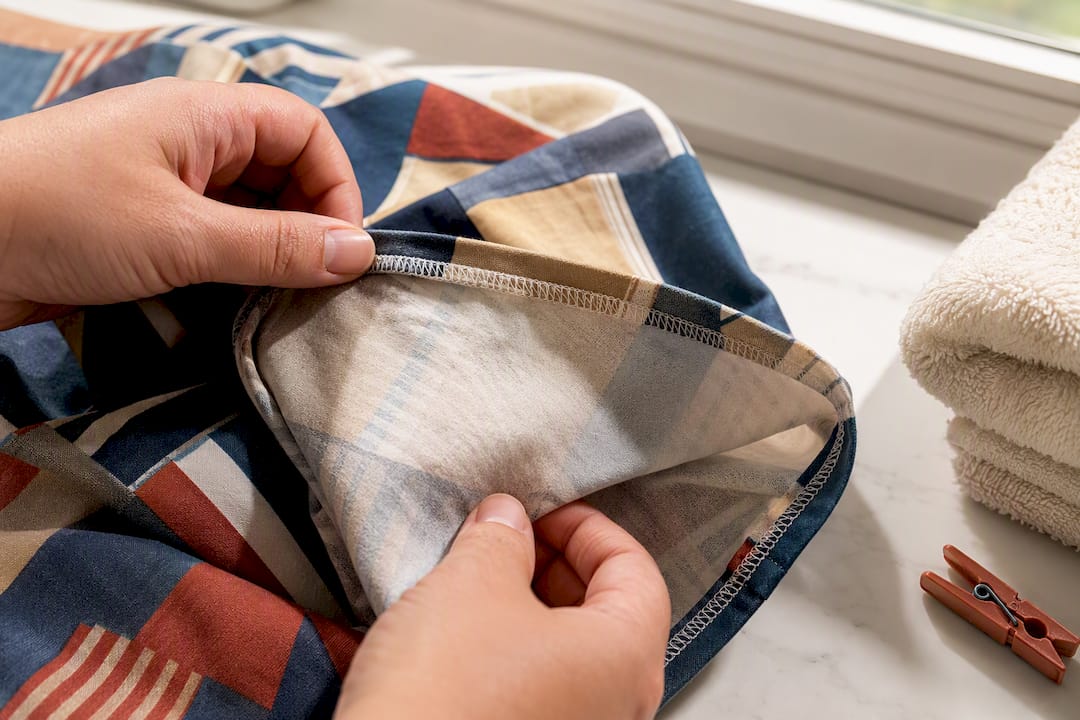
Lay the item flat and measure chest width, body length, and sleeve length, then compare those numbers to the original size chart or a pre-wash measurement if you took one. A drop of half an inch or more across multiple spots is real shrinkage, not just normal settling.
Watch for these signs specifically:
- Seams pulling tight or puckering along the sides
- Hemlines riding up noticeably higher than before
- Sleeves or cuffs that no longer reach where they used to
If shrinkage is mild, a lukewarm soak followed by gentle stretching while the fabric is still damp can coax some size back, a method detailed in Thepreciouslamb’s guide on shrinking (and unshrinking) a cotton hoodie. For anything drastic, professional garment care or a return is the safer bet.
Why This Matters More Than Most Shoppers Realize
Most people treat “preshrunk” as a marketing sticker instead of a manufacturing spec, and that’s the mistake. The label is describing a specific mechanical or chemical process, not a personality trait of the garment. Once you know it means sanforization, compacting, or an industrial prewash happened before the fabric was cut, the label stops being a vague promise and starts being useful information you can act on.
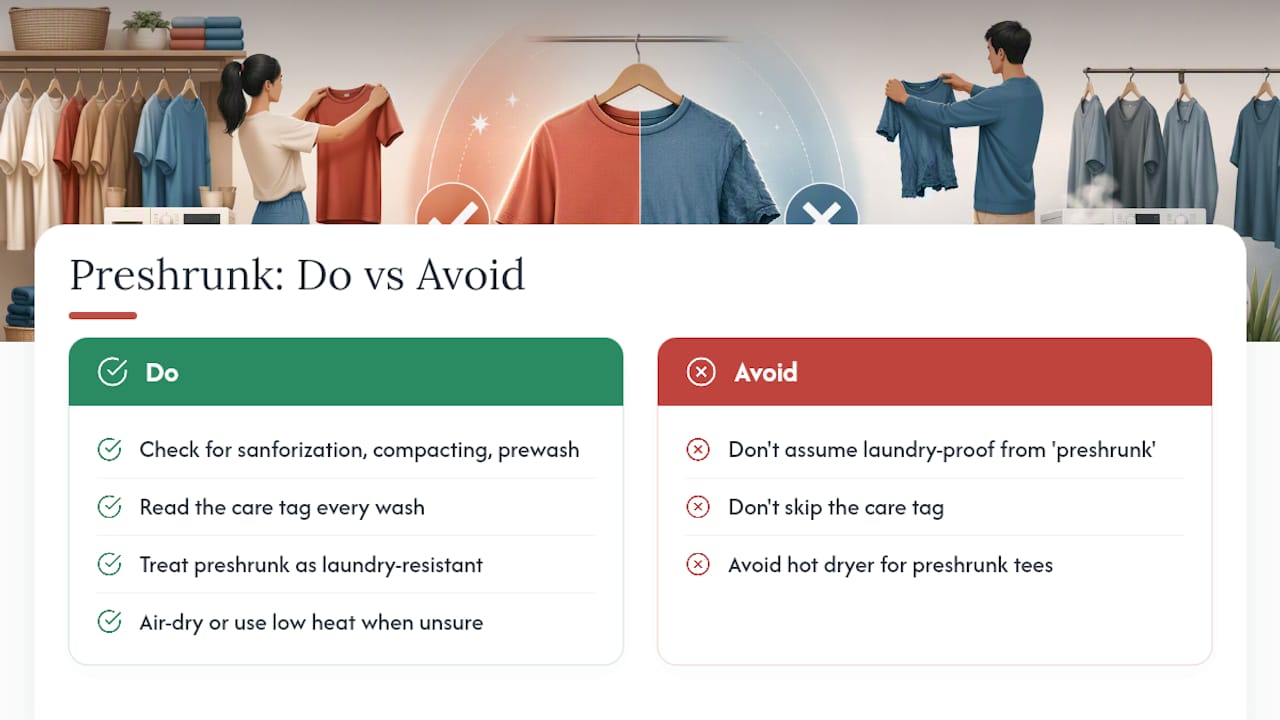
The bigger blind spot is assuming preshrunk clothing is laundry-proof, but understanding why shirt material matters for print quality can help you protect your garment’s fit and design. It isn’t. It’s laundry-resistant. That distinction should change how you wash things, not just how you shop for them. A tee that’s already preshrunk can still lose its shape in a hot dryer, and a garment that isn’t labeled preshrunk at all can often survive fine with cold water and air drying. The label is a head start, not a substitute for reading the tag every time.
If there’s one habit worth building, it’s this: stop assuming fabric behavior and start checking it, garment by garment, wash by wash.
— Joshua
How Thepreciouslamb Approaches Fabric and Fit
Some brands pick fabrics with fit stability in mind, not just how a piece looks on the rack, and product pages often carry material and care details you need before you commit to a size. That’s the real advantage over guessing from a photo: you can check fabric composition and washing guidance up front instead of finding out after the first wash.

The Snow Washed Distressed Panel Pocket Hoodie is a good example of a piece built for a stable, consistent fit wash after wash. For denim built to hold its shape through the kind of heavy wear denim is made for, the Denim Vintage Washed Heavyweight Jacket is worth a look too. If you’re unsure which piece fits your routine, check the fabric and care notes on the product page, then add it to your cart with a clearer sense of how it will wear over time.
Sources
- Merriam‑Webster — preshrink
- Wikipedia — Sanforization
- TextileGlossary — pre-shrunk
- Printful — Pre-shrunk